プリント版に切り替え
 詳細を表示







































 いずれかの辺が105 cm(約41インチ)を超えるアートワークまたは複製画の場合、フレームは分解されたキットの状態でお届けいたします。この方法は、輸送中の破損を防ぎ、安全に配送するために採用しております。


A Symphony in Steel and Hue: The Mechanical Pulse of Fernand Léger
In the vast landscape of twentieth-century modernism, few artists captured the rhythmic heartbeat of the industrial age as vibrantly as Fernand Léger. His 1952 masterpiece, Composition, serves as a profound visual manifesto, transcending mere abstraction to become a crystallized embodiment of an era defined by both anxiety and boundless aspiration. Born in the rural landscapes of Normandy, Léger’s artistic journey was a metamorphosis from the organic textures of agricultural life to the sleek, hard-edged precision of the machine. In this particular work, we witness the culmination of his lifelong obsession with form, where the boundaries between the human spirit and the mechanical world begin to blur into a singular, dynamic energy.
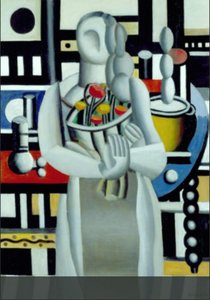
The painting unfolds as a complex, orchestrated dance of geometry. At its heart lies a prominent circle, acting as a luminous beacon of order that radiates through an otherwise chaotic arrangement of shapes. This central focal point is surrounded by a sophisticated network of ovoids, smaller spheres, triangles, and rectangles, creating a visual cadence that echoes the repetitive, hypnotic motions of factory pistons and urban transit. The palette is nothing short of electric; bold strikes of primary yellows, deep reds, and vibrant oranges clash and harmonize against cool blues and stark blacks. This deliberate use of color does more than decorate the canvas; it breathes life into the geometric structures, imbuing cold shapes with a sense of warmth and kinetic vitality.
The Essence of Machine Painting and Tactile Mastery
Léger famously pioneered a style he termed “machine painting,” a technique that sought to move beyond the mere depiction of industrial objects to capture their very essence. He was not interested in the literal silhouette of a locomotive or a gear, but rather in the sensory experience of the machine age—the relentless movement, the transformative power, and the structural solidity of progress. To achieve this, Léger employed a masterful approach to texture. By applying thick, deliberate layers of paint, he created a surface that possesses a physical weight, mimicking the ruggedness of forged metal and the industrial grit of a modern cityscape.
For the discerning collector or interior designer, this piece offers an unparalleled opportunity to introduce a sense of structured dynamism into a space. The interplay of light and shadow within the layered pigments provides a depth that changes as the viewer moves around the work, making it a captivating centerpiece for contemporary settings. Whether placed in a minimalist gallery-style room or a sophisticated executive office, Composition commands attention through its balanced tension between chaos and control.
A Timeless Legacy for the Modern Collector
Beyond its aesthetic brilliance, Léger’s work carries a profound historical weight. Created in the post-war period, the painting reflects a world rebuilding itself through technology and structural innovation. It is an invitation to contemplate how much of our modern identity is forged in the intersection of human creativity and mechanical precision. Owning a high-quality reproduction of this work allows one to possess not just a beautiful arrangement of color and shape, but a fragment of the avant-garde spirit that redefined the twentieth century.
For those seeking to curate an environment filled with intellectual depth and visual excitement, this Composition stands as a testament to the enduring power of abstraction. It remains a timeless exploration of how order can emerge from complexity, offering a sophisticated aesthetic that resonates with the pulse of the modern world.
Q&A
「Abstract Composition」は、フェルナン・レジェが繰り返し描いてきた主題の中でどのような位置を占めているのでしょうか?
フェルナン・レジェの作品に繰り返し現れるテーマにはmechanized forms, bauhaus style, industrial aesthetic, geometric vision, modern expressionがありますが、「Abstract Composition」ではabstraction, geometric shapes, color palette, modern art, industrial influence, dynamic composition, circular formsに焦点を当てています。
フェルナン・レジェによる「Abstract Composition」はパブリックドメインに含まれますか?また、その理由は何ですか?
フェルナン・レジェによる「Abstract Composition」はパブリックドメイン(著作権消滅)です。著作権の保護期間は作者の没年から起算されますが、フェルナン・レジェは1955年に亡くなっています。
「Abstract Composition」はいつの時代のものですか?
フェルナン・レジェ作「Abstract Composition」はModern時代の作品です。この時代背景が、本作の歴史的な文脈を形作っています。
この絵画の詳細を見る
 設置イメージを表示

 シェアする
 シェアする
 詳細を見る
 ガイドを表示


 ダウンロード
 似ている作品
 X線調査
 スライドショーを表示
 Q&A
 統計情報