プレビュー
プレビュー
 シェアする
シェアする シェアする
シェアする
 詳細を見る
詳細を見る

 ダウンロード
 似ている作品
 X線調査
X線調査 スライドショー
 統計情報
統計情報Figure study
 Acrylic On Canvas
- WallArt
- Symbolism
 1899
1899 5.0 x 10.0 cm
 ボスニア・ヘルツェゴビナ国立美術館
 詳細を見る
詳細を見る
手描き油彩複製画
当社のアーティストが、お客様のご希望のサイズと額縁に合わせて、キャンバスに手描きで制作する油彩画です。 ( プリント版に切り替え デジタル画像販売へ切り替え)




P118B $10

P118H $10

P118W $10

P438Z $10

P508JH $12

P508YH $12

P805H $10

P805Z $10

P919BZ $10

P919G $10

P919XJ $10

P959ZH $10

P968JZ $12

W106C $8

W218G $10

W218JH $8

W218Y $10

W307PJ $10

W316G $10

W316PJ $8

W316Y $10

W398PJ $8

W4111J $10

W500HY $15

W500JH $15

W692G $12

W849H $8

W940BG $15

W953PJ $8




作品のオリジナル比率に合わせた、当店の規定サイズからお選びください。

特定のフレームやスペースに合わせて、ご希望のサイズをご入力いただけます。選択されたサイズが元の画像の比率と異なる場合、アートワークをトリミングするか、手描きで要素を追加して絵画を拡張いたします。デジタルモックアップ を制作し、制作開始前にご確認(承認)をいただきます。
画面上のプレビューは、実際のトリミングや拡張を正確に反映しているものではありません。最終的な構図は、モックアップによってのみ正確にご確認いただけます。
カスタムサイズもご利用いただけますが、元の比率を維持するためには、あらかじめ用意されたリストからサイズを選択することをお勧めいたします。
ご注文後、OriginalUniqueArt.com チームより詳細な指示をお送りするとともに、仕上がりイメージ(モックアップ)をご提供いたします。


 ガラスオプションは、110cm未満のサイズでのみご利用いただけます。

Figure study
複製技法
複製画のサイズ
-


合計金額
$ 325
A Study in Melancholy: Ferdinand Hodler’s “Figure Study”
Ferdinand Hodler's "Figure Study," a deceptively small watercolor painting measuring just 5 x 10 centimeters, is far more than a miniature portrait. Completed in 1899, it encapsulates the core of Hodler’s Symbolist aesthetic – a poignant exploration of human emotion and vulnerability rendered with an exquisite sensitivity to line and tone. The work depicts two male figures locked in what appears to be a struggle or perhaps a moment of intense contemplation. Their postures are subtly tense, their faces partially obscured, inviting viewers to project their own interpretations onto the scene. Hodler masterfully employs loose, expressive lines, eschewing rigid anatomical detail for a more fluid and emotionally charged representation. The painting’s power lies not in precise depiction but in its ability to evoke a sense of quiet melancholy – a feeling that resonates deeply within the viewer.
- Style & Movement: Rooted firmly in Symbolism, “Figure Study” reflects the broader artistic currents of late 19th-century Europe. Hodler’s style is characterized by its dreamlike quality and emphasis on subjective experience rather than objective reality.
- Technique: The watercolor medium itself contributes significantly to the painting's mood. Hodler utilizes layering washes, creating subtle tonal variations and a delicate sense of texture. Dry brush techniques add further definition to the figures’ forms while maintaining an overall fluidity.
The Symbolist Soul: Hodler’s Artistic Vision
Ferdinand Hodler's artistic journey was profoundly shaped by personal tragedy – the early deaths of his father and two brothers instilled within him a deep contemplation of mortality and the ephemeral nature of existence. This preoccupation with loss and vulnerability became a recurring theme in his work, informing his Symbolist approach to art. Unlike many of his contemporaries who sought to capture external reality, Hodler focused on conveying internal states – emotions, memories, and spiritual experiences. “Figure Study” exemplifies this shift, prioritizing emotional resonance over literal representation.
Hodler’s artistic philosophy, termed "parallelism," posited that repetition and pattern intensify experience, serving as a source of revelation. He believed that by observing the interconnectedness of things – the mirroring of forms, the recurrence of motifs – one could gain access to deeper truths about the human condition. This concept is evident in his meticulous compositional studies, where he often employed grids and symmetrical arrangements to explore the relationships between figures and their environment.
Historical Context & Hodler’s Legacy
Created in 1899, “Figure Study” emerged during a period of significant artistic experimentation and social upheaval. The Symbolist movement was challenging traditional notions of representation, while simultaneously grappling with the anxieties and uncertainties of the modern world. Hodler's work reflects this broader cultural context, offering a nuanced portrayal of human interaction within a rapidly changing society. He was part of a group of Swiss artists who sought to establish a distinctly national artistic identity, drawing inspiration from both European traditions and their own unique heritage.
Hodler’s influence extends far beyond Switzerland. His pioneering use of watercolor, his evocative imagery, and his exploration of psychological themes have resonated with artists across generations. He is considered a key figure in the development of modern art, paving the way for movements such as Expressionism and Surrealism. Reproductions of “Figure Study” continue to captivate audiences today, offering a glimpse into the profound emotional depth of this remarkable artist.
A Timeless Reflection: The Emotional Impact
“Figure Study” is not merely a depiction of two men; it’s an invitation to contemplate the complexities of human relationships and the enduring power of emotion. The painting's ambiguity – the uncertain nature of their interaction, the veiled expressions on their faces – encourages viewers to project their own feelings and experiences onto the scene. It evokes a sense of quiet introspection, prompting us to consider our own vulnerabilities and the ways in which we connect with others. The subdued palette and masterful use of line contribute to its haunting beauty, solidifying “Figure Study” as a timeless reflection on the human condition.
アーティストの略歴
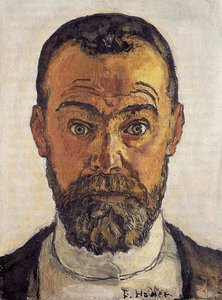
フェルディナント・ホドラー:スイス象徴主義の巨匠、普遍的調和への探求
1853年、ベルンに生まれたフェルディナンド・ホドラーは、スイス絵画史における最も重要な芸術家の一人として、その名を刻みました。幼い頃から喪失という影を背負った彼の人生—父と二人の弟が結核で若くして亡くなったこと—は、死の儚さや存在の意味について深く考察する原点となり、その後の作品に普遍的なテーマを織り込みました。装飾画家としての修業を経て、ホドラーは芸術家としての道を歩み始め、ジュネーブで科学講義を受講しながら美術館で古典作品を模写することで、確固たる基礎を築きました。初期の作品には写実主義の影響が見られましたが、彼は次第にその枠を超え、より深い感情や哲学的な思想を表現する方法を切望するようになりました。象徴主義と並列性:独自の芸術言語の創造
ホドラーの芸術的探求は、主観的な経験と喚起的なイメージを重視する象徴主義へと向かいました。しかし、彼は単にこの運動の原則を受け入れただけでなく、独自の芸術スタイル「並列性」を開発しました。これは、人物や形態をリズム感のある、ほぼ幾何学的なパターンで配置することで、調和と緊張感が共存する視覚的表現を生み出す手法です。ホドラーは、目に見える対象を描写するだけでなく、万物を結びつける根源的な感情の流れを捉えようとしたのです。1890年に完成した『夜』は、その転換点となった作品であり、死と安息を示唆する横たわる人物の描写は、大きな論争を巻き起こしました。しかし、この作品はパリのサロンで高い評価を受け、ホドラーの名声を確立し、スイス国外へと芸術的影響力を広げるきっかけとなりました。主要作品:人生と自然への瞑想
ホドラーのキャリアを通じて制作された数々の傑作は、彼の芸術的探求を鮮やかに物語っています。『昼』(1893年)は、その中でも最も野心的で評価の高い作品の一つであり、チューリッヒ美術館に所蔵されています。この壮大な歴史画は、生命、死、そして再生というテーマを、現実主義と先見的な強烈さの融合によって描き出しています。ホドラーはまた、スイスアルプスの風景を数多く描きましたが、それらは畏敬の念を起こさせる壮大さを湛え、自然への深い愛情を示しています。彼の作品には、喪失や悲嘆といったテーマも頻繁に登場しますが、常に尊厳と回復力を通して表現されています。『真理II』(1897年)に見られるように、ホドラーは古典的な形態と現代的な感覚を融合させ、時代を超越した魅力を持つ作品を生み出しました。遺産:影響と歴史的意義
フェルディナンド・ホドラーの芸術的影響力は、スイス国外にも及びました。彼の象徴主義の使用や「並列性」の開発は、主観的な感情を強調し、形態を歪める表現主義への道を開きました。ホドラーの作品は、19世紀末から20世紀初頭にかけての社会の変化、科学的進歩、そして存在不安の高まりといった文化的潮流と共鳴しました。彼の絵画は、ますます不確実な世界において、慰めと洞察を提供し、人々の心に深く響きました。今日、ホドラーの作品はヨーロッパをはじめとする主要美術館に収蔵されており、世代を超えて多くの人々を魅了し続けています。彼はスイス美術史における偉大な芸術家として記憶され、その技術的な熟練度だけでなく、深い感情的な深みと、人間の存在の意味を探求する揺るぎない決意によって称賛されています。さらにホドラーの世界へ
- 詳細な生涯と作品について: Wikipedia - フェルディナンド・ホドラー
- 彼のコレクションを探索する: OriginalUniqueArt - フェルディナンド・ホドラー作品集
- 『昼』(1893年)をご覧ください: OriginalUniqueArt - 昼
フェルディナン・ホドラー
1853 - 1918 , スイス
基本情報
- フルネーム: フェルディナント・ホドラー
- 主な作品: ['夜', '昼', '真理II']
- 出生地: ベルン(スイス)
- 国籍: スイス
- 影響を与えたアーティスト: ['表現主義']
- 没年月日: 1918年5月19日
- 生年月日: 1853年3月14日
- 芸術運動またはスタイル: 象徴主義、並列主義
関連記事

Ephemeral Visions: Exploring the Artistic Legacy & Contemporary Practice of Watercolor Painting
Explore the captivating world of watercolor painting! Discover its rich history, essential techniques, influential artists & collecting tips. A comprehensive guide for art enthusiasts from OriginalUniqueArt.

Ephemeral Visions: Exploring the History & Emotional Resonance of Watercolor Painting
Explore the captivating history of watercolor painting, from ancient techniques to modern masters like Kandinsky & Blake. Discover essential artists, collecting tips & the emotional power of this luminous medium. Expert insights for art enthusiasts.

水彩の永続的な魅力:歴史、技法、そして現代の実践
水彩画の歴史、技法、現代の実践を深く探求。巨匠たちの名画から初心者向けテクニックまで解説。OriginalUniqueArt.comでは高品質な複製画やカスタムポートレートをご提供します。アートコンサルテーションも受付中。

Watercolor Wonders: 10 Masterpieces That Redefined Art History | OriginalUniqueArt
Journey through 10 legendary watercolor masterpieces by Sargent, Turner & Homer! Explore iconic landscapes, portraits & floral art that redefined history. Find museum-quality reproductions and curated decor ideas at OriginalUniqueArt.com.

Ephemeral Visions: Exploring the Artistic Legacy & Nuances of Watercolor Painting
Explore the captivating world of watercolor painting! Discover its rich history, essential techniques, influential artists & collecting tips from art experts. A comprehensive guide for enthusiasts.