

 設置イメージを確認
 送る
送る シェア
シェア
 詳細情報
詳細情報 ガイドを表示

 画像をダウンロード
 似ている作品
 X線調査
X線調査 スライドショー
 統計情報
統計情報Still Life


 続きを読む
続きを読む
ジークレー/アートプリント
スピーディーな制作と多彩な仕上げオプションが魅力の、ミュージアムクオリティなジークレー・キャンバスプリント。 ( 手描きの複製画を注文する デジタル画像販売へ切り替え)




P118B ¥10

P118H ¥10

P118W ¥10

P438Z ¥10

P508JH ¥12

P508YH ¥12

P805H ¥10

P805Z ¥10

P919BZ ¥10

P919G ¥10

P919XJ ¥10

P959ZH ¥10

P968JZ ¥12

W106C ¥8

W218G ¥10

W218JH ¥8

W218Y ¥10

W307PJ ¥10

W316G ¥10

W316PJ ¥8

W316Y ¥10

W398PJ ¥8

W4111J ¥10

W500HY ¥15

W500JH ¥15

W692G ¥12

W849H ¥8

W940BG ¥15

W953PJ ¥8




作品のオリジナル比率に合わせた、当店の規定サイズからお選びください。

額縁や壁のスペースに合わせて、ご希望の幅と高さを入力してください。プリントはカットすることは可能ですが、元の画像より大きくすることはできないため、異なる比率のサイズを選択された場合は、画像の一部が欠けることになります。印刷を開始する前に、内容を確認していただくためのデジタルモックアップをお送りいたします。このページに表示されている画像は、実際のカット後の状態を示すものではありません。実際の仕上がりはモックアップにてご確認ください。


 ガラスオプションは、110cm未満のサイズでのみご利用いただけます。

Still Life
ジークレー/アートプリント
複製画サイズ一覧
-


合計金額
¥ 12650
A Moment Frozen in Time: Ferdinand Guillaimin’s “Still Life”
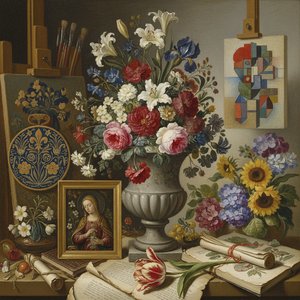
Ferdinand Guillaimin's "Still Life," painted in 1872, isn’t merely a depiction of objects arranged on a table; it’s a carefully constructed tableau brimming with quiet observation and subtle symbolism. This work, rendered in the heart of the Impressionist movement, captures a fleeting moment of domestic tranquility – a scene both familiar and imbued with an understated elegance. The painting immediately draws the eye to the central arrangement: a vase overflowing with vibrant red and yellow flowers, their petals seemingly caught mid-bloom, radiating warmth against the cooler tones that dominate the rest of the composition. Beside them rests a worn book, its pages hinting at untold stories and intellectual pursuits, while a simple bowl holds what appears to be fruit – perhaps apples or pears – adding another layer of earthly abundance.
Guillaimin’s technique is distinctly Impressionistic, prioritizing capturing the *impression* of light and color rather than precise detail. Loose brushstrokes dance across the canvas, creating an atmospheric haze that softens the edges of each object. He masterfully employs broken color – applying small dabs of paint side-by-side to build up hues and create a shimmering effect, particularly noticeable in the reflections on the table’s surface. The dark background serves not as mere backdrop but as a crucial element, intensifying the luminosity of the floral arrangement and lending the scene a sense of intimacy and depth. The artist's focus is less on photographic realism and more on conveying the *feeling* of being present within this quiet space.
The Context of Parisian Impressionism
To fully appreciate “Still Life,” it’s essential to understand the artistic climate in which Guillaimin was working. The 1870s were a period of profound change and experimentation for French art, marked by the rise of Impressionism. Artists like Monet, Renoir, and Pissarro sought to break free from the rigid conventions of academic painting, embracing plein air (outdoor) painting and capturing the ephemeral qualities of light and atmosphere. Guillaimin’s work reflects this spirit of innovation, moving away from traditional subject matter and exploring new ways of representing the world around him.
Guillaimin's connection to Pissarro is particularly noteworthy. The artist spent a significant period painting alongside Pissarro in Pontoise, a suburb of Paris, where he found inspiration in the everyday life of the region. This proximity fostered a collaborative environment, allowing Guillaimin to refine his style and develop his unique approach to capturing light and color. The Impressionists were not simply interested in depicting what they *saw*; they were driven by a desire to express their subjective experience of the world.
Symbolism and the Language of Objects
Beyond its aesthetic qualities, “Still Life” is rich with symbolic meaning. The flowers themselves represent beauty, fragility, and the fleeting nature of life – themes frequently explored in Impressionist art. The book suggests knowledge, contemplation, and a connection to the past. The bowl of fruit symbolizes abundance, nourishment, and the pleasures of earthly existence. Even the dark background can be interpreted as representing mortality or the unknown.
Guillaimin’s use of these objects is deliberate and carefully considered, inviting the viewer to engage in a process of interpretation. He doesn't offer explicit explanations; instead, he presents a series of interconnected symbols that resonate with universal themes of beauty, life, and death. The arrangement feels deliberately balanced, creating a harmonious composition that evokes a sense of peace and serenity.
A Legacy of Delicate Beauty
Ferdinand Guillaimin’s “Still Life” stands as a testament to the power of observation and the enduring appeal of simple subjects rendered with exquisite sensitivity. It's a painting that rewards close attention, revealing layers of meaning and emotional depth with each viewing. Reproductions capture much of the original atmosphere, but nothing quite replicates the subtle nuances of light and color that define Guillaimin’s masterful technique.
Today, this work is celebrated for its evocative beauty and its contribution to the development of Impressionism. It remains a poignant reminder of the quiet moments of everyday life – a timeless meditation on beauty, mortality, and the enduring power of art.
よくあるご質問
「Still Life」にはどのような色が使われていますか?
フェルディナン・ギヨマン作「Still Life」は、Earthyなカラーパレットを使用しています。この配色が、作品全体の色彩的特徴を象徴しています。
「Still Life」に似た作品はありますか?
フェルディナン・ギヨマン作「Still Life」の似ている作品ページでは、関連する作品をご紹介しています。
「Still Life」の作者と制作年はいつですか?
「Still Life」の作者はフェルディナン・ギヨマンで、制作年は1872年です。
アーティストについて
幼年時代と画家としての出発
1841年2月16日、フランスのパリに生まれたフェルディナン・ギヨマンは、印象派という芸術運動が芽生え始めた時期にその画家の道を歩み始めました。当初は絵具商として働きながら独学で絵を学びましたが、次第に画家としての才能を開花させていきます。彼の人生は、光と色彩の捉え方を根本から変えようとした印象派の隆盛と深く結びついています。ギヨマンが描いた作品は、単なる風景描写にとどまらず、その瞬間の感情や感覚を鮮やかに表現しようとする試みでした。印象派への貢献
ギヨマンの芸術的貢献は、印象派運動の発展に不可欠なものでした。彼はモネをはじめとする多くの画家たちと交流し、自然界における光と色彩の一瞬の変化を捉えるという共通の目標に向かって探求を続けました。ギヨマンの作品の特徴は、夢のような柔らかな風景描写です。それは、見る者の心に静寂と安らぎをもたらします。鮮やかな色彩と自由奔放な筆致は、印象派特有の即興性と生命力を表現しており、当時の芸術界に新たな風を吹き込みました。ギヨマンは、展覧会にも積極的に参加し、その独自のスタイルを世に広めていきました。影響を受けた画家と象徴主義との交錯
ギヨマンの画風には、様々な芸術家の影響が見られます。特に、フィンセント・ファン・ゴッホやポール・セザンヌ、カミーユ・ピサロといった画家たちの存在は、彼の作品に大きな影響を与えました。しかし、ギヨマンは単なる模倣にとどまらず、独自の表現を追求しました。また、象徴主義という運動からも強い影響を受けました。象徴主義は、夢や神秘の世界を描くことを重視しており、ギヨマンの作品にも大胆な色彩と感情的な主題が取り入れられています。彼の絵画は、現実世界を超えた深遠な精神性を表現しようとする試みでもありました。主要な作品と遺産
マウント・ホライオーク美術館は、ギヨマンの作品を数多く所蔵しており、その芸術的価値を後世に伝える上で重要な役割を果たしています。特に、「1月の庭」や「プイ・ドームの眺め」などの作品は、彼の代表作として知られています。また、クロード・モネとの親交も深く、二人は互いに影響を与え合いながら、印象派運動を牽引しました。ギヨマンは、1927年6月26日にその生涯を閉じましたが、彼の芸術的遺産は今もなお輝きを失っていません。彼の作品は、世界中の美術館やコレクションに収蔵されており、多くの人々に感動を与え続けています。 OriginalUniqueArtでは、ギヨマンの作品や印象派運動についてさらに詳しく知ることができます: フェルディナン・ギヨマン | 3点 印象派美術運動 彼の作品を通して、光と色彩が織りなす美しい世界を体験してください。
フェルディナン・ギヨマン
1841 - 1927 , フランス
アーティスト情報
- Artistic Movement Or Style: 印象派
- Artists Or Movements Influenced By This Artist: ['クロード・モネ']
- Artists Who Influenced This Artist:
- フィンセント・ファン・ゴッホ
- ポール・セザンヌ
- カミーユ・ピサロ
- Date Of Birth: 1841年2月16日
- Date Of Death: 1927年6月26日
- Full Name: ジャン=バティスト・アルマン・ギヨマン
- Nationality: フランス人
- Notable Artworks:
- ジャンヴィルの庭(6月)
- 河畔の風景
- ピュ・ドーム山
- Place Of Birth (City And Country): フランス、パリ
関連記事

Blossoms of Time: A Historical Journey Through Flower Painting
Explore the captivating history of flower painting! Discover Dutch masters, symbolic meanings, & botanical art. Expert insights & high-quality reproductions at OriginalUniqueArt.
Blossoming Symbolism: A Historical Journey Through Flowers in Western Painting
Explore the rich history of flower symbolism in Western painting! Discover how artists from the Renaissance to Modernism used blossoms to convey meaning, emotion & beauty. Learn about iconic artworks and movements.

Impressionism's Masterpieces: 10 Paintings That Defined a Movement | OriginalUniqueArt
Journey through Impressionism's heart with 10 iconic paintings by Monet, Renoir & Degas. Explore light, color & the stories behind these masterpieces. Find museum-quality art reproductions and elevate your home decor on OriginalUniqueArt.com.

Silent Narratives: Exploring the Enduring Appeal of Still Life Painting Across Centuries
Explore the rich history of still life painting with OriginalUniqueArt. Discover Dutch Masters, decode vanitas symbolism & learn about collecting timeless art. Expert insights and museum-quality reproductions.

ポール・セザンヌ:至高の25選 - 傑作と革新の軌跡 | OriginalUniqueArt
ポール・セザンヌの至高の25選。ポスト印象派を代表する画家、セザンヌの傑作と革新的な技法を紐解きます。OriginalUniqueArtで高品質な複製画やインテリアアートを見つけ、芸術の世界をご自宅に。今すぐコレクションをご覧ください。