

 設置イメージを確認
 送る
送る シェア
シェア
 詳細情報
詳細情報 ガイドを表示

 画像をダウンロード
 似ている作品
 X線調査
X線調査 スライドショー
 統計情報
統計情報Self-Portrait


 続きを読む
続きを読む
ジークレー/アートプリント
スピーディーな制作と多彩な仕上げオプションが魅力の、ミュージアムクオリティなジークレー・キャンバスプリント。 ( 手描きの複製画を注文する デジタル画像販売へ切り替え)




P118B ¥10

P118H ¥10

P118W ¥10

P438Z ¥10

P508JH ¥12

P508YH ¥12

P805H ¥10

P805Z ¥10

P919BZ ¥10

P919G ¥10

P919XJ ¥10

P959ZH ¥10

P968JZ ¥12

W106C ¥8

W218G ¥10

W218JH ¥8

W218Y ¥10

W307PJ ¥10

W316G ¥10

W316PJ ¥8

W316Y ¥10

W398PJ ¥8

W4111J ¥10

W500HY ¥15

W500JH ¥15

W692G ¥12

W849H ¥8

W940BG ¥15

W953PJ ¥8




作品のオリジナル比率に合わせた、当店の規定サイズからお選びください。

額縁や壁のスペースに合わせて、ご希望の幅と高さを入力してください。プリントはカットすることは可能ですが、元の画像より大きくすることはできないため、異なる比率のサイズを選択された場合は、画像の一部が欠けることになります。印刷を開始する前に、内容を確認していただくためのデジタルモックアップをお送りいたします。このページに表示されている画像は、実際のカット後の状態を示すものではありません。実際の仕上がりはモックアップにてご確認ください。


 ガラスオプションは、110cm未満のサイズでのみご利用いただけます。

Self-Portrait
ジークレー/アートプリント
複製画サイズ一覧
-


合計金額
¥ 12582
Introduction
Federico Zuccari, an Italian painter and architect, was born in 1540 and died in 1609. He is considered one of the most important artists of the late Renaissance or Mannerist period. Among his many works, the self-portrait painted in 1575 stands out as a masterpiece of this style.The Self-Portrait
The self-portrait by Federico Zuccari is an oil painting on canvas measuring 56 x 43 cm. It is currently housed in the Galleria degli Uffizi in Florence, Italy. The painting depicts the artist at the age of 35, dressed in a black robe and wearing a white collar. He is shown holding a brush in his right hand and looking directly at the viewer with a serious expression. The self-portrait is characterized by its use of bright colors and bold brushstrokes. The artist's face is rendered in great detail, with particular attention paid to the play of light and shadow on his features. The background of the painting is simple, consisting of a dark brown surface that serves to highlight the figure of the artist.Historical Context
The self-portrait by Federico Zuccari was painted in 1575, during the height of the Mannerist period. This style emerged in Italy in the early 16th century as a reaction against the harmonious and balanced forms of the High Renaissance. Mannerism is characterized by its use of elongated figures, complex compositions, and bright colors. At the time when Zuccari painted his self-portrait, he was already an established artist who had worked on several important projects, including the decoration of the Vatican Palace in Rome. The self-portrait reflects his confidence as a painter and his mastery of the Mannerist style.Significance
The self-portrait by Federico Zuccari is considered one of the most important works of Mannerism. It is a powerful representation of the artist's personality and his artistic vision. The painting also reflects the historical context in which it was created, providing valuable insights into the cultural and artistic trends of the time.Conclusion
The self-portrait by Federico Zuccari is a masterpiece of Mannerism that showcases the artist's skill and vision. It is an essential work for anyone interested in the history of Italian art and the development of the Mannerist style. At https://OriginalUniqueArt.com, we are proud to offer high-quality reproductions of this painting, allowing art lovers to enjoy its beauty and significance from the comfort of their own homes.Other Works by Federico Zuccari
In addition to the self-portrait, Federico Zuccari created many other important works of art. Some of his most famous paintings include:- The Resurrection of Christ: A fresco painted in 1576 for the church of Santa Maria sopra Minerva in Rome.
- The Martyrdom of Saint Peter: A painting executed in 1582 for the Vatican Palace.
- The Triumph of Christianity over Paganism: A fresco painted in 1603 for the church of San Giovanni in Laterano in Rome.
よくあるご質問
Federico Zuccaro作「Self-Portrait」は、どの部屋に飾るのがおすすめですか?
Federico Zuccaro作「Self-Portrait」 は、Living Room に飾るのがおすすめです。作品の主題、色彩、そして雰囲気に合わせたご提案です。
「Self-Portrait」の作者は誰で、どの様式に属していますか?
「Self-Portrait」の背景には、Federico ZuccaroとMannerism運動があります。
Federico Zuccaro作「Self-Portrait」は、お部屋にどのような雰囲気をもたらしてくれるでしょうか?
Federico Zuccaro作「Self-Portrait」が醸し出すDramaticな雰囲気は、おすすめの空間であるLiving Roomにぴったりです。
アーティストについて
The Architect of Roman Mannerism
Federico Zuccaro stands as a pivotal figure in the Italian Renaissance, specifically within the burgeoning Roman Mannerist movement. He was far more than a mere painter; he was an architect, a historian, and a champion of artistic innovation—a rare combination of talents that cemented his legacy as one of the era's most influential creators. Born around 1539, Zuccaro’s early life was deeply rooted in the traditions of the masters. He received a robust artistic education from his father, Giovanni Zuccaro, a celebrated sculptor and painter. This familial connection instilled within Federico a profound appreciation for classical ideals, establishing him firmly on a path toward mastering the delicate balance between painting, sculpture, and structural design.
His formative years were spent honing his skills in Florence, where he studied under the legendary Andrea Palladio. From Palladio, Zuccaro absorbed a meticulous attention to proportion and architectural harmony, principles that would later define his grander compositions. He quickly gained recognition for his breathtaking frescoes, particularly those adorning the Palazzo Vecchio, which demonstrated an exceptional ability to convey deep emotion and narrative complexity within a restrained, sophisticated stylistic framework. As his reputation grew, so did his reach, with commissions flowing from wealthy Florentine families and eventually extending into the heart of Rome.
A Legacy of Collaboration and Innovation
One cannot discuss the brilliance of Federico Zuccaro without acknowledging the profound influence of his brother, Taddeo Zuccaro. Together, the brothers formed an unparalleled creative partnership that pushed the boundaries of Mannerist aesthetics. While Taddeo’s mastery of sculpture provided a structural strength to their shared visions, Federico’s painting prowess brought them to life with ethereal light and movement. Their collaborative spirit yielded masterpieces such as “The Holy Family” in Palazzo Vecchio, a work that serves as a testament to their unified artistic language.
Zuccaro's versatility allowed him to transcend the canvas. As an architect, he undertook ambitious projects throughout Rome and Italy, designing palaces, churches, and villas that reflected his deep understanding of classical space. His architectural achievements were not merely functional but were intended to elevate the very status of the artist. This ambition is perhaps most tangibly felt in Casa Zuccari in Florence, a residence built around 1578. Conceived as an emblem of lineage and creative emancipation, this architectural jewel was inspired by the pioneering spirit of Giorgio Vasari, transforming a private sanctuary into a stage for intellectual and aesthetic triumph.
The Spirit of Mannerist Mastery
The true essence of Zuccaro’s work lies in his ability to blend the physical with the divine. In works such as “Angels and Cherubim Among Clouds,” dating from 1566, one can witness a celestial vision painted with sublime transcendence. He masterfully orchestrated gatherings of heavenly beings amidst billowing clouds, creating scenes that were simultaneously grand and intimately peaceful. His technique involved building luminosity through delicate gradations of color and shadow, allowing for a dynamic tension between solid forms and weightless vapor.
Beyond the grandeur of his large-scale frescoes, Zuccaro possessed a remarkable ability to capture quiet, spiritual introspection. His drawings, such as the exquisite “St Mennas,” reveal a master of light and shadow, where figures appear suspended between the earthly realm and the divine. This intellectual rigor and technical versatility allowed him to leave an indelible mark on the history of art, influencing generations of artists across Italy, Spain, France, and England. Through his leadership in founding the Accademia di San Luca, he ensured that the principles of classical beauty and artistic discipline would endure long after his passing in 1609.

Federico Zuccaro
1539 - 1609
アーティスト情報
- Artistic Movement Or Style: Mannerism
- Artists Or Movements Influenced By This Artist: ['Bartolomeo Carducci']
- Artists Who Influenced This Artist:
- Giorgio Vasari
- Taddei Zuccaro
- Date Of Birth: 1539
- Date Of Death: 1609
- Full Name: Federico Zuccaro
- Nationality: Italian
- Notable Artworks:
- The Last Judgment
- Saint Jerome in His Study
- Place Of Birth: Rome, Italy
関連記事

10 Iconic Masterpieces That Capture the Magic of Italy
Journey through Italy via 10 iconic masterpieces. From Renaissance legends to romantic landscapes, explore the stories and techniques behind these timeless works. Find museum-quality art reproductions and decor inspiration for your space. Discover all masterpieces on OriginalUniqueArt.com.

Dark Masterpieces: 10 Iconic Paintings Dominated by Black Tones |
Explore 10 iconic paintings dominated by black tones, from Rembrandt’s chiaroscuro to Goya's dark expressions. Discover the stories behind these masterpieces & find museum-quality art reproductions for your home at .
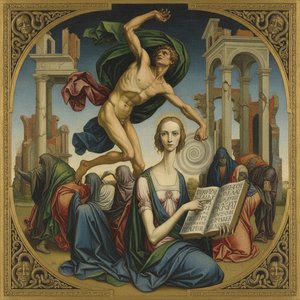
Beyond Perfection: The Dramatic Elegance and Intellectual Tension of Renaissance Mannerism
Explore the captivating world of Renaissance Mannerism. Discover how artists moved beyond High Renaissance harmony into a realm of elegant distortion, psychological tension, and dramatic beauty that bridged the gap to the Baroque era.

10 Iconic Masterpieces That Capture the Soul of Italy
Journey through Italy's soul with 10 iconic masterpieces. From Renaissance legends to romantic landscapes, explore the stories behind these timeless works. Find museum-quality art reproductions and curated decor inspiration at OriginalUniqueArt.com. Discover all masterpieces online.

10 Iconic Masterpieces That Capture the Magic of Italy
Journey through Italy's soul with 10 iconic masterpieces. From Renaissance classics to romantic landscapes, explore the stories behind these timeless works and find museum-quality art reproductions for your decor. Discover all masterpieces on OriginalUniqueArt.com.