
 設置イメージを表示
 シェアする
シェアする シェアする
シェアする
 詳細を見る
詳細を見る ガイドを表示

 ダウンロード
 似ている作品
 X線調査
X線調査 スライドショーを表示
 Q&A
Q&A 統計情報
統計情報Untitled (509)

 詳細を表示
詳細を表示
ジークレー/アートプリント
スピーディーな制作と多彩な仕上げオプションが魅力の、ミュージアムクオリティなジークレー・キャンバスプリント。 ( 手描き複製画を注文する デジタル画像販売へ切り替え)




P118B ¥10

P118H ¥10

P118W ¥10

P438Z ¥10

P508JH ¥12

P508YH ¥12

P805H ¥10

P805Z ¥10

P919BZ ¥10

P919G ¥10

P919XJ ¥10

P959ZH ¥10

P968JZ ¥12

W106C ¥8

W218G ¥10

W218JH ¥8

W218Y ¥10

W307PJ ¥10

W316G ¥10

W316PJ ¥8

W316Y ¥10

W398PJ ¥8

W4111J ¥10

W500HY ¥15

W500JH ¥15

W692G ¥12

W849H ¥8

W940BG ¥15

W953PJ ¥8




作品のオリジナル比率に合わせた、当店の規定サイズからお選びください。

額縁や壁のスペースに合わせて、ご希望の幅と高さを入力してください。プリントはカットすることは可能ですが、元の画像より大きくすることはできないため、異なる比率のサイズを選択された場合は、画像の一部が欠けることになります。印刷を開始する前に、内容を確認していただくためのデジタルモックアップをお送りいたします。このページに表示されている画像は、実際のカット後の状態を示すものではありません。実際の仕上がりはモックアップにてご確認ください。


 ガラスオプションは、110cm未満のサイズでのみご利用いただけます。

Untitled (509)
ジークレー/アートプリント
複製画サイズ一覧
-


合計金額
¥ 12810
作家プロフィール
A Life Immersed in History: The World of Évariste Vital Luminais
Évariste Vital Luminais, born in Nantes in 1821 and passing away in Paris in 1896, was a French painter who dedicated his life to vividly recreating the dramatic narratives of early French history. Often celebrated as “the Painter of the Gauls,” Luminais wasn’t merely illustrating the past; he was actively shaping its visual memory for a nation grappling with its identity in the wake of political upheaval. His lineage itself spoke to a deep engagement with French society – descended from a family steeped in parliamentary and legal tradition, his upbringing instilled within him a sense of national consciousness that would profoundly influence his artistic direction. The support of his family was crucial; recognizing his innate talent at a young age, they facilitated his move to Paris at the tender age of eighteen, setting him on a path toward formal training under the guidance of Auguste Debay, a painter and sculptor who laid the foundation for his technical skills. This initial education was further enriched by studies with Léon Cogniet, a master of historical and portraiture, and Constant Troyon, renowned for his evocative landscapes and animal paintings – a combination that would later manifest in Luminais’s ability to seamlessly blend detailed figure work with atmospheric settings.The Rise of the Painter of Gauls: Early Career & Influences
Luminais's artistic debut at the Paris Salon in 1843 marked the beginning of his public recognition, showcasing two paintings that immediately captured attention for their dynamic compositions and historical accuracy. He quickly established himself within the academic circles, consistently earning accolades with medals awarded at subsequent Salons in 1852, 1855, 1857, and 1861. However, it was his dedication to depicting the Gauls – the ancient Celtic tribes of France – that truly set him apart. This fascination wasn’t born from pure archaeological interest; rather, it coincided with a broader national movement in post-Napoleonic France to construct a heroic past, particularly one untainted by recent political failures. Historians were actively reinterpreting Gallic history, and Luminais became the visual interpreter of these new narratives. His paintings weren’t simply representations of battles or daily life; they were carefully crafted symbols intended to evoke a sense of national pride and resilience. He wasn't alone in this endeavor, but his commitment to portraying the Gauls with such fervor earned him the enduring moniker that would define his legacy. The influence of Romanticism is palpable in his early works – a dramatic use of light and shadow, emotionally charged scenes, and a focus on individual heroism all point to an artistic sensibility deeply rooted in the movement’s ideals.A Studio Divided: Paris & the Brenne Region
For over four decades, Luminais skillfully balanced his life between the bustling art scene of Paris and the tranquil countryside of Douadic, a village nestled within the Brenne region. His Parisian studio at 17 boulevard Lannes served as the hub for his large-scale historical compositions, while Douadic provided both inspiration and respite. The Brenne, recommended to him by friends Jules de Vorys and Louis Fombelle, offered a connection to nature that subtly infused his work with a sense of authenticity. This duality – the intellectual rigor of the city versus the raw beauty of the countryside – is reflected in his paintings, which often feature meticulously researched historical details set against evocative landscapes. Luminais was also a dedicated teacher, and remarkably open-minded for an academic painter of his time. He welcomed women into his studio as pupils, including Albert Maignan and Emily Sartain, challenging the conventions of the art world and fostering a new generation of artists. His willingness to share his knowledge underscores a commitment to artistic growth that extended beyond his own personal success.Themes & Techniques: Beyond the Battlefield
While Luminais is best known for his depictions of Gallic warriors clashing with Roman legions, his oeuvre extends far beyond these dramatic battle scenes. He explored themes of everyday life in early France – hunting expeditions, peasant rituals, and moments of quiet contemplation. His technique was characterized by a masterful command of color, light, and composition. He employed a rich palette, often using muted tones to create a sense of atmosphere and realism. His figures are rendered with meticulous detail, showcasing his skill as a draftsman and his dedication to historical accuracy. However, he wasn’t simply striving for photographic precision; Luminais understood the power of symbolism and used it strategically throughout his work. Paintings like *The Widow* (1865) foreshadowed elements of social realism, hinting at the hardships faced by ordinary people – a departure from the purely heroic narratives that dominated much of his earlier work. He skillfully integrated historical costumes and weaponry into scenes of rural life, making them more palatable to an Academy accustomed to grand historical themes.Legacy & Historical Significance: Shaping a National Narrative
Évariste Vital Luminais died in Paris in 1896 at the age of seventy-five, leaving behind a body of work that continues to captivate and inspire. Buried in the small cemetery of Douadic, his legacy extends far beyond the confines of art history. He was awarded the Légion d'honneur in 1869 and became a founding member of the Société des Artistes Français, solidifying his position as a leading figure within the French artistic establishment. More importantly, Luminais played a crucial role in shaping France’s visual understanding of its own past. His paintings weren’t simply historical documents; they were carefully constructed narratives designed to evoke national pride and resilience during a period of political uncertainty. He helped popularize the image of the Gauls as fierce warriors – an image that continues to resonate within French culture today. While later critics sometimes condemned his work for its academic style, Luminais’s dedication to historical accuracy, masterful technique, and profound understanding of symbolism ensure his place as a significant figure in 19th-century French painting—a true “Painter of the Gauls” who helped define a nation's identity through art.
Évariste Vital Luminais
1821 - 1896
プロフィール概要
- Full Name: Évariste Vital Luminais
- Nationality: French
- Date Of Birth: 1821
- Date Of Death: 1896
- Place Of Birth: Nantes, France
- Notable Artworks:
- Première Pensée pour les Énervés de Jumièges
- GAULOIS Revenant de la Chasse
- Artistic Movement Or Style: Historical Painting
- Artists Who Influenced This Artist:
- Auguste Debay
- Léon Cogniet
- Artists Or Movements Influenced By This Artist: ['Impressionism']
関連記事
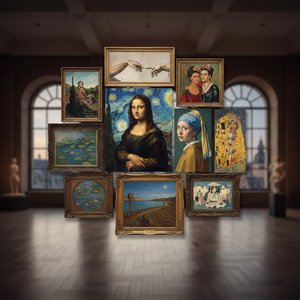
Oil on Canvas Masters: 10 Paintings That Redefined Art History |
Journey through art history with our guide to 10 legendary oil on canvas masterpieces! Explore iconic works by Van Gogh, Monet & Rembrandt. Find museum-quality reproductions and elevate your home decor at . Discover all masterpieces online.

The Enduring Legacy of Oil on Canvas: Technique, History & Aesthetic Impact
Explore the rich history & techniques of oil painting – from Renaissance masters to Impressionism. Discover pigments, layering methods, and why this timeless medium endures. Expert insights for artists & art enthusiasts.

Oil on Canvas: A Historical & Technical Exploration of a Timeless Artistic Medium
Explore the rich history & enduring techniques of oil painting on canvas. Discover the science behind its longevity, conservation practices, and contemporary relevance. Expert insights for art enthusiasts.

油彩のキャンバス:技法、歴史、そして現代の実践 - 古典美術愛好家へ
油彩の技法、歴史、巨匠たちの秘密を徹底解説。古典美術愛好家向けに、初期フランドル絵画から現代の実践まで深く掘り下げます。OriginalUniqueArtで高品質な複製画やカスタムオーダーも承ります。

The Soul of Impressionism: Why Oil on Canvas Captures Eternal Light and Timeless Emotion
Discover the enchanting alchemy of Impressionism. Explore how the mastery of oil on canvas, through glazing and impasto, captures eternal light and emotion. Perfect for lovers of Monet and Van Gogh seeking the profound depth of hand-painted fine art.