

 設置イメージを確認
 送る
送る シェア
シェア
 詳細情報
詳細情報 ガイドを表示

 画像をダウンロード
 似ている作品
 X線調査
X線調査 スライドショー
 統計情報
統計情報Ferry Boat (detail)


 続きを読む
続きを読む
ジークレー/アートプリント
スピーディーな制作と多彩な仕上げオプションが魅力の、ミュージアムクオリティなジークレー・キャンバスプリント。 ( 手描きの複製画を注文する デジタル画像販売へ切り替え)




P118B $10

P118H $10

P118W $10

P438Z $10

P508JH $12

P508YH $12

P805H $10

P805Z $10

P919BZ $10

P919G $10

P919XJ $10

P959ZH $10

P968JZ $12

W106C $8

W218G $10

W218JH $8

W218Y $10

W307PJ $10

W316G $10

W316PJ $8

W316Y $10

W398PJ $8

W4111J $10

W500HY $15

W500JH $15

W692G $12

W849H $8

W940BG $15

W953PJ $8




作品のオリジナル比率に合わせた、当店の規定サイズからお選びください。

特定のフレームやスペースに合わせて、ご自身でサイズを指定することも可能です。選択されたサイズが元の画像の比率と一致しない場合、作品をトリミングするか、鏡面反射または単色での塗りつぶしによって画像を拡張いたします。制作を開始する前に、ご確認用のデジタルモックアップをお送りいたします。
画面上のプレビューには、実際のトリミングや拡張は反映されませんのでご注意ください。最終的な構図を正確に確認できるのは、モックアップのみとなります。
カスタムサイズも承っておりますが、元の比率を維持するためには、あらかじめ用意されたリストからサイズを選択することをお勧めいたします。


 ガラスオプションは、110cm未満のサイズでのみご利用いただけます。

Ferry Boat (detail)
ジークレー/アートプリント
複製画サイズ一覧
-


合計金額
$ 80
The Serene Passage: Esaias van de Velde’s “Ferry Boat” (1622)
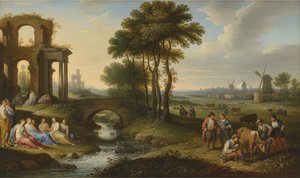
Esaias van de Velde's "Ferry Boat," painted in 1622, is more than a simple depiction of a river crossing; it’s a masterful distillation of the Dutch Golden Age’s fascination with light, landscape, and the quiet dignity of everyday life. This intimate scene, now housed within the Rijksmuseum in Amsterdam, offers a rare glimpse into a world where the rhythms of nature and human activity intertwine seamlessly. Van de Velde, deeply influenced by his father, Hans van de Velde, and later Gillis van Coninxloo – both renowned landscape painters – expertly captures the fleeting beauty of a rural waterway, imbuing it with an atmosphere of profound peace and understated drama.
The painting’s composition is deceptively simple. A small ferry boat, laden with passengers, navigates a gently flowing river, its journey framed by the verdant banks and distant hills. The artist employs a low vantage point, drawing the viewer into this intimate tableau as if we are standing on the shore ourselves, observing the scene unfold before us. The arrangement of elements – the boats, the figures, the trees – creates a harmonious balance, reflecting the Dutch ideal of *symmetrie* and order, yet simultaneously conveying a sense of natural spontaneity.
A Window into 17th-Century Dutch Life
To fully appreciate “Ferry Boat,” it’s essential to understand the context in which it was created. The early 17th century marked a period of immense prosperity and artistic flourishing for the Netherlands, fueled by burgeoning trade and a newfound sense of independence. Landscape painting, previously considered a minor genre, began to gain prominence as artists sought to capture the beauty of their homeland – a landscape shaped by canals, meadows, and rolling hills. Van de Velde’s work exemplifies this shift, moving beyond mere topographical representation to explore the emotional resonance of the natural world.
The scene itself offers clues about daily life in rural Holland. The ferry boat likely served as a vital link between communities, transporting people and goods along the waterways. The figures on board – a mix of men, women, and children – represent a diverse cross-section of society, engaged in simple activities: some chatting animatedly, others gazing out at the scenery. These details invite us to imagine the stories behind each individual, adding layers of narrative depth to the painting.
Technique and Artistic Style
Van de Velde’s technical skill is immediately apparent in his masterful rendering of light and shadow. He employs a subtle yet effective use of *chiaroscuro* – the contrast between light and dark – to create a sense of depth and volume, bringing the landscape to life with remarkable realism. The artist's brushwork is loose and expressive, capturing the texture of the water, the foliage, and the clothing worn by the figures. The use of muted earth tones—greens, browns, and blues—evokes the natural palette of the Dutch countryside.
Notably, Van de Velde’s style evolved over time, influenced by his exposure to the work of Adam Elsheimer in Haarlem. This influence led him to adopt a more realistic approach, moving away from the highly stylized forms of earlier Netherlandish painters and embracing a greater emphasis on atmospheric perspective and naturalistic detail. The painting's composition is triangular, with the ferry boat as its apex, creating a sense of stability and balance.
Symbolism and Emotional Resonance
Beyond its technical merits, “Ferry Boat” possesses a quiet emotional resonance that continues to captivate viewers today. The scene evokes a feeling of tranquility and serenity, inviting us to pause and appreciate the simple pleasures of life. The gentle flow of the river, the warmth of the sunlight, and the camaraderie among the passengers all contribute to this sense of peacefulness.
Furthermore, the painting can be interpreted as a meditation on the passage of time and the interconnectedness of human existence. The ferry boat represents a journey – both literal and metaphorical – connecting people and places. The scene’s timeless quality suggests that the themes it explores—the beauty of nature, the importance of community, and the inevitability of change—remain relevant to us today.
A Timeless Masterpiece
Esaias van de Velde's “Ferry Boat” is a testament to the enduring power of landscape painting. It’s a work that rewards careful observation and invites contemplation, offering a glimpse into the heart of 17th-century Dutch life. Whether viewed as a historical document, an artistic masterpiece, or simply a beautiful image, this painting continues to resonate with viewers across generations, reminding us of the timeless beauty of the natural world.
アーティストについて
エサイアス・ファン・デ・フェルデ:オランダ風景画の巨匠
エサイアス・ファン・デ・フェルデ(1587年5月17日 – 1630年11月18日)は、オランダ黄金時代における風景画の発展において、極めて重要な役割を果たした人物です。アムステルダムに生まれた彼の芸術的系譜は、父ハンス・ファン・デ・ペルデへと遡ります。父は16世紀後半の宗教的動乱を逃れ、フランドルからオランダへと身を寄せたプロテスタントの避難民でした。このフランドルの伝統との家族的な繋がりは、エサイアスの初期の芸術教育に深い影響を与えました。当初は父の下で、後にピーター・ブリューゲル(父)の作品に強い影響を受けた風景画家ギリス・ファン・コンインクスローの下で学んだのです。こうした多様な芸術的潮流が交差する環境で育まれたことが、キャンバス上に自然界を描き出す可能性を再定義することとなる、彼の独創的なスタイルの礎となりました。初期の受容とハールレムの芸術的情景
ファン・デ・フェルデのキャリアは、1610年から1618年にかけて、芸術と商業の活気あふれる中心地であったハールレムから始まりました。この時期は、彼の芸術的進化にとって決定的なものとなりました。1612年には、ヘラクレス・セガースと共に名高いハールレムの聖ルカ・ギルドに加入しましたが、この出来事は、その地域における風景画の捉え方に大きな転換をもたらしました。それまで風景画は、しばしば装飾的な役割を担う二次的なジャンルと見なされていました。しかし、ファン・デ・フェルデの存在は、オランダ全土で見られた広範な潮流を反映するように、風景画を尊敬に値する独立した芸術的カテゴリーへと昇華させたのです。特筆すべきは、劇的な光の演出や大気の表現で知られるドイツの画家アダム・エルスハイマーから受けた影響です。これにより、彼は師匠の硬直した慣習から脱却し、低い視点(ロー・ビューポイント)を採用するようになりました。この技法は、目の前に広がる情景に対して、鑑賞者に広大で、まるで没入するかのような感覚を与えるものとなりました。この意図的な選択と、三角形の構図構造が組み合わされることで、彼の代名詞とも言える独特なスタイルが確立されたのです。風俗画と軍事画:広がりゆく芸術の地平
風景画の旗手として主に称賛されている一方で、ファン・デ・フェルデの芸術的レパートリーは純粋な自然主義の枠を超えて広がっていました。彼は自身の作品群の中に、日常の営みを描いた風俗画や軍事画を巧みに取り入れました。これらの作品には、鋭い観察眼と、田園地帯や都市部における人間活動のダイナミズムやドラマを捉える能力が示されています。例えば、彼の代表作の一つである『荷馬車の待ち伏せ』(1618年頃)は、その多才さを象徴しており、風景画としての卓越した技術だけでなく、躍動感あふれる物語を細部まで描き出す才能を見事に提示しています。こうした多様な主題は、人間が経験するあらゆる複雑な営みを表現することに、迷いなく挑んだ画家としての姿を浮き彫りにしています。宮廷画家としての地位と芸術的遺産
晩年、ファン・デ・フェルデはハーグにおいて、モーリッツ公およびフリードリヒ・ヘンリー公の宮廷画家という名誉ある地位を確立しました。この任命は彼の名声を不動のものとし、精緻な戦闘シーンや儀式的な場面の制作など、より幅広い依頼を受ける機会をもたらしました。この時期の作品には、細部への執拗なまでのこだわり、繊細な色彩設計、そして光と影に対するますます洗練された理解といった、磨き上げられた芸術的感性が反映されています。また、ローラント・サーヴェリやヤン・ファン・デ・フェルデの影響も受けており、一族の芸術的伝統の中に明確な系譜を示しています。弟子たちと永劫に続く影響力
エサイアス・ファン・デ・フェルデの影響は、彼自身の創作活動に留まりませんでした。彼はピーテル・ファン・ラー、ヤン・マルツェン・デ・ヨンゲ、アントニー・ファン・デ・フェルデ(二世)といった、将来有望な若き芸術家たちのメンターとしての役割を果たしました。彼の影は、パラメデス・パラメデス、ニコラエス・デ・クアデ・ファン・ラヴェステイン、アドリアーン・アドリアエンス・ギボンスらの作品の中にも見て取ることができ、彼らはエサイアスのスタイルや構図技法の要素を継承していきました。さらに、彼はヤン・ファン・デ・フェルデの従兄弟でもあり、一族の芸術的遺産にさらなる深みを与えました。1630年、ハーグにおけるエサイアスの死は一つの時代の終焉を告げましたが、オランダ風景画への彼の貢献は極めて重要であり続け、ジャンルの進展を決定づけ、後世の世代にインスピレーションを与え続けました。その作品は、写実性、劇的な光の演出、そして自然界の情緒豊かな描写において、今なお人々を魅了して止みません。
エサイアス・ファン・デ・フェルデ
1587 - 1630 , オランダ
アーティスト情報
- Artistic Movement Or Style: ハールレム派、風景画
- Artists Or Movements Influenced By This Artist:
- パラメデス・パラメデズ
- ヤン・マルツェン・デ・ヨンゲ
- Artists Who Influenced This Artist:
- アダム・エルスハイマー
- ローラント・サヴェリ
- Date Of Birth: 1587-05-17 (洗礼)
- Date Of Death: 1630-11-18
- Full Name: エサイアス・ファン・デ・フェルデ
- Nationality: オランダ
- Notable Artworks:
- 冬の風景
- 待ち伏せ
- 強盗
- Place Of Birth: オランダ、アムステルダム
関連記事

Jan van Goyen: Master of Dutch Landscape & Atmospheric Perspective
Discover Jan van Goyen, the master of Dutch landscape painting. Explore his subtle technique, atmospheric realism & lasting influence on art history. Learn about this 17th-century pioneer at OriginalUniqueArt.

Willem van de Velde the Elder: Master of Maritime Painting & Chronicler of the Dutch Golden Age
Discover the captivating maritime paintings of Willem van de Velde the Elder, a master chronicler of the Dutch Golden Age. Explore his unparalleled realism and lasting influence on naval art history.
Cornelis van Poelenburch: Bridging Mannerism & the Dutch Baroque Landscape
Discover Cornelis van Poelenburch, a pivotal Dutch Baroque landscape painter bridging Mannerism & Italianate styles. Explore his life, key works, and lasting influence on 17th-century art with OriginalUniqueArt.

レンブラント傑作25選:光と影の巨匠、魂を揺さぶる名画の世界 | OriginalUniqueArt
レンブラントの傑作25選。光と影の魔術師が描いた魂を揺さぶる名画の世界へ。美術史に残る自画像、夜警、宗教画…OriginalUniqueArtで高品質なアートプリントやインテリアアートをお楽しみください。コレクションはこちら→

ゴヤ傑作25選:スペインの魂を揺さぶる、深遠な芸術の世界 | OriginalUniqueArt
ゴヤ傑作25選:ロマン主義を代表するスペインの巨匠、フランシスコ・デ・ゴヤの世界へ。黒衣の女からマハまで、魂を揺さぶる絵画の物語と技法を紐解きます。OriginalUniqueArtで高品質なアートレプリカを見つけ、インテリアに深みと風格を。今すぐコレクションをご覧ください。