() ·

A painting made for you, by hand

Dr. Alfred Döblin

手描き油彩複製画

当社のアーティストが、お客様のご希望のサイズと額縁に合わせて、キャンバスに手描きで制作する油彩画です。 ( プリント版に切り替え デジタル画像販売へ切り替え)

コレクション詳細

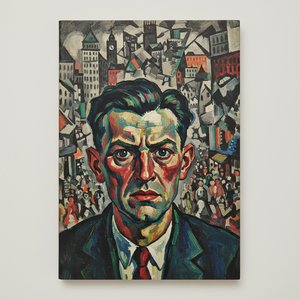
“Dr. Alfred Döblin” by Ernst Ludwig Kirchner captures Berlin’s anxieties through bold colors and fractured forms, reflecting Expressionist ideals and the artist's engagement with African art.

アーティストプロフィール

キルヒナー(1880-1938)は、ドイツ表現主義を代表する画家。「Die Brücke」の創設者として都市生活や人物を大胆な色彩と筆致で描き出しました。ベルリンの街並みやヌード像など、初期現代美術における力強い表現が魅力です。

from ·

Chapter 1

How large should it be?

Slide to change the size; the picture on the left shows the frame at its real width. The proportions of the original are kept.

標準サイズ
カスタムサイズ
CM
INCH

作品のオリジナル比率に合わせた、当店の規定サイズからお選びください。

横幅
高さ

フレームや壁のスペースに合わせて、ご希望の幅と高さを入力してください。本作品は手描きのため、異なる比率のサイズをご希望の場合、絵画の周囲を少し広げて描くか、あるいは端を少しカットして調整することが可能です。お客様のご要望に合わせます。制作を開始する前に、仕上がりを確認するためのデジタルモックアップをお送りいたします。このページに表示されている画像は完成品の実物ではなく、あくまでモックアップによるイメージです。

Chapter 2

How should it arrive?

Choose the edges of the stretched canvas

Choose your frame

Corner sample of the WhiteWrap canvas edge finish, stretched on 天然木 bars
White ¥1
Corner sample of the BlurSideWrap canvas edge finish, stretched on 天然木 bars
Blurside ¥1
Corner sample of the ExtendedWrap canvas edge finish, stretched on 天然木 bars
Extended ¥1
Corner sample of the P118B picture frame: 成型ポリスチレン, 5 cm wide and 3 cm thick
P118B ¥10
Corner sample of the P118H picture frame: 成型ポリスチレン, 5 cm wide and 3 cm thick
P118H ¥10
Corner sample of the P118W picture frame: 成型ポリスチレン, 5 cm wide and 3 cm thick
P118W ¥10
Corner sample of the P438Z picture frame: 成型ポリスチレン, 5.5 cm wide and 3.5 cm thick
P438Z ¥10
Corner sample of the P508JH picture frame: 成型ポリスチレン, 7 cm wide and 3.5 cm thick
P508JH ¥12
Corner sample of the P508YH picture frame: 成型ポリスチレン, 7 cm wide and 3.5 cm thick
P508YH ¥12
Corner sample of the P805H picture frame: 成型ポリスチレン, 5 cm wide and 3.5 cm thick
P805H ¥10
Corner sample of the P805Z picture frame: 成型ポリスチレン, 5 cm wide and 3.5 cm thick
P805Z ¥10
Corner sample of the P919BZ picture frame: 成型ポリスチレン, 7 cm wide and 3.5 cm thick
P919BZ ¥10
Corner sample of the P919G picture frame: 成型ポリスチレン, 7 cm wide and 3.5 cm thick
P919G ¥10
Corner sample of the P919XJ picture frame: 成型ポリスチレン, 7 cm wide and 3.5 cm thick
P919XJ ¥10
Corner sample of the P959ZH picture frame: 成型ポリスチレン, 5 cm wide and 3 cm thick
P959ZH ¥10
Corner sample of the P968JZ picture frame: 成型ポリスチレン, 6 cm wide and 4 cm thick
P968JZ ¥12
Corner sample of the W106C picture frame: 天然木, 5 cm wide and 3 cm thick
W106C ¥8
Corner sample of the W218G picture frame: 天然木, 5 cm wide and 3 cm thick
W218G ¥10
Corner sample of the W218JH picture frame: 天然木, 5 cm wide and 3 cm thick
W218JH ¥8
Corner sample of the W218Y picture frame: 天然木, 5 cm wide and 3 cm thick
W218Y ¥10
Corner sample of the W307PJ picture frame: 天然木, 6 cm wide and 3 cm thick
W307PJ ¥10
Corner sample of the W316G picture frame: 天然木, 6 cm wide and 3 cm thick
W316G ¥10
Corner sample of the W316PJ picture frame: 天然木, 6 cm wide and 3 cm thick
W316PJ ¥8
Corner sample of the W316Y picture frame: 天然木, 6 cm wide and 3 cm thick
W316Y ¥10
Corner sample of the W398PJ picture frame: 天然木, 5 cm wide and 3 cm thick
W398PJ ¥8
Corner sample of the W4111J picture frame: 天然木, 6.5 cm wide and 3.5 cm thick
W4111J ¥10
Corner sample of the W500HY picture frame: 天然木, 7 cm wide and 5 cm thick
W500HY ¥15
Corner sample of the W500JH picture frame: 天然木, 7 cm wide and 5 cm thick
W500JH ¥15
Corner sample of the W692G picture frame: 天然木, 8 cm wide and 4 cm thick
W692G ¥12
Corner sample of the W849H picture frame: 天然木, 5 cm wide and 3 cm thick
W849H ¥8
Corner sample of the W940BG picture frame: 天然木, 7.5 cm wide and 4.5 cm thick
W940BG ¥15
Corner sample of the W953PJ picture frame: 天然木, 6 cm wide and 3.5 cm thick
W953PJ ¥8
Corner sample of the H24-GOLD picture frame: ジェッソ仕上げの木彫, 10 cm wide and 6 cm thick
H24-GOLD ¥30
Corner sample of the H24-SILVER picture frame: ジェッソ仕上げの木彫, 10 cm wide and 6 cm thick
H24-SILVER ¥30
Corner sample of the H36-GOLD picture frame: ジェッソ仕上げの木彫, 15 cm wide and 6.5 cm thick
H36-GOLD ¥45
Corner sample of the H36-SILVER picture frame: ジェッソ仕上げの木彫, 15 cm wide and 6.5 cm thick
H36-SILVER ¥45
額縁プレビュー
額装済み

Moulding: . Overall size with the frame: .

Chapter 3

Who paints it, and should anything change?

Examples of what can be changed: Replace face with customer photo; Add pet (e.g., replace cat with dog); Include hidden message in background; Change background landscape or elements.
After order, OriginalUniqueArt.com team will email client for instructions and provide a mockup preview

世界中への配送()は、通常の5週間ではなく、3〜4週間でお届けいたします。(1 11月)。品質には一切妥協いたしません。

Chapter 4

The finishing touches

A nameplate, as in a museum?

刻印入りブロンズプレートの詳細

This elegant plaque features the artist's name and the title of the artwork, finely engraved for a timeless presentation.

It is made from bronze with a refined, elegant finish. The text is precisely laser-engraved for a sharp and permanent result. Measuring 9x2 cm, the plaque is compact yet easy to read. It's built to be durable and scratch-resistant, offering a professional, museum-quality look. Mounting is simple thanks to the included adhesive backing.

透明アクリル銘板の詳細

The plaque includes essential engraved details such as the artist's name, the title of the artwork, the date it was created, the type of media used-like oil on canvas or watercolor-a brief description of the piece, and a QR code that links to the complete artwork information.

It is crafted from clear acrylic, offering a sleek, modern appearance. The text is UV-engraved in black to ensure strong visual contrast. With a size of 10x15 cm, it ensures optimal readability. It comes equipped with two metal hooks for secure wall mounting. The plaque is designed to be weather-resistant, making it suitable for various environments, and it includes interactive features that work seamlessly with smartphone scanning.

黒アクリル製銘板の詳細

This elegant plaque includes engraved information such as the artist's name, the title of the artwork, the date it was created, the type of media used (like oil on canvas or watercolor), a short description of the artwork, and a QR code for quick access to more information.

The plaque itself is made from refined black acrylic with a premium finish. The text is laser-engraved in white for high contrast and readability. Its size is 10x15 cm, designed to be easy to read. It comes with two metal hooks for professional mounting. The design is sleek and fits any interior style. It is also weather-resistant and durable, with built-in digital integration for mobile compatibility.

A protective varnish?

When do you need it?

Chapter 5

Your painting, as you ordered it

Dr. Alfred Döblin

再現技法

複製画サイズ一覧

-

厳選された熟練アーティスト

より細部までこだわった表現、洗練された技術、そして十分な制作時間

-

複製画用額装

-

-

いずれかの辺が105 cm(約41インチ)を超えるアートワークまたは複製画の場合、フレームは分解されたキットの状態でお届けいたします。この方法は、輸送中の破損を防ぎ、安全に配送するために採用しております。

組み立てには専門知識が必要です(DIY用製品ではありません)。
本キットは、経験豊富なプロの額装師が、木工用ボンド(別売)、キャンバス用プライヤー、およびボンドの乾燥時に桟を直角に保持するためのクランプを使用して、組み立ておよびキャンバスの張り作業を行う必要があります。不適切な組み立てやキャンバスの張りの不均一は、作品に永久的な損傷を与える恐れがあり、弊社の保証対象外となります。

  • すべての無垢材のパーツが含まれており、組み立てに最適なサイズに正確にカットされています。

  • 付属のネジを使用し、角の接合部には別途木工用ボンドをご用意ください(ボンドは付属しておりません)。ボンドは額装業者様にてご手配をお願いいたします。

  • プロ仕様の道具が必要ですが、キットには含まれていません:キャンバス用ストレッチングプライヤー(テンショナー)、および接着剤が乾燥するまで木枠を直角に固定するためのクランプ。

重要:
コーナーの接合部には木工用ボンドが必要です。また、ボンドが完全に乾くまでクランプでバーを固定しておく必要があり、組み立てたフレームにキャンバスを張るにはキャンバス用ストレッチングプライヤーが必要となります。これらの道具はキットに含まれておりません。このサイズをご注文される前に、経験豊富なプロの額装師(フライマー)の手配をお願いいたします。

銘板

-

-

保護用ワニス

光沢ワニス(色彩を鮮やかに引き立て、光や湿気から保護します)

-

作品をカスタマイズ

カスタマイズの例:顔をお客様の写真に差し替える、ペットを追加する(例:猫を犬に変更)、背景に隠しメッセージを入れる、背景の風景や要素を変更する。

-

お急ぎ便

世界中への配送()は、通常の5週間ではなく、3〜4週間でお届けいたします。(1 11月)。品質には一切の妥協を許しません。

-

お急ぎ便

世界中への配送()は、5週間ほどでお届けします。(8 11月)。

送料込

合計金額

¥ 47346

合計金額 ¥ 47346

ガラスオプションは、110cm未満のサイズでのみご利用いただけます。

Included with every order

  • 世界中へ無料エクスプレス配送
  • 高品質なリネンキャンバス
  • 配送時完全保険付
  • 関税・輸入税の払い戻し保証
  • 忠実な色彩再現の保証
  • 100日間返品保証(製造上の欠陥がある場合のみ)
  • 100% 全額返金保証
  • まとめ買い割引のご案内

A Portrait of Urban Anxiety: Dr. Alfred Döblin by Ernst Ludwig Kirchner

Ernst Ludwig Kirchner’s “Dr. Alfred Döblin,” painted in 1912, isn't merely a likeness; it’s a visceral embodiment of the anxieties simmering beneath the surface of early 20th-century Berlin. This oil on canvas, measuring just over 50 by 41 centimeters, housed within the Fogg Art Museum in Cambridge, offers a profound glimpse into the artist’s Expressionist vision and the turbulent intellectual landscape of its time. Kirchner, a founding member of Die Brücke (The Bridge) group, sought to capture not just appearances but the raw emotional currents shaping modern life – a pursuit powerfully realized in this arresting portrait.

Kirchner's style is immediately recognizable: bold, fractured forms and an intense palette dominate the composition. The figure of Döblin, a prominent German writer and physician, is rendered with a deliberate distortion, his features elongated and simplified into geometric shapes. His gaze, direct and unwavering, pierces through the viewer, creating an immediate connection—and perhaps a subtle unease. The background isn’t a simple backdrop; it's a swirling vortex of blues, purples, and greens – colors often associated with melancholy, introspection, and the disorientation of urban existence. These hues aren’t blended smoothly; instead, Kirchner employs thick, visible brushstrokes that contribute to the painting’s dynamic energy.

The Echoes of Berlin: Context and Influences

To understand “Dr. Alfred Döblin,” one must consider the context in which it was created. 1912 Berlin was a city undergoing rapid transformation – an explosion of industry, immigration, and social upheaval. Kirchner, deeply affected by this dynamism, sought to portray its unsettling effects on the human psyche. The painting reflects the growing sense of alienation and fragmentation experienced by many during this period. Kirchner’s work was profoundly influenced by African and Oceanic art, particularly the use of simplified forms and symbolic color palettes. He also drew inspiration from the avant-garde movements emerging in Europe at the time, embracing a rejection of academic tradition in favor of subjective expression.

Furthermore, the portrait is inextricably linked to the intellectual world of Berlin. Döblin himself was a key figure in this milieu, known for his innovative and often challenging novels that explored themes of modernity, alienation, and the subconscious. Kirchner’s portrayal captures not just Döblin's physical appearance but also something of his intellectual intensity – a sense of being both deeply engaged with and profoundly troubled by the complexities of the modern world.

Symbolism and Emotional Resonance

Beyond its formal elements, “Dr. Alfred Döblin” is rich in symbolic meaning. The doctor’s spectacles, prominently displayed, represent his profession—a symbol of reason and order attempting to navigate a chaotic reality. However, the intensity of his gaze suggests that this rational approach is insufficient to fully comprehend the anxieties he observes. The swirling background can be interpreted as a metaphor for the overwhelming forces shaping modern life – industrialization, urbanization, and the breakdown of traditional values. The painting’s emotional impact is undeniably powerful; it evokes a sense of unease, isolation, and perhaps even despair.

Kirchner masterfully uses color to amplify these emotions. The cool blues and purples contribute to a feeling of melancholy and introspection, while the flashes of brighter hues—particularly in Döblin’s eyes—suggest a flicker of defiance or resistance against this encroaching darkness. The directness of the subject's gaze compels the viewer to confront their own anxieties about the modern world, making “Dr. Alfred Döblin” a timeless and profoundly moving work of art.

A Legacy in Reproduction: Bringing Kirchner’s Vision Home

High-quality reproductions of "Dr. Alfred Döblin" are now available through OriginalUniqueArt.com, meticulously crafted to capture the essence of Kirchner's original masterpiece. Utilizing archival-grade materials and employing traditional oil painting techniques, these reproductions faithfully recreate the artist’s bold brushstrokes, vibrant colors, and evocative symbolism. Whether adorning a contemporary living space or serving as a striking addition to an art collection, this reproduction offers a tangible connection to one of the most significant figures in Expressionist art – a poignant reminder of the anxieties and complexities of modern life.

For further insights into Ernst Ludwig Kirchner and his artistic journey, we invite you to explore our website at https://OriginalUniqueArt.com or delve deeper into his biography on Wikipedia: https://en.wikipedia.org/wiki/Ernst_Ludwig_Kirchner.

よくあるご質問

「Dr. Alfred Döblin」の色彩は、どの程度鮮やかですか?

「Dr. Alfred Döblin」のパレットは、彩度がClear Color Presenceです。

「Dr. Alfred Döblin」の閲覧数はどのくらいですか?

エルンスト・リュドヴィヒ・キルヒナー作「Dr. Alfred Döblin」の統計情報ページでは、公開されている閲覧統計をご覧いただけます。この作品の月間閲覧数、アーティストのなかで最も閲覧されている作品との比較、そして訪問者の地域情報などが掲載されています。

エルンスト・リュドヴィヒ・キルヒナー作「Dr. Alfred Döblin」は、作家の母国に保管されていますか?

いいえ、作品は国外に保管されています。「Dr. Alfred Döblin」はアメリカ合衆国に所蔵されていますが、エルンスト・リュドヴィヒ・キルヒナーの出生地はドイツです。

More about this painting

設置イメージを確認 ARで壁に飾るイメージを見る プリント版に切り替え デジタル画像販売へ切り替え 送る
詳細情報 ガイドを表示 お気に入りに追加 画像をダウンロード 似ている作品 X線調査 スライドショー Q&A 統計情報

In numbers

  • 1912the year it was painted
  • 29frames to choose from
  • standard sizes, in its own proportions
  • 5weeks to paint and deliver it

Quick facts about エルンスト・リュドヴィヒ・キルヒナー

  • Artistic Movement Or Style: 表現主義
  • Artists Who Influenced This Artist:
    • アルブレヒト・デューラー
    • ゴッホ
    • モナハン
  • Date Of Birth: 5月6日1880年
  • Date Of Death: 6月15日1938年
  • Full Name: Ernst Ludwig Kirchner
  • Nationality: ドイツ人
  • Notable Artworks:
    • ストリート(1908)
    • 躍動するダンサー(1912)
    • 自画像(1910)
    • 五人の女性
  • Place Of Birth: アッシャーフェンブルク、ドイツ

アーティストについて

Ernst Ludwig Kirchner (1880-1938): Eine Lebensgeschichte geprägt von Ausdrucksstärke

Ernst Ludwig Kirchner, ein Name, der für sich genommen mit der ungezügelten emotionalen Kraft des deutschen Expressionismus verbunden ist und dessen Werk bis heute Künstler weltweit inspiriert. Geboren im Jahr 1880 in Aschaffenburg, Bayern, begann sein Leben inmitten einer Welt, die sich einem dramatischen Wandel näherte – eine Welt, deren Veränderungen tiefgreifend seine künstlerische Entwicklung prägten. Seine Kindheit wurde von den wechselnden Landschaftsbildern seines Vaterhauses geprägt, wobei dessen Beruf ihm ein Gefühl der Entwurzelung vermittelte, das später in seinen Gemälden zum Ausdruck kam. Von Frankfurt nach Perlen und schließlich nach Chemnitz zog sich Kirchner zurück und nahm die zunehmende Beschleunigung des modernen Deutschlands auf – eine Zeit großer gesellschaftlicher Umbrüche und künstlerischer Herausforderungen. Obwohl zunächst für Architektur am Königlichen Technischen Hochschule Dresden vorgesehen, fand sein Herz für die Malerei wieder und wurde von der Bewunderung für Meister wie Albrecht Dürer und einer wachsenden Ablehnung akademischer Konvention geprägt. Er fand Gleichgesinnte unter Künstlern wie Fritz Bleyl, Karl Schmidt-Rottluff und Erich Heckel und gründete damit eine Gemeinschaft, die entscheidend zur Entwicklung des Expressionismus im frühen 20. Jahrhundert beitrug.

Die Geburt eines Ausdrucksstarken Künstlers: Jugend und Ausbildung

Kirchner wurde in einer Familie von Eltern unterschiedlicher sozialer Herkunft geboren – sein Vater war ein Chemiker und seine Mutter eine Nachfahrin der Hugenotten. Diese Verbindung prägte seinen Blick auf die Welt und beeinflusste seine künstlerische Entwicklung maßgeblich. Seine frühe Bildung fand im renommierten Gymnasium Chemnitz statt, wo er sich intensiv mit Kunstgeschichte und Philosophie beschäftigte. Bereits in jungen Jahren zeigte Kirchner ein außergewöhnliches Talent für Zeichnung und Darstellung – Fähigkeiten, die ihm auch später zugute kamen und ihn zu einem Meister seines Fachs führten. Sein Interesse an Architektur blieb bestehen und führte ihn zum Studium am Königlichen Technischen Hochschule Dresden, wo er eine umfassende Ausbildung erhielt und Kontakte zu anderen jungen Künstlern knüpfte. Diese Begegnungen mit Gleichgesinnerten waren entscheidend für die Entwicklung seiner künstlerischen Vision und inspirierten ihn zu neuen Experimenten und Ausdrucksformen. Besonders intensiv beschäftigte sich Kirchner mit der Natur und studierte insbesondere die Landschaftsbilder von Caspar David Friedrich, dessen Werke ihm eine besondere Bedeutung verliehen.

Die Gründung der Brücke: Eine Künstlergruppe im Zeichen der Rebellion

Im Jahr 1905 wurde Kirchner Mitglied der Künstlergruppe *Die Brücke* (“Die Brücke”), einem außergewöhnlichen Zusammenschluss von Künstlern, die sich dem Bruch mit den etablierten künstlerischen Traditionen und Idealen ihrer Zeit verschrieben hatten. Diese Gruppe setzte sich für eine neue Sichtweise auf Kunst und Gesellschaft ein und wollte die Grenzen des akademischen Ausdrucks überschreiten. Die Mitglieder von *Die Brücke* waren beeindruckt von der Kunst der primitiven Kulturen Afrikas und Ozeaniens sowie von den Farben und Formen von Künstlern wie Vincent van Gogh und Edvard Munch – Künstler, deren Werke ihnen eine besondere Inspiration gaben. Sie lehnten die idealisierte Darstellung von Schönheit ab und betonten stattdessen die Bedeutung von Emotionen und Ausdruckskraft in ihren Arbeiten. Kirchner und seine Kollegen gründeten damit eine Gemeinschaft, die nicht nur künstlerisch sondern auch gesellschaftlich revolutionär war und einen wichtigen Beitrag zur Entwicklung des Expressionismus leistete. Die Gruppe entwickelte ein einzigartiges künstlerisches Konzept und setzte sich für eine neue Ästhetik ein, die sich von den Regeln und Konventionen ihrer Zeit abhob.

Die Kunst der Brücke: Ausdrucksstarke Bilder einer neuen Welt

Kirchner konzentrierte seine künstlerische Tätigkeit hauptsächlich auf die Gestaltung von Gemälden und Druckgrafiken – insbesondere Holzstichen –, wobei er stets eine besondere Verbindung zur Natur und zum menschlichen Körper suchte. Seine Arbeiten zeichnen sich durch einen außergewöhnlich hohen Grad an Ausdruckskraft und Intensität aus und spiegeln die tiefgreifende Auseinandersetzung mit den Herausforderungen und Konflikten der modernen Welt wider. Er entwickelte eine eigene künstlerische Sprache, die sich von anderen Künstlern ihrer Zeit abhob und ihre Werke zu einem wichtigen Bestandteil des deutschen Expressionismus machte. Besonders beeindruckt waren Kirchner von der Kunst der primitiven Kulturen Afrikas und Ozeaniens sowie von den Farben und Formen von Künstlern wie Vincent van Gogh und Edvard Munch – Künstler, deren Werke ihm eine besondere Inspiration gaben. Er entwickelte eine eigene künstlerische Sprache, die sich von anderen Künstlern ihrer Zeit abhob und ihre Werke zu einem wichtigen Bestandteil des deutschen Expressionismus machte. Seine Bilder sind geprägt von einer besonderen Sensibilität für Licht und Farbe sowie von einer außergewöhnlichen Fähigkeit zur Darstellung menschlicher Emotionen und Zustände. Durch seine Verwendung von starken Kontrasten und dynamischen Bewegungen gelang es ihm, eine Atmosphäre von Spannung und Dramatik zu schaffen und gleichzeitig die Schönheit der Natur einzufangen.

Ein Künstler im Dienste der Zeit: Spätwerk und Vermächtnis

Kirchner setzte sein künstlerisches Leben fort und entwickelte sich zu einem Meister seines Fachs – ein Künstler, dessen Werk bis heute beeindruckt und inspiriert. Er gründete das MUIM Institut in Berlin zusammen mit Max Pechstein und engagierte sich aktiv für die Förderung junger Künstler und die Entwicklung neuer künstlerischer Ideen. Seine Werke wurden von zahlreichen Ausstellungen gefeiert und erhielten internationale Anerkennung – ein Zeichen dafür, dass sein künstlerisches Werk einen wichtigen Beitrag zur deutschen Kunstgeschichte leistete. Trotz persönlicher Schwierigkeiten und gesundheitlicher Probleme blieb Kirchner stets seinem künstlerischen Glauben treu und setzte sich für eine neue Sichtweise auf Kunst und Gesellschaft ein. Sein Leben wurde von einer tiefen Sehnsucht nach Authentizität und Einfachheit geprägt und seine Werke sind ein Ausdruck seiner außergewöhnlichen Sensibilität für die Schönheit der Natur sowie für die komplexen Herausforderungen des modernen Lebens. Ernst Ludwig Kirchner starb im Jahr 1938 in Davos, Schweiz und hinterließ damit ein beeindruckendes künstlerisches Erbe – ein Erbe, das bis heute Künstler weltweit inspiriert und erinnert. Seine Gemälde und Druckgrafiken sind Teil eines internationalen Kunstschatzes und tragen dazu bei, die Geschichte des deutschen Expressionismus zu erzählen und seine Bedeutung für die Entwicklung der modernen Kunst zu würdigen.

作品情報

  • Influences: African art
  • Movement: Expressionism
  • Artist: Ernst Ludwig Kirchner
  • Dimensions: 50.8 x 41.3 cm
  • Year: 1912
  • Title: Dr. Alfred Döblin

アート・クイズ

各質問の正解は1つだけです。

問題 1:
What artistic movement is most closely associated with Ernst Ludwig Kirchner’s ‘Dr. Alfred Döblin’?
問題 2:
In the painting, what is Dr. Döblin primarily depicted as doing?
問題 3:
Which of the following best describes the style of Kirchner’s brushstrokes in ‘Dr. Alfred Döblin’?
問題 4:
The painting ‘Dr. Alfred Döblin’ was created in which year?
問題 5:
Where is ‘Dr. Alfred Döblin’ currently housed?