
 プレビュー
プレビュー
 プリントを購入
 シェアする
シェアする シェアする
シェアする
 詳細を見る
詳細を見る

 ダウンロード
 似ている作品
 X線調査
X線調査 スライドショー
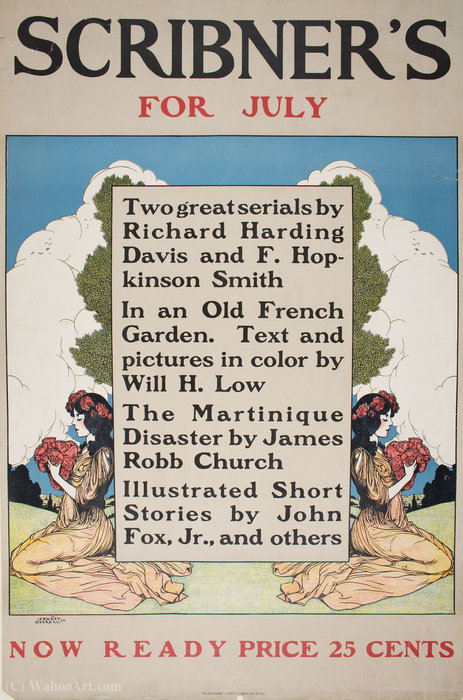
'Scribner's for July', (55 x 36 CM) (1902)
 詳細を見る
詳細を見る




































作品のオリジナル比率に合わせた、当店の規定サイズからお選びください。

特定のフレームやスペースに合わせて、ご希望のサイズをご入力いただけます。選択されたサイズが元の画像の比率と異なる場合、アートワークをトリミングするか、手描きで要素を追加して絵画を拡張いたします。デジタルモックアップ を制作し、制作開始前にご確認(承認)をいただきます。
画面上のプレビューは、実際のトリミングや拡張を正確に反映しているものではありません。最終的な構図は、モックアップによってのみ正確にご確認いただけます。
カスタムサイズもご利用いただけますが、元の比率を維持するためには、あらかじめ用意されたリストからサイズを選択することをお勧めいたします。
ご注文後、OriginalUniqueArt.com チームより詳細な指示をお送りするとともに、仕上がりイメージ(モックアップ)をご提供いたします。


 ガラスオプションは、110cm未満のサイズでのみご利用いただけます。

'Scribner's for July', (55 x 36 CM) (1902)
複製技法
複製画のサイズ
-


合計金額
$ 300
アーティストの略歴
Ernest Haskell: Bridging Art and Commerce in the Early 20th Century
Ernest Haskell (1876-1925) stands as a compelling figure in American art—a pioneer who skillfully navigated the evolving landscape between fine art and commercial design. Born in Woodstock, Connecticut, in June of 1876, his early life on the Haskell farm instilled a deep connection to the natural world, an influence subtly woven into his later works. Initially destined for Yale University on a football scholarship, Haskell’s artistic talent quickly diverted him toward illustration, ultimately leading him to the bustling art department of *The New York American* in 1896. This early experience, largely self-taught, provided a crucial foundation before he embarked on transformative studies in Paris—a period that fundamentally shaped his artistic vision and technique.Parisian Influences and Artistic Evolution
Haskell’s three extended trips to Paris between 1897 and 1902 proved pivotal. Rejecting the structured environment of the Académie Julian, he instead devised a personalized system of observation and practice, fueled by a desire to move beyond mere imitation. It was during this time that he encountered James McNeill Whistler, a figure whose influence extended far beyond simple instruction. Whistler’s emphasis on tonal harmony and atmospheric effects profoundly impacted Haskell's approach to etching, particularly his ability to capture subtle nuances of light and shadow. This mentorship fostered a deep appreciation for the expressive potential of intaglio techniques—a cornerstone of Haskell’s artistic identity. He began experimenting with new methods of printing, incorporating elements he learned from advertising and theatrical poster design – a burgeoning field at the time that demanded innovative visual communication.Theatrical Posters and Portraiture: A Dual Career
Returning to New York in the late 1890s, Haskell brought with him a fresh perspective informed by his Parisian studies and commercial experience. He quickly established himself as a sought-after designer of theatrical posters for prominent magazines like *Scribner’s*, *Pearsons*, and *Truth*. These posters weren't merely advertisements; they were miniature works of art—bold, evocative compositions that captured the spirit of the productions they promoted. Simultaneously, Haskell cultivated a distinguished career as a portrait artist, capturing the likenesses of luminaries of the day, including stage actresses like Helen Hayes and Ethel Barrymore. His portraits possessed a remarkable blend of realism and psychological insight, revealing not just physical appearance but also personality and character. His work in this area was particularly notable for its elegance and sophistication, reflecting the artistic trends of the era.Wartime Innovation: Camouflage Painting
World War I marked a significant shift in Haskell’s career. He was commissioned by the United States Army to develop camouflage painting techniques—a critical necessity for protecting troops and equipment from enemy observation. This project demanded an understanding of color theory, texture, and optical illusion, pushing Haskell to explore new artistic approaches. His innovative camouflage designs were instrumental in concealing battleships and providing a visual advantage on the battlefield. This experience further solidified his reputation as a versatile artist capable of adapting his skills to meet diverse challenges.Legacy and Critical Recognition
Ernest Haskell’s legacy extends beyond individual artworks. He stands as a bridge between fine art and commercial design, demonstrating how artistic principles could be effectively applied in the service of communication and visual persuasion. His etchings and intaglio prints are now recognized by critics and scholars as his most important contribution—a testament to his mastery of technique and his ability to imbue his work with emotional depth. His influence can be seen in the works of subsequent generations of artists, particularly those who explored the intersection of art and commerce. Today, OriginalUniqueArt.com continues to offer high-quality reproductions of Haskell’s iconic images, ensuring that this remarkable artist's vision endures for future appreciation.
Ernest Haskell
1876 - 1925
基本情報
- Artistic Movement Or Style: Etchings, Posters
- Artists Or Movements Influenced By This Artist: ['Theatrical posters']
- Artists Who Influenced This Artist: ['James Whistler']
- Date Of Birth: June 30, 1876
- Date Of Death: 1925
- Full Name: Ernest Haskell
- Nationality: American
- Notable Artworks:
- Scribner's for June
- Scribner's for July
- Pearsons for July
- Place Of Birth: Woodstock, Connecticut

