
 設置イメージを表示
 シェアする
シェアする シェアする
シェアする
 詳細を見る
詳細を見る ガイドを表示

 ダウンロード
 似ている作品
 X線調査
X線調査 スライドショーを表示
 Q&A
Q&A 統計情報
統計情報Peace in Bondage


 詳細を表示
詳細を表示
ジークレー/アートプリント
スピーディーな制作と多彩な仕上げオプションが魅力の、ミュージアムクオリティなジークレー・キャンバスプリント。 ( 手描き複製画を注文する デジタル画像販売へ切り替え)




































作品のオリジナル比率に合わせた、当店の規定サイズからお選びください。

額縁や壁のスペースに合わせて、ご希望の幅と高さを入力してください。プリントはカットすることは可能ですが、元の画像より大きくすることはできないため、異なる比率のサイズを選択された場合は、画像の一部が欠けることになります。印刷を開始する前に、内容を確認していただくためのデジタルモックアップをお送りいたします。このページに表示されている画像は、実際のカット後の状態を示すものではありません。実際の仕上がりはモックアップにてご確認ください。


 ガラスオプションは、110cm未満のサイズでのみご利用いただけます。

Peace in Bondage
ジークレー/アートプリント
複製画サイズ一覧
-


合計金額
¥ 12821
Q&A
Erastus Dow Palmer作「Peace in Bondage」 の色彩は、どの程度調和していますか?
Erastus Dow Palmer作「Peace in Bondage」の色使いは、Discordant Paletteな調和を見せています。ここでの「調和」とは、色彩同士が互いにどのように響き合っているかを表しています。
Erastus Dow Palmer作「Peace in Bondage」に似た作品はどこで見つけることができますか?
「Peace in Bondage」に似た作品は、こちらの関連作品ページでご覧いただけます。
Erastus Dow Palmer作「Peace in Bondage」の色彩構成はどのように成り立っていますか?
「Peace in Bondage」において、Sereneな対比とDiscordant Paletteな調和が響き合っています。
作家プロフィール
The Sculptor of Classical Dreams: The Life of Erastus Dow Palmer
In the heart of nineteenth-century America, a period often defined by rugged expansion and industrial grit, Erastus Dow Palmer carved out a sanctuary of grace and timelessness. Born in 1817 in Pompeii, New York—a name that itself whispered of ancient grandeur—Palmer was destined to bridge the gap between the raw American spirit and the refined ideals of Greco-Roman antiquity. The son of a carpenter, he inherited an early, intimate understanding of form, texture, and the physical manipulation of materials. This foundational skill, paired with his initial training in the delicate art of cameo carving, allowed him to develop a precision that would later define his monumental marble and bronze masterpieces. His journey was not merely one of technical mastery, but a profound pursuit of capturing the ethereal within the tangible.
Palmer’s ascent into the upper echelons of the American art world was catalyzed by the patronage of influential figures like Thomas R. Walker, whose support granted the young sculptor access to the vibrant artistic pulse of New York City. It was here that Palmer’s vision began to expand beyond the miniature. Influenced by the sweeping neoclassical movements and the burgeoning realism of European masters, he sought to translate human emotion into stone. His work became a vessel for themes of memory, spirituality, and the sublime. Even amidst personal tragedies, such as the profound loss of his wife and child, Palmer found a way to transmute grief into art, creating works that served as enduring monuments to the human condition.
Mastery of Form and Neoclassical Elegance
The hallmark of Palmer’s oeuvre is an unwavering commitment to the neoclassical aesthetic, characterized by a serene dignity and an exquisite attention to anatomical accuracy. He possessed a rare ability to breathe life into cold marble, making drapery appear as light as silk and skin as soft as breath. His sculptures often featured idealized figures that seemed to exist in a state of perpetual contemplation or divine grace. In his celebrated work Evening, created in 1851, he presents a woman adorned with wings, a breathtaking symbol of ethereal beauty that captures the quiet transition from light to shadow.
Beyond the purely aesthetic, Palmer’s sculptures were deeply symbolic, often weaving complex narratives of peace and struggle. His piece Peace in Bondage (1863) stands as a poignant testament to this depth, utilizing the image of a sorrowful angel to evoke a sense of longing and spiritual resilience during a turbulent era in American history. This ability to marry classical beauty with contemporary emotional resonance is what elevated him from a mere craftsman to a significant voice in American sculpture. His magnum opus, The White Captive, commissioned by the Metropolitan Museum of Art, remains a pinnacle of his career, showcasing his mastery of movement, grace, and the dramatic interplay of light and shadow across sculpted surfaces.
Legacy and Historical Significance
Erastus Dow Palmer’s contribution to American art lies in his role as a pioneer who helped establish a sophisticated sculptural tradition within a young nation. While much of the American art of his era focused on portraiture or landscape, Palmer looked backward to the classical foundations of Western civilization to move the American spirit forward. He proved that American artists could master the rigorous demands of neoclassicism while infusing their work with a unique, soulful intensity.
His legacy is preserved not only in museums but in the very way we perceive the intersection of history and art. Through his diverse body of work, ranging from the delicate precision of his early carvings to the sweeping grandeur of his public monuments, Palmer left an indelible mark on the landscape of nineteenth-century sculpture. His ability to capture the essence of nature and the depths of human emotion ensures that his works continue to invite viewers into a world of timeless beauty and profound reflection.

Erastus Dow Palmer
1817 - 1904 , United States of America
プロフィール概要
- Full Name: Erastus Dow Palmer
- Nationality: American
- Date Of Birth: 1817
- Date Of Death: 1904
- Place Of Birth: Pompeii, United States of America
- Notable Artworks:
- The White Captive
- Peace in Bondage
- Angel at the Sepulchre
- Artistic Movement Or Style: Neoclassical
- Artists Who Influenced This Artist:
- William Cullen Bryant
- Asher B. Durand
- Frederic Edwin Church
- Artists Or Movements Influenced By This Artist: ['Hudson River School']
関連記事

Timeless Elegance: A Complete Guide to the Sublime Beauty and Artistry of Marble Sculpture
Discover the sublime beauty of marble art through an expert exploration of Renaissance and Neoclassical masterpieces. From the delicate textures of Carpeaux to the grandeur of Sansovino, immerse yourself in a guide to timeless elegance and sculptural perfection.

The Enduring Form: Exploring Themes & Techniques in Sculpture Across Historical Periods
Explore the rich history of sculpture from ancient masterpieces to contemporary innovations. Discover key techniques, influential artists & investment potential for discerning art collectors.
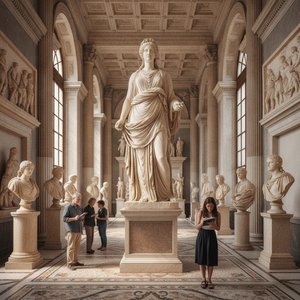
Timeless Grandeur: Exploring the Eternal Beauty and Art-Historical Legacy of Marble Sculpture
Explore the profound legacy of marble sculpture, from Classical antiquity to Neoclassical mastery. A definitive guide for elite collectors and designers seeking to integrate the luminous, eternal beauty of stone into sophisticated, high-end architectural spaces.

Bronze Sculptures That Defined Art History | OriginalUniqueArt
Journey through art history with our Top 10 bronze sculptures! Explore masterpieces by Rodin, Michelangelo & more. Discover stories behind iconic statues and find museum-quality reproductions for your home decor at OriginalUniqueArt.com.

The Enduring Allure of Marble in Art History: From Classical Sculpture to Modern Abstraction
Explore the captivating history of marble sculpture from ancient Greece to modern art. Discover renowned artists like Canova & Michelangelo, carving techniques, and investment insights at OriginalUniqueArt.