

 プレビュー
プレビュー
 シェアする
シェアする シェアする
シェアする
 詳細を見る
詳細を見る

 ダウンロード
 似ている作品
 X線調査
X線調査 スライドショー
 統計情報
統計情報Kyffin Williams (1918–2006), Seated at a Table
 Contemporary Realism
 1978
1978- Modern
 27.0 x 32.0 cm
 Llyfrgell Genedlaethol Cymru / The National Library of Wales
 詳細を見る
詳細を見る
オンラインプレビューをはるかに凌ぐ、高解像度で鮮明なデジタル画像をご購入いただけます。
各ファイルは、社内の専門家が高度なツールと熟練した手作業によるレタッチを用いて、細心の注意を払って準備されています。すべての画像において、卓越した鮮明度、正確な色彩再現性、そして繊細なディテールを保証いたします。
最終ファイルは、プロフェッショナルな編集・印刷環境ですぐにご利用いただけるよう最適化された状態で、72時間以内にメールにてお届けいたします。これは、一流のデザインスタジオ、出版社、ギャラリーから信頼されているものと同等の品質です。
デジタルアート
個人での鑑賞、印刷、クリエイティブなプロジェクト用に、高解像度ファイルをダウンロードできます。 ( プリント版に切り替え 手描きの絵画を購入)
デジタル画像のご注文に付随する特典
高品質なデジタル画像配信を、確かな品質で。
OriginalUniqueArt.com を選ぶことは、単に画像を手に入れることではありません。それは、プロの手によって精密に仕上げられ、満足保証が付いた高品質なデジタルアートワークを受け取ることを意味します。ご注文いただいた際に自動的に付随する内容は、以下の通りです:

メールですぐにお届け
ご注文から72時間以内に、高解像度のデジタル画像ファイルがメールでお手元に届きます。すぐにそのままご利用いただけます。

AI技術で最適化されたデジタルファイル
お客様の作品は、高度なAIツールと専門家による手作業の編集を組み合わせてプロフェッショナルに最適化されており、細部のディテール、鮮明さ、そして正確な色再現性を最大限に引き出しています。

一生涯無料の再送サービス
ファイルを誤って削除したり、紛失してしまったりしましたか?ご安心ください。いつでも無料で再送いたします。

輸入手数料は一切かかりません
関税や手数料、配送料を気にすることなく、お気に入りのアートワークをすぐにお楽しみいただけます。デジタルダウンロードは常に免税です。

色彩再現の保証
プロ仕様のツールとカラーマネジメント技術を用いることで、デジタル画像が元の色を最大限に忠実に再現することを保証いたします。

100日間満足保証
ご購入いただいたデジタル画像にご満足いただけない場合は、100日以内であれば、理由を問わず修正または100%の返金対応をさせていただきます。

100% 返金保証
ご満足いただけない場合は、デジタルファイルを受け取ってから100日以内であれば、理由を問わず全額返金いたします。

まとめ買い割引
3枚購入で10%OFF - 5枚購入で15%OFF - 10枚以上購入で20%OFF。クリエイティブなプロジェクト、ギャラリー、エージェンシーに最適です。
An Intimate Encounter: The Quiet Soul of Enslin du Plessis
In the quiet corners of art history, certain works possess the unique ability to freeze a fleeting moment of domestic tranquility, turning a simple afternoon into an eternal study of companionship. Seated at a Table, painted in 1978 by the evocative Enslin du Plessis, is such a masterpiece. The painting presents us with a profound sense of stillness, capturing a man in a moment of repose, his formal attire—a suit and tie—suggesting a life of structure and perhaps a recent return from the professional world. Yet, all the rigidity of his outward appearance melts away through the presence of his feline companion, nestled warmly upon his lap. This juxtaposition between the formal human element and the soft, instinctive comfort of the cat creates an atmosphere that is both deeply personal and universally relatable.
The composition invites the viewer to sit at the table alongside the subject. The arrangement of objects—the bottles that hint at a shared meal or a solitary drink, the humble cup resting near the edge, and the surrounding chairs—builds a narrative of lived-in reality. There is no grand drama here, only the subtle beauty of existence. Through his masterful use of light and shadow, du Plessis directs our gaze not just to the man, but to the textures of the scene, making the viewer feel the weight of the moment and the silent communication between human and animal.
Technique and the Art of Observation
Enslin du Plessis, a self-taught master whose journey was shaped by the keen eye of a journalist, brings a unique observational depth to this work. Unlike those trained in rigid academic traditions, his technique is rooted in an innate sensitivity to how light interacts with form. In Seated at a Table, we see a sophisticated handling of texture and tone that breathes life into the canvas. The way the light catches the edge of the glassware and the subtle folds of the man's suit demonstrates a profound understanding of materiality.
The artist’s ability to convey emotion through brushwork is particularly striking in this portrait. There is a softness to the rendering of the cat that contrasts beautifully with the more defined, structural elements of the room. This delicate balance of precision and fluidity ensures that the painting does not feel like a mere photographic reproduction, but rather an emotional interpretation of a memory. For collectors and interior designers, this technique offers a rich visual experience; the painting possesses a depth that changes depending on the lighting of a room, making it a dynamic centerpiece for any curated space.
A Timeless Addition to the Modern Interior
For those seeking to infuse their living spaces with a sense of peace and historical weight, this reproduction offers an unparalleled opportunity. The emotional impact of the piece lies in its ability to evoke nostalgia and a longing for simplicity. It is a work that speaks to the heart of the home, making it an ideal selection for a study, a library, or a quiet sitting room where conversation and reflection are encouraged.
Integrating such a high-quality reproduction into an interior design scheme allows for a sophisticated dialogue between classical portraiture and contemporary aesthetics. The muted palette and intimate subject matter complement both traditional decor and modern minimalist styles, providing a focal point that is both intellectually stimulating and visually soothing. To possess this work is to hold a piece of 1970s serenity, a reminder that even in a bustling world, there is profound beauty to be found in the quietest of moments.
作家の略歴
A Life Painted in Serenity: The World of Enslin du Plessis
Enslin Hercules du Plessis, born in Standerton, Transvaal, South Africa, in 1894, was an artist whose life unfolded as a quiet dedication to capturing the beauty of the landscapes that surrounded him. Though initially forging a path as a journalist, it was the allure of light and form—the subtle nuances of color and texture—that ultimately claimed his artistic soul. His journey wasn’t one of formal training; instead, du Plessis honed his skills through observation and an innate sensitivity to the world around him, a self-taught mastery that would become a defining characteristic of his work. The early years were marked by service during World War I, where he acted as a correspondent for South African newspapers, witnessing scenes that undoubtedly shaped his perspective but didn’t immediately translate into artistic expression. It wasn't until the 1920s, after settling in London and working within the bustling world of journalism, that painting began to take hold as more than just a pastime.From Journalism to Impressionistic Visions
Du Plessis’ transition from journalist to artist was gradual but resolute. He initially worked for Argus South African Newspapers while simultaneously exploring his burgeoning talent with paint. The late 1920s saw him begin exhibiting, first with the London Group in 1928 and gaining full membership by 1929. This association proved pivotal, exposing him to a network of like-minded artists and fostering an environment where experimentation and individual expression were valued. His style quickly evolved into a delicate Impressionism, characterized by soft brushstrokes, muted palettes, and a focus on capturing the atmosphere and light of his chosen subjects. He wasn’t interested in grand narratives or dramatic compositions; rather, he sought to portray the quiet beauty of everyday life—a sun-dappled garden, a peaceful canal scene, the comforting interior of a home.- Early Influences: While lacking formal training, du Plessis’ work demonstrates an affinity for Impressionistic principles, likely gleaned from exposure to European masters and contemporary British painters.
- The Power of Observation: His journalistic background instilled a keen eye for detail and a sensitivity to the nuances of his surroundings, qualities that translated directly into his paintings.
Themes of Home and Landscape
Du Plessis’ oeuvre is remarkably consistent in its thematic focus. He gravitated towards scenes of domestic tranquility—interiors bathed in soft light, still lifes depicting simple objects imbued with a sense of warmth and nostalgia—and the idyllic landscapes of England's Cotswolds and Buckinghamshire. His paintings are not merely representations of places; they are evocations of mood and feeling. Home Work, for example, captures the peaceful rhythm of domestic life, while scenes like Via del Fossa, Lucca, Italy transport the viewer to a serene Italian canal, bathed in golden light. He frequently returned to South Africa, but it was England that became his primary artistic muse, offering a wealth of inspiration in its rolling hills, quaint villages, and gentle countryside. His work often features boats, canals, and waterways—symbols perhaps of journeys taken, both literal and metaphorical.Recognition and Legacy
Throughout his career, du Plessis exhibited extensively with prominent galleries such as Goupil, Arlington, Leicester, Roland Browse and Delbanco, and the London Group. Contemporary Art Society and Arts Council acquired his work, and his paintings found their way into numerous public collections in both Britain and South Africa, including the Johannesburg Art Gallery, William Humphreys Art Gallery, and the University of Wits Art Galleries. In 1972, he was awarded the South African Akademie Medal of Honour for painting, a testament to his enduring contribution to the art world. While perhaps not a household name, Enslin du Plessis occupies an important place in the history of Modern British art. His paintings offer a poignant glimpse into a quieter, more contemplative era—a celebration of beauty, simplicity, and the enduring power of light and atmosphere. He retired from journalism in 1956 to paint full-time, dedicating his final years entirely to his artistic pursuit, passing away in Bromley, London, in 1978 leaving behind a legacy of serene landscapes and intimate interiors that continue to captivate viewers today.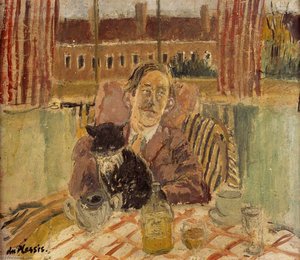
enslin du plessis
1894 - 1978
プロフィール概要
- Artistic Movement Or Style: Impressionism
- Artists Or Movements Influenced By This Artist: ['Post-Impressionism']
- Artists Who Influenced This Artist:
- Claude Monet
- Pierre Auguste Renoir
- Date Of Birth: 1894
- Date Of Death: 1978
- Full Name: Enslin Du Plessis
- Nationality: British
- Notable Artworks:
- Via del Fossa
- The Mantelpiece
- Cottage Garden
- Place Of Birth: Lucca, Italy