プリント版に切り替え
 続きを読む
続きを読む







































 いずれかの辺が105 cm(約41インチ)を超えるアートワークまたは複製画の場合、フレームは分解されたキットの状態でお届けいたします。この方法は、輸送中の破損を防ぎ、安全に配送するために採用しております。


A Breath of the Bernese Alps: Edward Theodore Compton’s ‘The Jungfrau’
Edward Theodore Compton's “The Jungfrau” isn’t merely a depiction of a mountain landscape; it’s an immersive experience, a frozen moment of awe and reverence for the raw power and sublime beauty of the Swiss Alps. Painted in 1890, this work stands as a pivotal example of early alpine watercolor, showcasing Compton's unique ability to capture not just the visual grandeur but also the very *feeling* of being amidst these colossal peaks. The painting immediately draws the eye into its heart – the imposing silhouette of the Jungfrau itself, rendered with a delicate yet confident hand, dominating the composition and radiating an almost palpable sense of majesty.

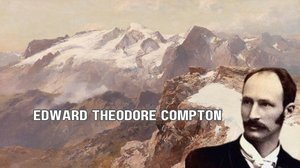
(Image: A portrait of Edward Theodore Compton, the artist behind ‘The Jungfrau’)
The Pioneer of Alpine Watercolor
Born in 1849, Edward Theodore Compton was a singular figure in late 19th-century European art. His journey to Darmstadt, Germany, fueled by his Quaker upbringing's emphasis on simplicity and observation, proved transformative. It was here he truly honed his skills, immersing himself in the vibrant artistic community led by Grand Duke Ludwig III. Compton’s dedication to meticulous observation is evident in every brushstroke of “The Jungfrau.” He wasn’t simply copying what he saw; he was translating a profound emotional response – a sense of humility and wonder – onto the canvas. His self-taught approach, combined with his experiences as a mountaineer (making over 300 ascents), imbued his work with an unparalleled understanding of alpine terrain and light.
Technique and Composition: A Symphony of Light and Shadow
Compton’s mastery lies in his watercolor technique. He employs a broken brushstroke method, layering translucent washes to build up the forms of the mountains – the snow-capped peaks shimmering with reflected sunlight, the shadowed valleys hinting at hidden depths. The composition itself is carefully balanced, drawing the viewer's eye upwards towards the Jungfrau’s summit while simultaneously grounding it in the lush greenery of the foreground. Notice how he uses atmospheric perspective—the subtle blurring of details and colors as they recede into the distance—to create a convincing sense of depth and scale. The scattered figures within the scene, likely tourists enjoying the view, aren't mere additions; they serve to emphasize the vastness of the landscape and our own insignificance in its presence.
Symbolism and Emotional Impact
“The Jungfrau” transcends a simple landscape painting. It embodies the Romantic fascination with nature’s power and beauty, reflecting a desire for escape and spiritual renewal. The Jungfrau itself – named after the Virgin Mary – adds a layer of religious symbolism, suggesting a connection between humanity and the divine within this awe-inspiring environment. The painting evokes a powerful sense of tranquility, solitude, and perhaps even a touch of melancholy—a recognition of the sublime and our own fleeting existence in the face of such enduring grandeur. It’s a piece that invites contemplation, prompting us to consider our place within the natural world and the timeless beauty of the Alps.
よくあるご質問
「The Jungfrau」を手がけたアーティストは誰ですか?
「The Jungfrau」はエドワード・セオドア・コンプトンの作品とされています。
エドワード・セオドア・コンプトン作「The Jungfrau」は、どのような感情を伝えていますか?
「The Jungfrau」は、Tranquilな感情を呼び起こします。この情緒的なトーンは、作品が与える印象を表しています。
「The Jungfrau」はいつ制作されましたか?
「The Jungfrau」は1890年に制作されました。この制作年は、エドワード・セオドア・コンプトンのキャリアおよびその時代の文脈において、本作を位置づけるものです。
More about this painting
 設置イメージを確認
 送る
送る シェア
シェア
 詳細情報
詳細情報 ガイドを表示

 画像をダウンロード
 似ている作品
 X線調査
X線調査 スライドショー
 Q&A
Q&A 統計情報
統計情報