
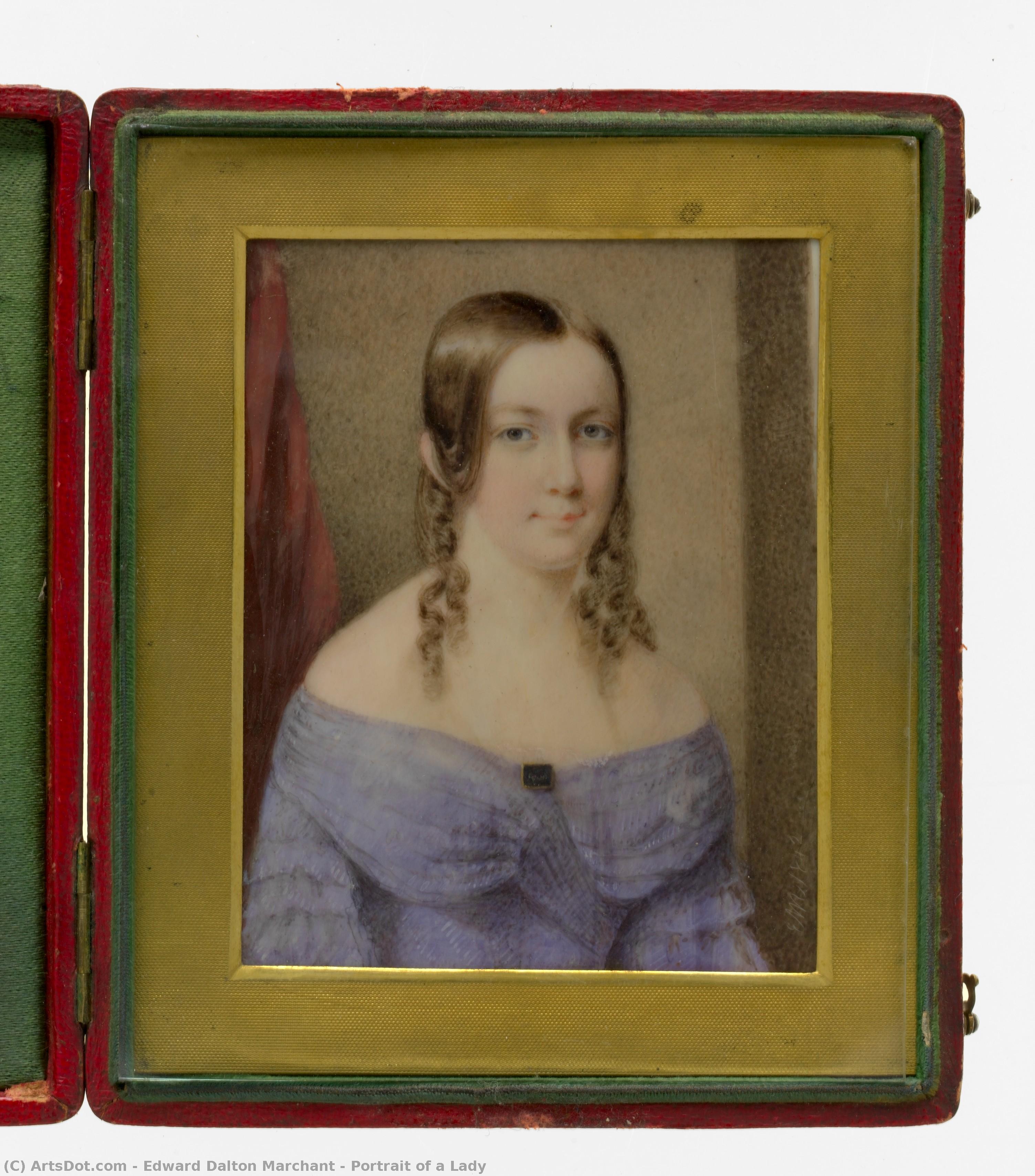
 プレビュー
プレビュー
 シェアする
シェアする シェアする
シェアする
 詳細を見る
詳細を見る

 ダウンロード
 似ている作品
 X線調査
X線調査 スライドショー
Untitled (D2WW2U)
 1842
1842 8.0 x 7.0 cm
 詳細を見る
詳細を見る
ジークレー/アートプリント
迅速な制作と多彩な仕上げオプションを備えた、ミュージアムクオリティのジークレーまたはキャンバスプリント。 ( 手描き画への切り替え 画像に切り替え)




































作品のオリジナル比率に合わせた、当店の規定サイズからお選びください。

特定のフレームやスペースに合わせて、ご自身でサイズを指定することも可能です。選択されたサイズが元の画像の比率と一致しない場合、作品をトリミングするか、鏡面反射または単色での塗りつぶしによって画像を拡張いたします。制作を開始する前に、ご確認用のデジタルモックアップをお送りいたします。
画面上のプレビューには、実際のトリミングや拡張は反映されませんのでご注意ください。最終的な構図を正確に確認できるのは、モックアップのみとなります。
カスタムサイズも承っておりますが、元の比率を維持するためには、あらかじめ用意されたリストからサイズを選択することをお勧めいたします。


 ガラスオプションは、110cm未満のサイズでのみご利用いただけます。

Untitled (D2WW2U)
ジークレー/アートプリント
複製画のサイズ
-


合計金額
$ 81
アーティストの略歴
Edward Dalton Marchant: A Portraitist of Victorian America
Edward Dalton Marchant (1806-1887), also known as Edward D. Marchant and E. D. Marchant, was an American artist who carved out a distinctive niche in the landscape of 19th-century portraiture. Born in Edgartown, Massachusetts, he emerged from humble beginnings—a house painter—to become one of his era’s most prolific and respected artists, particularly celebrated for his depictions of prominent figures during the Civil War period. Unlike many of his contemporaries who pursued grand narratives or ambitious landscapes, Marchant focused intently on capturing the essence of individuals, crafting meticulously rendered portraits that conveyed both physical likeness and psychological depth.- Early Life & Training: Marchant’s artistic journey began organically. Largely self-taught, he honed his skills through observation and experimentation before receiving brief instruction from Gilbert Stuart in Boston in 1825—a formative encounter that instilled him with Stuart's mastery of tonal modeling and compositional balance.
- Early Career & Travels: Demonstrating entrepreneurial spirit early on, Marchant advertised his services in Charleston’s newspaper as young as 1826, embarking upon a restless exploration of the American frontier. He returned to Edgartown in 1828-1829 and subsequently relocated to Worcester, Massachusetts, where he established a studio and produced portraits of influential citizens—a testament to his adaptability and responsiveness to local demand.
- New York City & Expanding Horizons: Marchant’s ambition propelled him eastward to New York City in 1832, cementing his reputation as a portraitist amongst the city's elite merchants and political leaders. Commissions spanned Ohio cities and ventured into Nashville and New Orleans, showcasing his versatility and broadening his artistic reach.
- The Lincoln Portrait & Artistic Legacy: Perhaps Marchant’s most enduring achievement was his monumental portrait of Abraham Lincoln commissioned by the Union League in December 1862. Executed during the Civil War, this painting—a collaborative effort with artist George Caleb Bingham—captured Lincoln's solemn gaze and dignified posture as he signed the Emancipation Proclamation. Marchant famously declared that his depiction “triumphantly gives lie to those hideous caricatures of Mr. Lincoln,” reflecting a profound conviction in Lincoln’s moral leadership and skillfully countering prevailing anti-Lincoln sentiment.
- Miniature Artist & Recognition: Beyond oil paintings, Marchant excelled as a miniaturist, producing exquisitely detailed portraits that commanded considerable prestige. Elected to several arts academies and consistently exhibiting his work throughout his lifetime, he secured a place among the leading artists of his time—a legacy solidified by the widespread circulation of reproductions of his Lincoln portrait prior to the 1864 election.
Technique & Style: Impressionistic Influences Marchant’s artistic style evolved over time, reflecting influences from Romanticism and increasingly embracing elements of Impressionism. He favored tonal modeling—a technique championed by Stuart—to create luminous surfaces and convey atmospheric effects. However, as he matured, Marchant experimented with looser brushstrokes and brighter palettes, mirroring the burgeoning Impressionist movement's emphasis on capturing fleeting moments of light and color. This stylistic shift is particularly evident in his landscapes and contributes to the evocative quality of his artistic output.
Notable Works: Beyond Lincoln Marchant’s oeuvre encompassed a diverse range of subjects—from portraits of presidents and industrialists to depictions of everyday life—demonstrating his ability to engage with both formal grandeur and intimate human experience. Among his most celebrated paintings are portraits of Andrew Jackson, capturing the statesman's commanding presence and weathered countenance; and numerous miniatures documenting the lives of prominent families across New England. His meticulous attention to detail and masterful rendering of texture ensured that these artworks would endure as treasured representations of their respective eras.
Historical Significance Edward Dalton Marchant’s contribution to American art history extends beyond his artistic accomplishments. He served as a visual chronicler of the Civil War era, documenting pivotal moments in national history—most notably Lincoln's signing of the Emancipation Proclamation—and shaping public perception through carefully crafted portraits that championed Lincoln’s moral authority. His unwavering advocacy for abolition and his involvement with organizations like the Union League underscore his commitment to social justice and solidify his place as a figure of considerable cultural importance.

Edward Dalton Marchant
1806 - 1887 , United States of America
基本情報
- Artistic Movement Or Style: Portraiture
- Artists Or Movements Influenced By This Artist: Victorian art
- Artists Who Influenced This Artist: Gilbert Stuart
- Date Of Birth: 1806
- Full Name: Edward Dalton Marchant
- Nationality: American
- Notable Artworks:
- Lincoln portraits
- Andrew Jackson
- Place Of Birth: Edgartown, United States

