プリント版に切り替え
 詳細を表示
詳細を表示







































 いずれかの辺が105 cm(約41インチ)を超えるアートワークまたは複製画の場合、フレームは分解されたキットの状態でお届けいたします。この方法は、輸送中の破損を防ぎ、安全に配送するために採用しております。


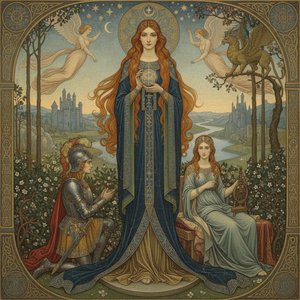
A Portrait Steeped in Mythic Resonance: Exploring Burne-Jones’ “The Baleful Head”
Edward Coley Burne-Jones (1833 – 1898), a luminary of the Pre-Raphaelite Brotherhood and arguably its most commercially successful artist, crafted "The Baleful Head" in 1886—a painting that transcends mere visual representation to delve into profound psychological and symbolic depths. This arresting image depicts a woman cradling a babe while gazing intently at the infant’s head, framed by an ancient oak tree laden with ripe apples. The scene isn't merely picturesque; it’s deliberately positioned within a framework of medieval legend, specifically inspired by Geoffrey Chaucer’s “The Canterbury Tales,” where St. George slays the dragon—a motif Burne-Jones skillfully incorporates into his artistic vision.- Subject Matter & Narrative Context: The composition speaks volumes about themes of motherhood, protection, and confronting darkness. Burne-Jones draws upon Christian iconography to convey a narrative of courage and vigilance against evil forces—a cornerstone of Victorian moral philosophy.
- Style & Technique: Characteristic of Burne-Jones’ oeuvre, “The Baleful Head” exemplifies the Brotherhood's commitment to reviving artistic ideals rooted in medieval art. Employing oil paint on canvas with meticulous detail and glazing techniques, he achieves a luminous surface that captures subtle tonal variations—a hallmark of his masterful craftsmanship.
Symbolism: Apples, Oak Trees & The Dragon’s Shadow
The scattered apples surrounding the figures are laden with symbolic significance. Traditionally associated with immortality and fertility, they represent not only the bounty of nature but also the promise of regeneration—a visual counterpoint to the looming presence of the oak tree. This venerable tree symbolizes strength, endurance, and wisdom, mirroring St. George’s unwavering resolve in battling the dragon. Burne-Jones subtly references Chaucer's tale, suggesting that vigilance and faith are essential for safeguarding innocence and overcoming adversity.Emotional Impact & Aesthetic Considerations
Burne-Jones’ deliberate use of muted colors—primarily ochre, crimson, and emerald green—creates an atmosphere of solemn contemplation. The woman's gaze is unwavering, conveying a palpable sense of determination and sorrowful awareness. This emotive quality aligns perfectly with the Pre-Raphaelite preoccupation with psychological realism—a departure from academic conventions that prioritized idealized beauty. “The Baleful Head” invites viewers to contemplate themes of vulnerability, resilience, and the enduring power of mythic narratives.- Interior Design Inspiration: This artwork’s serene palette and evocative imagery lend themselves beautifully to creating tranquil spaces—particularly nurseries or bedrooms—where comfort and contemplation intertwine.
- Collector's Perspective: Owning a high-quality reproduction of “The Baleful Head” offers an opportunity to appreciate Burne-Jones’ artistic genius and engage with the rich tapestry of Victorian symbolism.
Q&A
エドワード・バーン=ジョーンズ作「The Baleful Head」は、どのようにしてPre-Raphaelite Brotherhoodをアーティストの母国と結びつけているのでしょうか?
Pre-Raphaelite Brotherhoodの作品「The Baleful Head」は、イギリス出身のアーティストによって制作されました。
「The Baleful Head」は、エドワード・バーン=ジョーンズのこれまでの作風を象徴するものと言えるでしょうか?
エドワード・バーン=ジョーンズの作品に繰り返し現れるテーマにはmedieval symbolism, victorian morality, pre-raphaelite style, mythological narrative, artistic revivalがありますが、「The Baleful Head」ではmythology, medieval legend, motherhood, symbolism, victorian morality, christian iconography, decorative artsに焦点を当てています。
「The Baleful Head」は、エドワード・バーン=ジョーンズの画業におけるどの時期の作品にあたりますか?
「The Baleful Head」は、エドワード・バーン=ジョーンズの画業におけるMature Periodに属します。この分類は、作品をアーティストの作風の変遷に関連付けるものです。
この絵画の詳細を見る
 設置イメージを表示
 シェアする
シェアする シェアする
シェアする
 詳細を見る
詳細を見る ガイドを表示

 ダウンロード
 似ている作品
 X線調査
X線調査 スライドショーを表示
 Q&A
Q&A 統計情報
統計情報