プリント版に切り替え
 詳細を表示
詳細を表示







































 いずれかの辺が105 cm(約41インチ)を超えるアートワークまたは複製画の場合、フレームは分解されたキットの状態でお届けいたします。この方法は、輸送中の破損を防ぎ、安全に配送するために採用しております。


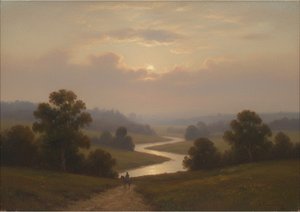
A Serene Dawn: Capturing Nature's Majesty
Dwight William Tryon’s "Daybreak" is a captivating depiction of sunrise over water, rendered in a style characteristic of American Tonalism. This evocative painting transports the viewer to a tranquil scene where the soft light of dawn gently illuminates the landscape. The composition features two boats resting peacefully on the water's surface – one closer to the left and another towards the right - with scattered figures adding a sense of human presence within this vast natural setting. Tryon masterfully uses subtle gradations of color, particularly in the sky’s cloud formations, creating a dramatic backdrop that enhances the overall serenity of the scene. The painting's atmosphere is one of quiet contemplation and peaceful awakening, inviting viewers to share in the stillness of the moment.Tonalism and Artistic Influences
"Daybreak," created around 1885, exemplifies the Tonalist movement prevalent in late 19th-century American art. This style prioritized mood and atmosphere over precise detail, emphasizing subtle color harmonies and soft edges to create a sense of tranquility and introspection. Tryon was significantly influenced by James McNeill Whistler, a leading figure in the Aesthetic Movement, who championed "art for art's sake" and emphasized harmonious color relationships. Unlike earlier landscape traditions that focused on dramatic narratives or heroic depictions of nature, Tonalism sought to capture the essence of a scene through its tonal qualities – the interplay of light and shadow, and the subtle nuances of color. Tryon’s work reflects this shift towards a more contemplative and atmospheric approach to landscape painting.Technique and Composition
Tryon's technique in "Daybreak" is characterized by his delicate brushwork and careful layering of paint. He employed thin glazes of oil paint to build up the luminous quality of the sky and water, creating a sense of depth and atmosphere. The composition is carefully balanced, with the boats acting as anchors in the foreground while the expansive sky draws the eye upwards. The placement of figures within the scene isn't about narrative detail but rather contributes to the overall feeling of peaceful solitude.- Color Palette: Predominantly soft blues, pinks, and grays create a harmonious and calming effect.
- Brushwork: Loose and blended brushstrokes contribute to the atmospheric quality of the painting.
- Light & Shadow: The subtle interplay of light and shadow defines forms and creates depth, emphasizing the tranquility of the scene.
Symbolism and Emotional Impact
Beyond its aesthetic beauty, "Daybreak" carries symbolic weight. Sunrises often represent new beginnings, hope, and renewal. The presence of boats suggests journeys and exploration, while the figures in the distance hint at human connection within the vastness of nature. The painting evokes a sense of peace, tranquility, and quiet contemplation. It invites viewers to pause, reflect, and appreciate the beauty of the natural world. "Daybreak" is more than just a landscape; it's an emotional experience that resonates with our innate desire for serenity and connection. The overall effect is one of gentle optimism and enduring beauty – qualities that make this painting a timeless treasure.Q&A
ドワイト・ウィリアム・トライオンには、他にどのような別名や通称がありますか?
ドワイト・ウィリアム・トライオンは、Dwight William Tryonという別名でも表記されます。
「Daybreak」の主題は、ドワイト・ウィリアム・トライオンが普段扱うテーマとどのように関連していますか?
ドワイト・ウィリアム・トライオンの代表的なテーマであるinfluenced by james mcneill whistler, reflects tonalist aesthetic principles, captures serene natural beauty, evokes a sense of tranquility, typical landscape subject for tryon, representative of american tonalismにおいて、「Daybreak」はsunrise, water, boats, landscape, serene, atmospheric, morning, figuresに独自の焦点を当てています。
ドワイト・ウィリアム・トライオン作「Daybreak」 の主要な色調は何ですか?
ドワイト・ウィリアム・トライオン作「Daybreak」には、Green to Violet Spectrumの色調が全体に広がっています。
この絵画の詳細を見る
 設置イメージを表示
 シェアする
シェアする シェアする
シェアする
 詳細を見る
詳細を見る ガイドを表示

 ダウンロード
 似ている作品
 X線調査
X線調査 スライドショーを表示
 Q&A
Q&A 統計情報
統計情報