

 設置イメージを確認
 送る
送る シェア
シェア
 詳細情報
詳細情報 ガイドを表示

 画像をダウンロード
 似ている作品
 X線調査
X線調査 スライドショー
 統計情報
統計情報Your country needs you
 Drawing
- WallArt
- Contemporary Realism
 Modern
 67.0 x 77.0 cm
 Shrine of Remembrance
 続きを読む
続きを読む
このページに掲載されている作品は著作権法によって保護されており、当社の許可なく同一の複製物を制作または販売することは法律で禁じられています。この保護は、以下のような国際条約に基づき執行されます。 ベルヌ条約 および、以下の条項に定められたものを含む各国の法律により、 米国著作権法 第17編。
敬意を払った法的な代替手段として、私たちはオリジナルにインスピレーションを与えられた、カスタムの手描きアートワークを提供しています。私たちの熟練したプロのアーティストは、元の作品が持つスタイル、情緒、そして芸術的なエッセンスを注意深く研究し、独自の創作物でありながら、同じ感性を呼び起こすような、新しくユニークな作品を作り上げます。
この手法は、著作権で保護された作品の複製や複写を伴わないため、著作権法に完全に準拠しています。これは単なる模倣ではなく、創造的な再解釈です。元の作品からインスピレーションを受けつつも、それとは異なる、全く新しい絵画を生み出すものです。
手描き油彩複製画
当社のアーティストが、お客様のご希望のサイズと額縁に合わせて、キャンバスに手描きで制作する油彩画です。 ( プリント版に切り替え デジタル画像販売へ切り替え)




P118B ¥10

P118H ¥10

P118W ¥10

P438Z ¥10

P508JH ¥12

P508YH ¥12

P805H ¥10

P805Z ¥10

P919BZ ¥10

P919G ¥10

P919XJ ¥10

P959ZH ¥10

P968JZ ¥12

W106C ¥8

W218G ¥10

W218JH ¥8

W218Y ¥10

W307PJ ¥10

W316G ¥10

W316PJ ¥8

W316Y ¥10

W398PJ ¥8

W4111J ¥10

W500HY ¥15

W500JH ¥15

W692G ¥12

W849H ¥8

W940BG ¥15

W953PJ ¥8




作品のオリジナル比率に合わせた、当店の規定サイズからお選びください。

フレームや壁のスペースに合わせて、ご希望の幅と高さを入力してください。本作品は手描きのため、異なる比率のサイズをご希望の場合、絵画の周囲を少し広げて描くか、あるいは端を少しカットして調整することが可能です。お客様のご要望に合わせます。制作を開始する前に、仕上がりを確認するためのデジタルモックアップをお送りいたします。このページに表示されている画像は完成品の実物ではなく、あくまでモックアップによるイメージです。
ご注文後、OriginalUniqueArt.com チームより詳細な指示をお送りするとともに、仕上がりイメージ(モックアップ)をご提供いたします。


 ガラスオプションは、110cm未満のサイズでのみご利用いただけます。

Your country needs you
再現技法
複製画サイズ一覧
-


合計金額
¥ 47184
A Solemn Vow: The Poignant Narrative of Westbrook’s Recruitment
In the quiet, evocative strokes of Dr. Eric Westbrook’s "Your country needs you," we are transported to a pivotal moment of historical tension and personal duty. This compelling work serves as more than just a depiction of military enlistment; it is a profound meditation on the intersection of civilian life and the heavy mantle of national service. The composition centers on a young recruit, still clad in the humble textures of his civilian attire, caught in the transformative moment of swearing an oath of allegiance to King George V. As he holds the Bible—a symbol of sacred truth and unshakeable commitment—the weight of his promise hangs palpably in the air. The presence of the seasoned officers, particularly the Recruiting Sergeant marked by his distinctive red sash, provides a stark contrast between the innocence of the new recruit and the weathered reality of those who have already answered the call.
The atmosphere of the piece is thick with the gravity of the era, reflecting the intense social pressures of early 20th-century mobilization. Westbrook, an artist whose life was shaped by the shadows of both World Wars, masterfully captures the psychological landscape of a nation at a crossroads. The title itself, a direct nod to the iconic recruitment slogans that once echoed through the streets of England, immediately anchors the viewer in a period of collective sacrifice. Through this work, we witness the ritualistic nature of the oath—a solemn promise to defend the Crown, Person, and Dignity against all enemies—rendered with a sensitivity that honors the individual human experience amidst the vast machinery of war.
Masterful Technique and Visual Depth
Technically, the work demonstrates Westbrook’s sophisticated command over form and light. The artist utilizes a nuanced approach to texture, allowing the viewer to feel the coarse fabric of the civilian clothing against the structured, authoritative presence of the military uniforms. The interplay of light and shadow serves to heighten the drama of the scene, casting a spotlight on the central act of devotion while leaving the surrounding environment in a state of atmospheric depth. This careful manipulation of tonal values creates a sense of three-dimensionality that draws the eye toward the focal point: the hands gripping the Bible and the resolute expression of the recruit.
For the discerning collector or interior designer, this piece offers an unparalleled opportunity to introduce a conversation starter into a curated space. The artwork possesses a timeless quality, blending historical accuracy with an emotional resonance that transcends its specific era. Whether placed in a study, a library, or a formal gallery setting, a high-quality reproduction of this painting brings a sense of intellectual depth and historical prestige. It is a work that invites prolonged contemplation, offering layers of meaning regarding duty, identity, and the enduring human spirit in times of crisis.
A Timeless Addition to any Fine Art Collection
Owning a piece like "Your country needs you" is an investment in storytelling. The painting does not merely decorate a wall; it anchors a room with its narrative weight and historical significance. For those who appreciate art that bridges the gap between personal emotion and global history, Westbrook’s work stands as a testament to the power of the drawn line and the painted stroke to preserve the ephemeral moments of human conviction. It remains a hauntingly beautiful tribute to the courage found in the simple act of saying, "So help me God."
よくあるご質問
Dr Eric Westbrook, Cb作「Your country needs you」のデジタルデータを入手するには、どうすればよいですか?
Dr Eric Westbrook, Cb作「Your country needs you」のデジタルイメージは、こちらのデジタル画像ページにてご購入いただけます:高解像度デジタル画像のダウンロード
「Your country needs you」の油彩複製画を注文することはできますか?
Dr Eric Westbrook, Cb作「Your country needs you」の手描き複製画は、こちらの手描き油彩複製画ページからご注文いただけます:リネンキャンバスに手描きされた油彩複製画(受注制作)
Dr Eric Westbrook, Cb作「Your country needs you」のコントラストはどの程度ですか?
Dr Eric Westbrook, Cb作「Your country needs you」は、明部と暗部の間にStatementなコントラストを描き出しています。
アーティストについて
Early Life and Artistic Foundations
Dr. Eric Westbrook (1915–2005) was a figure of remarkable breadth, seamlessly transitioning between the roles of artist, curator, and director, leaving an indelible mark on both British and Australian art landscapes. Born in Peckham, South-East London, his early life was steeped in artistic exposure—a fortunate consequence of his father’s textile business travels across Europe. While his father conducted business, young Eric found himself captivated by the museums he accompanied him to, experiences that ignited a lifelong passion for visual culture and galleries.
Westbrook's formal training began at several London art schools – Battersea, Clapham, and Westminster School of Art—where he studied painting under influential figures like Walter Sickert and Mark Gertler. He supplemented his education by working as a telephone operator, demonstrating an early commitment to pursuing his artistic ambitions despite financial constraints. In 1934, at the age of nineteen, Westbrook ventured to Paris, not with the intention of becoming a celebrated painter himself, but rather to immerse himself in the world of contemporary art and develop his discerning eye.
A Curator Emerges: Wakefield and Beyond
The outbreak of World War II interrupted Westbrook’s artistic pursuits. Deemed “unfit for service” due to his slight build—a somewhat ironic fate for a man with such vision—he found himself working in intelligence liaison and army education, roles that nonetheless honed his organizational skills and ability to connect with diverse audiences. After the war, he briefly returned to teaching before accepting the directorship of the Wakefield City Art Gallery in Yorkshire in 1946, becoming Britain’s youngest gallery director at the time.
His tenure at Wakefield was marked by a commitment to showcasing innovative work, most notably a retrospective exhibition dedicated to Henry Moore. This exhibition proved controversial when Alfred Munnings, then-president of the Royal Academy, launched a scathing attack on Modernism in a radio broadcast, singling out Moore as an example of its perceived failings. However, Westbrook skillfully navigated this challenge, using the publicity to promote Moore’s work further through a British Council tour of Europe. This success led to his appointment as chief exhibitions officer for the Fine Arts Department of the British Council three years later.
Transforming Galleries: Auckland and Melbourne
As chief exhibitions officer, Westbrook orchestrated numerous tours of British art across Europe, twice overseeing the British pavilion at the Venice Biennale. During a tour in Greece, he learned of an opening for a director at the Auckland City Art Gallery in New Zealand. He secured the position in 1952 and spent four and a half years revitalizing the gallery, introducing poetry readings, concerts, and summer schools alongside traditional exhibitions. His innovative approach earned him honorary life membership from the Art Galleries and Museums Association of New Zealand.
In 1956, Westbrook accepted the directorship of the National Gallery of Victoria (NGV) in Melbourne, Australia, at the age of forty-one. He immediately embarked on a mission to restructure the gallery and expand its staff. A pivotal moment came with the government’s approval of a new building on St Kilda Road. Westbrook dedicated himself to the design process, visiting 122 galleries and museums alongside architect Roy Grounds to refine his vision for the space. His efforts were rewarded; by 1972, four years after the gallery's opening, attendance figures averaged one million visitors annually—a testament to his success in attracting a wider audience.
A Legacy of Accessibility and Support
Throughout his career as a director, Westbrook continued to create art privately. In 1966, he received a Carnegie Fellowship that allowed him to study and lecture in the United States. After retiring from the NGV, he served as the inaugural head of the Victorian Ministry for the Arts for five years, during which time he oversaw the establishment of the Victorian Tapestry Workshop—a significant contribution to the Australian arts community.
Dr. Eric Westbrook’s influence extended far beyond his own artistic creations. He was a champion of accessibility, believing that art should be available to all. His dedication to education, coupled with his keen curatorial eye and administrative skills, transformed the galleries he led into vibrant cultural hubs. The NGV's administration building stands as a lasting tribute to his vision, named in his honor—a fitting recognition of a man who dedicated his life to enriching the artistic landscape.

Dr Eric Westbrook, Cb
1915 - 2005 , United Kingdom
アーティスト情報
- Full Name: Dr Eric Westbrook
- Nationality: British-Australian
- Date Of Birth: 1915
- Date Of Death: 2005
- Place Of Birth: London, United Kingdom
- Notable Artworks: ['Your Country Needs You']
- Artistic Movement Or Style: Modern Art, Abstract Expressionism
- Artists Who Influenced This Artist:
- Walter Sickert
- Mark Gertler
関連記事
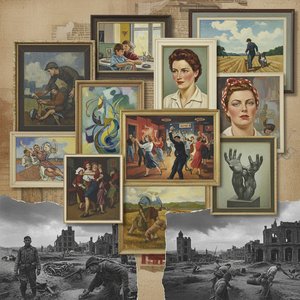
Echoes of War & Hope: Top 10 Artworks Reflecting the 1940s | OriginalUniqueArt
Journey through a decade of resilience & change with our Top 10 artworks of the 1940s. Explore iconic paintings by Rockwell, Hopper & more—reflecting WWII's impact and post-war hope. Find museum-quality reproductions at OriginalUniqueArt.com

Commanding Presence: The Art of Authority and the Iconography of the Officer in Classical Portraiture
Explore the profound iconography of authority through iconic military portraits. Discover how master painters captured command, regalia, and historical prestige in classical oil paintings, perfect for discerning collectors seeking timeless elegance.
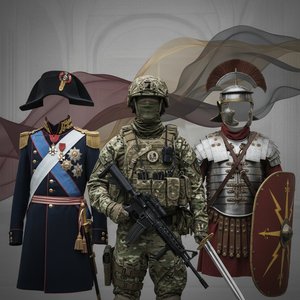
Beyond the Fabric: Decoding Identity, Authority, and Symbolism in the Art of Military Uniforms
Explore the profound symbolism of military uniforms in art history. From Victorian portraits to realistic lithographs, discover how artists capture power, identity, and historical legacy through the intricate details of martial regalia and command.

Josep Cusachs i: Exploring Catalan Modernism Through Social Commentary & Artistic Innovation
Explore the captivating world of Josep Cusachs i, a key figure in Catalan Modernism. Discover his realist paintings, social commentary, and influence on 19th-century Spanish art. Hand-painted reproductions available at OriginalUniqueArt.

Norman Wilkinson: Camouflage, Colour & the Artistic Response to Modern Warfare
Explore the fascinating story of Norman Wilkinson, the British artist behind Dazzle Camouflage. Discover his innovative techniques, wartime art, and enduring legacy in naval painting & abstract design. OriginalUniqueArt offers high-quality reproductions.