
 プレビュー
プレビュー
 シェアする
シェアする シェアする
シェアする
 詳細を見る
詳細を見る

 ダウンロード
 似ている作品
 X線調査
X線調査 スライドショー
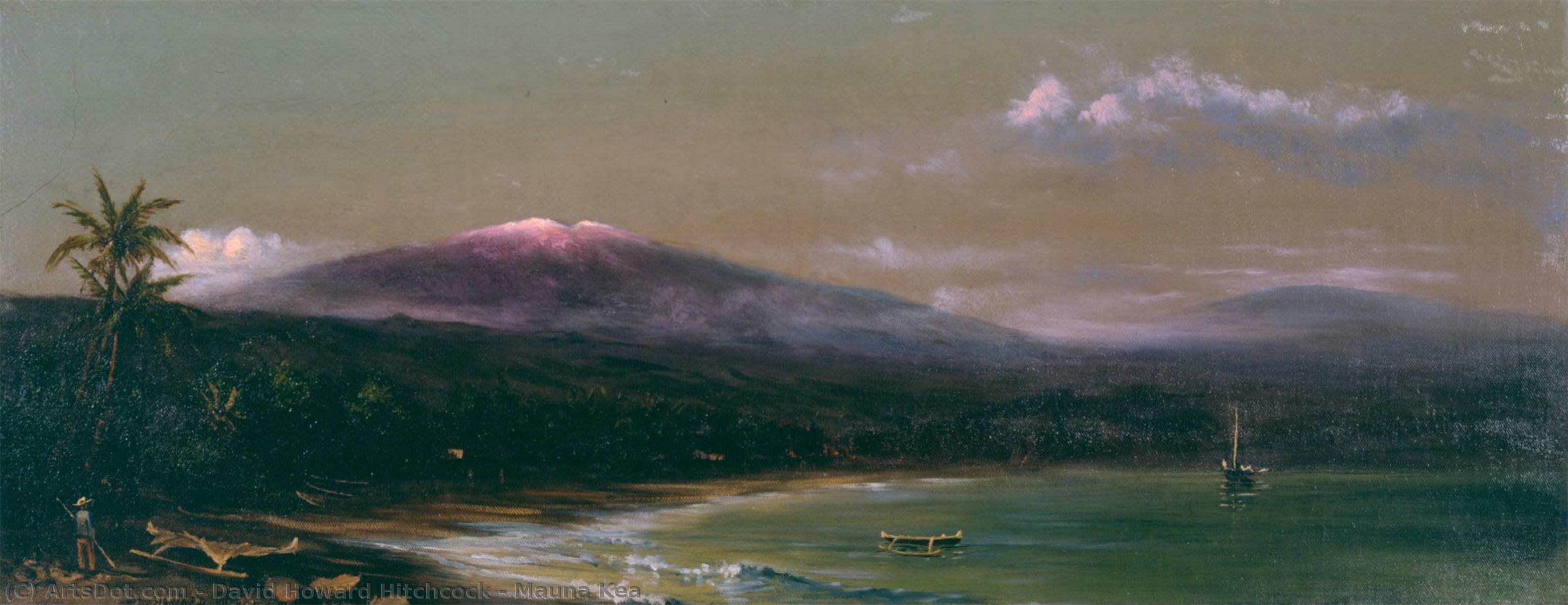
Mauna Kea


 詳細を見る
詳細を見る
ジークレー/アートプリント
迅速な制作と多彩な仕上げオプションを備えた、ミュージアムクオリティのジークレーまたはキャンバスプリント。 ( 手描きの絵画を購入 画像を購入)




































作品のオリジナル比率に合わせた、当店の規定サイズからお選びください。

特定のフレームやスペースに合わせて、ご自身でサイズを指定することも可能です。選択されたサイズが元の画像の比率と一致しない場合、作品をトリミングするか、鏡面反射または単色での塗りつぶしによって画像を拡張いたします。制作を開始する前に、ご確認用のデジタルモックアップをお送りいたします。
画面上のプレビューには、実際のトリミングや拡張は反映されませんのでご注意ください。最終的な構図を正確に確認できるのは、モックアップのみとなります。
カスタムサイズも承っておりますが、元の比率を維持するためには、あらかじめ用意されたリストからサイズを選択することをお勧めいたします。


 ガラスオプションは、110cm未満のサイズでのみご利用いただけます。

Mauna Kea
ジークレー/アートプリント
複製画のサイズ
-


合計金額
$ 80
作品詳細説明
アーティストの略歴
David Howard Hitchcock: A Life in Hawaiian Art
Early Life and Family Background
- Born: May 15, 1861, in Hilo, Hawaii.
- His father, also named David Howard Hitchcock (1831–1899), was a lawyer and served in the legislature of the Hawaiian Kingdom. He generally went by D. Howard Hitchcock to distinguish himself from his father.
- His mother was Almeda Eliza Widger (1828–1895).
- Hitchcock’s family had deep roots in Hawaii, with paternal grandparents who were missionaries – Harvey Rexford Hitchcock and Rebecca Howard.
- His sister, Almeda Eliza Hitchcock Moore, became the first woman lawyer in Hawaii.
Education and Artistic Beginnings
- Hitchcock graduated from Punahou School in Honolulu.
- He attended Oberlin College in Ohio, where he was first exposed to formal art exhibitions.
- Upon returning to Hawaii, he began sketching the volcanic landscapes with watercolors.
- A pivotal moment came when French artist Jules Tavernier recognized his talent and encouraged him to pursue serious artistic study.
- He furthered his training at the National Academy of Design in New York City and later at the Académie Julian in Paris (1891-1893), studying under Adolphe Bourguereau and Gabriel Joseph Ferrier.
- His work was accepted at the prestigious Paris Salon in 1893.
Artistic Development and Style
- Hitchcock became a leading member of Hawaii’s “Volcano School,” known for dramatic depictions of Hawaiian volcanic landscapes.
- His early work focused on capturing the raw power and beauty of volcanoes like Kilauea and Mauna Kea.
- He explored various islands, including Kauai (painting Waimea Canyon in 1907) and Maui, documenting their unique geological features.
- His style evolved over time, becoming more impressionistic during the late 1920s.
Major Achievements and Recognition
- He was a founder of the Kilohana Art League in Honolulu, an influential art program at the turn of the century.
- His paintings were exhibited at the Alaska-Yukon-Pacific Exposition in Seattle (1909), where he received an award.
- He held successful solo exhibitions in California, including San Francisco and Carmel-by-the-Sea.
- Hitchcock’s work was included in the Panama-Pacific International Exposition in San Francisco (1915).
- He created murals for the Pan-Pacific Union in Honolulu (1919) and painted views of Hawaii for Inter-Island Steam Navigation Company steamers.
- Retrospective exhibitions were held at the Honolulu Museum of Art (1936) and at the Golden Gate International Exposition (1939) and New York World’s Fair (1939).
Historical Significance and Legacy
- Hitchcock played a crucial role in establishing an artistic identity for Hawaii.
- His paintings provide valuable visual documentation of the Hawaiian landscape during a period of significant change.
- He was also involved in bringing Boy Scouting to Hawaii around 1910, demonstrating his commitment to community service.
- Hitchcock witnessed the attack on Pearl Harbor shortly before his death on January 1, 1943, marking a poignant end to a life dedicated to capturing the beauty and spirit of Hawaii.

david howard hitchcock
1861 - 1943
基本情報
- Birth Date: May 15, 1861
- Birth Place: Hilo, Hawaii
- Death Date: January 1, 1943
- Influenced By:
- Jules Tavernier
- Adolphe Bourguereau
- Gabriel Joseph Ferrier
- Movement: Volcano School
- Name: David Howard Hitchcock
- Nationality: American
- Notable Works:
- Floor of Kilauea Caldera
- Mauna Kea
- Waimea Canyon paintings

