プリント版に切り替え
 詳細を表示
詳細を表示







































 いずれかの辺が105 cm(約41インチ)を超えるアートワークまたは複製画の場合、フレームは分解されたキットの状態でお届けいたします。この方法は、輸送中の破損を防ぎ、安全に配送するために採用しております。


Echo and Narcissus by Pier Francesco Mola: A Baroque Masterpiece
- Artist: Pier Francesco Mola (Il Ticinese)
- Date: Unknown
- Medium: Oil on Canvas (likely, based on similar works)
A Scene of Despair and Reflection
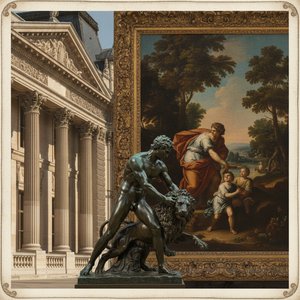
Pier Francesco Mola's "Echo and Narcissus" presents a poignant moment from Greek mythology. The painting depicts Narcissus, a strikingly handsome youth, consumed by his own reflection in a pool of water. He appears to be in distress or discomfort, his head bowed as he gazes at the image before him. The scene is set outdoors, suggested by the trees visible in the background, creating a naturalistic backdrop for this psychological drama. Two dogs are present – one near the left side and another closer to the right – seemingly observing Narcissus with an almost unsettling curiosity. Their presence adds a layer of complexity to the narrative, hinting at a world beyond Narcissus's self-absorption.
Baroque Style and Technique
"Echo and Narcissus" exemplifies the High Baroque style prevalent in 17th-century Rome, where Mola spent much of his career. Mola’s work is characterized by dynamic compositions, dramatic lighting (though subtle here), and a focus on emotional intensity. While known for his frescoes, Mola also excelled in smaller paintings like this one, demonstrating his skill in capturing nuanced expressions and atmospheric detail. The loose style, influenced by Titian, Albani, and Guercino, is evident in the brushwork and the rendering of textures – particularly in the foliage and Narcissus’s garments. The painting likely utilizes oil paints on canvas, a common technique for achieving rich colors and subtle gradations of tone during that period.
Mythological Significance and Symbolism
The subject matter itself is deeply symbolic. The myth of Echo and Narcissus explores themes of vanity, self-love, unrequited love, and the destructive nature of obsession. Narcissus's inability to look beyond his own beauty leads to his demise – he wastes away gazing at his reflection until only a flower remains. Echo, who was cursed to only repeat the words of others, represents lost communication and unattainable desire. Mola’s interpretation focuses primarily on Narcissus’s internal struggle, emphasizing the psychological torment rather than the tragic outcome. The dogs could symbolize fidelity or perhaps even a commentary on the indifference of nature to human suffering.
Emotional Impact and Artistic Legacy
Mola's "Echo and Narcissus" evokes a sense of melancholy and introspection. The painting’s power lies in its ability to convey complex emotions through subtle gestures and facial expressions. The downward gaze, the slumped posture, and the overall atmosphere of quiet despair create a deeply moving image. As a painter active around Rome, Mola's work bridged classicism with looser handling, influencing subsequent generations of artists. Owning a reproduction of this painting offers an opportunity to bring a touch of Baroque drama and timeless beauty into any space, inviting contemplation on the human condition.
Q&A
「Echo and Narcissus」のファインアートプリントは販売されていますか?
ピエトロ・フランチェスコ・モーラ作「Echo and Narcissus」のプリントは、こちらのファインアートプリントページから直接ご注文いただけます:コットンキャンバス、またはアーカイブ品質のキャンバスペーパーに施されたファインアートプリント
ピエトロ・フランチェスコ・モーラ作「Echo and Narcissus」の明るさはどのように感じられますか?
全体として、「Echo and Narcissus」の明るさはdeep_shadowと記録されています。知覚的な明るさとは、作品がどの程度明るく、あるいは暗く感じられるかを表すものです。
ピエトロ・フランチェスコ・モーラ作「Echo and Narcissus」は、明るい色調の作品ですか、それとも暗い色調の作品ですか?
「Echo and Narcissus」の全体的な明るさはdeep_shadowで、輝度はDarkです。
この絵画の詳細を見る
 設置イメージを表示
 シェアする
シェアする シェアする
シェアする
 詳細を見る
詳細を見る ガイドを表示

 ダウンロード
 似ている作品
 X線調査
X線調査 スライドショーを表示
 Q&A
Q&A 統計情報
統計情報