プリント版に切り替え
 詳細を表示
詳細を表示







































 いずれかの辺が105 cm(約41インチ)を超えるアートワークまたは複製画の場合、フレームは分解されたキットの状態でお届けいたします。この方法は、輸送中の破損を防ぎ、安全に配送するために採用しております。


A Silent Echo of War: Craig R. Barrett’s “Dulce et Decorum Est No. 1”
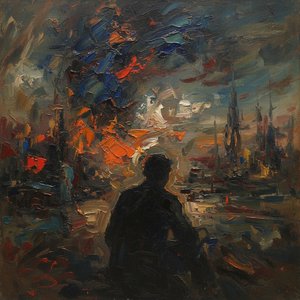
Craig R. Barrett's "Dulce et Decorum Est No. 1" isn’t merely a depiction of a scene; it’s an immersion into the chilling aftermath of conflict, rendered with a stark and profoundly moving restraint. Born in San Francisco in 1939, Barrett’s unlikely journey from leading Intel Corporation to creating these evocative monochrome sketches reveals a deeply contemplative spirit, one shaped by both technological precision and a haunting awareness of human suffering. The artwork immediately commands attention through its deliberate simplicity – a limited palette of greys and reds against a textured canvas that suggests the grit and grime of a battlefield. It’s a visual distillation of Wilfred Owen's seminal poem, “Dulce et Decorum Est,” translating the horrors of World War I into a powerfully silent narrative.
The central image is arresting: two silhouetted figures, rendered in deep red, are caught mid-stride, their postures conveying both urgency and exhaustion. They’re not heroic warriors charging into battle; instead, they embody the weary remnants of soldiers, limping through a desolate landscape. The detail—the slumped shoulders, the downward gaze, the suggestion of bloodied boots—is remarkably poignant, avoiding explicit gore while powerfully communicating the physical and emotional toll of war. The background, subtly textured to resemble canvas or paper, hints at the fragility of life and the enduring nature of memory. It’s a deliberate choice, emphasizing that this isn't a celebration of victory but a somber reflection on loss.
The Weight of Latin: Context and Poetic Resonance
The title itself – “Dulce et Decorum Est” – is crucial to understanding the artwork’s intent. This phrase, taken from Horace’s *Odes*, translates to "It is sweet and fitting to die for one's country." Owen famously subverted this sentiment in his poem, exposing its deceptive comfort amidst the brutal realities of trench warfare. Barrett doesn’t shy away from this irony; he presents the phrase not as a rallying cry but as a haunting echo of a lie, a testament to the enduring power of poetry to challenge conventional narratives. The inclusion of the Latin text at the top serves as a constant reminder of the poem's central theme and invites viewers to contemplate the complex relationship between patriotism, sacrifice, and truth.
The choice of “No. 1” adds another layer of complexity. It suggests a series, hinting that Barrett is exploring variations on this core theme – perhaps different moments within the experience of war, or different interpretations of the poem’s message. It also subtly elevates the work beyond a simple depiction, transforming it into a meditation on memory, loss, and the enduring legacy of conflict.
Technique and Emotional Impact
Barrett's technique is characterized by its deliberate restraint and masterful control of monochrome. The limited palette amplifies the emotional impact, forcing the viewer to focus on form, texture, and gesture. The stark contrast between the red figures and the grey background creates a sense of isolation and vulnerability. There’s no dramatic lighting or elaborate detail; instead, Barrett relies on subtle shifts in tone and shading to convey mood and atmosphere. The rough texture of the canvas adds to the feeling of rawness and immediacy, as if the artwork has been directly imprinted with the experience of war.
Ultimately, “Dulce et Decorum Est No. 1” is a profoundly moving work that transcends its subject matter. It’s not simply a depiction of soldiers; it's an exploration of human resilience, grief, and the enduring power of memory. The artwork invites viewers to confront the uncomfortable truths of war and to contemplate the cost of conflict – a reminder that even in silence, the echoes of the past can resonate powerfully in the present.
Specifications & Considerations
- Title: Dulce et Decorum Est No. 1
- Description: A monochrome sketch depicting two silhouetted figures, representing weary soldiers, set against a textured canvas background.
- Size: 150 x 90 cm
- Date: Unknown (likely created in the 21st century)
- Artist: Craig R. Barrett
- Medium: Sketch on Canvas/Paper
This artwork would be particularly well-suited for spaces that demand thoughtful contemplation, such as libraries, museums, or private residences where a connection to history and human experience is valued. Its understated elegance and powerful emotional resonance make it a compelling addition to any collection.
Q&A
クレイグ・R・バレット作「Dulce et decorum est no. 1」のX線画像を見ることはできますか?
クレイグ・R・バレット作「Dulce et decorum est no. 1」のX線解析ページは、X線写真のような表示を含む、作品画像の11層にわたる光学レイヤーをスライドして閲覧できるインタラクティブ・ビューアです。
「Dulce et decorum est no. 1」の推奨プリントサイズはどのくらいですか?
クレイグ・R・バレット作「Dulce et decorum est no. 1」には、Mediumのレプリカをおすすめします。比率を維持したまま、サイズを調整することが可能です。
「Dulce et decorum est no. 1」の作者とスタイルは何ですか?
「Dulce et decorum est no. 1」の背景には、クレイグ・R・バレットとContemporary Realism運動があります。
この絵画の詳細を見る
 設置イメージを表示
 シェアする
シェアする シェアする
シェアする
 詳細を見る
詳細を見る ガイドを表示

 ダウンロード
 似ている作品
 X線調査
X線調査 スライドショーを表示
 Q&A
Q&A 統計情報
統計情報