
 設置イメージを確認
 送る
送る シェア
シェア
 詳細情報
詳細情報 ガイドを表示

 画像をダウンロード
 似ている作品
 X線調査
X線調査 スライドショー
 Q&A
Q&A 統計情報
統計情報Melancholy

- 130.0 x 165.0 cm


 続きを読む
続きを読む
ジークレー/アートプリント
スピーディーな制作と多彩な仕上げオプションが魅力の、ミュージアムクオリティなジークレー・キャンバスプリント。 ( 手描きの複製画を注文する デジタル画像販売へ切り替え)




P118B ¥10

P118H ¥10

P118W ¥10

P438Z ¥10

P508JH ¥12

P508YH ¥12

P805H ¥10

P805Z ¥10

P919BZ ¥10

P919G ¥10

P919XJ ¥10

P959ZH ¥10

P968JZ ¥12

W106C ¥8

W218G ¥10

W218JH ¥8

W218Y ¥10

W307PJ ¥10

W316G ¥10

W316PJ ¥8

W316Y ¥10

W398PJ ¥8

W4111J ¥10

W500HY ¥15

W500JH ¥15

W692G ¥12

W849H ¥8

W940BG ¥15

W953PJ ¥8




作品のオリジナル比率に合わせた、当店の規定サイズからお選びください。

額縁や壁のスペースに合わせて、ご希望の幅と高さを入力してください。プリントはカットすることは可能ですが、元の画像より大きくすることはできないため、異なる比率のサイズを選択された場合は、画像の一部が欠けることになります。印刷を開始する前に、内容を確認していただくためのデジタルモックアップをお送りいたします。このページに表示されている画像は、実際のカット後の状態を示すものではありません。実際の仕上がりはモックアップにてご確認ください。


 ガラスオプションは、110cm未満のサイズでのみご利用いただけます。

Melancholy
ジークレー/アートプリント
複製画サイズ一覧
-


合計金額
¥ 12624
Melancholy by Constance Charpentier: A Portrait of Quietude
Constance Charpentier’s “Melancholy,” painted in 1801, is more than just a depiction of a seated woman; it's an exquisitely rendered meditation on solitude and the lingering grief of a generation. This oil-on-canvas masterpiece, currently residing within the hallowed halls of the Musée de Picardie in Amiens, France, offers a poignant glimpse into the artistic sensibilities of early 19th-century Europe – a period grappling with the aftermath of revolution and war.
The painting immediately draws the viewer’s eye to its central figure: a young woman lost in contemplative thought. Her posture is subtly slumped, her gaze fixed downwards, suggesting an inward journey of sorrow. The setting—a darkened landscape punctuated by indistinct trees—amplifies this sense of isolation and reinforces the theme of melancholy. Notice how Charpentier masterfully employs chiaroscuro, utilizing dramatic contrasts between light and shadow to sculpt the figure’s form and create a palpable atmosphere of quiet sadness. The muted palette – primarily creams, whites, and grays – further contributes to the painting's somber mood, while subtle variations within these tones hint at depth and texture.
Neoclassical Elegance: Style and Technique
“Melancholy” is a quintessential example of Neoclassicism, an artistic movement that sought inspiration from the art and ideals of ancient Greece and Rome. Charpentier’s work embodies this style through its emphasis on order, clarity, and balanced composition. The meticulous brushwork—evident in the delicate rendering of the fabric draped across the woman's body and the subtle modeling of her features—demonstrates a remarkable level of technical skill. The use of clean lines and defined edges is characteristic of Neoclassicism, lending the painting an air of formality and restraint.
Technically, Charpentier’s approach leans towards a restrained emotional palette, prioritizing form and structure over overt sentimentality. However, she skillfully captures the nuances of human emotion through her masterful use of light and shadow, creating a powerful sense of introspection within the subject's gaze. The painting’s shallow perspective further focuses attention on the figure, immersing the viewer in her internal world.
A Window into an Era: Historical Context
To fully appreciate “Melancholy,” it’s crucial to understand the historical context in which it was created. Following the tumultuous years of the French Revolution and Napoleonic Wars, France was a nation grappling with profound social and emotional upheaval. The loss of countless young men had left an indelible mark on society, particularly on women who often bore the brunt of responsibility and grief. Charpentier’s painting reflects this collective sorrow, offering a visual representation of the quiet despair that permeated French society at the time.
The Musée de Picardie, where “Melancholy” is housed, provides further context by showcasing other works from the same period, including pieces by Pierre Puvis de Chavannes and Frans Hals. These artists, like Charpentier, were deeply influenced by Neoclassicism and sought to capture the beauty and dignity of human experience through their art.
Symbolism and Emotional Resonance
Beyond its technical brilliance, “Melancholy” is rich in symbolism. The woman’s contemplative pose and downward gaze evoke a sense of introspection and sorrow, while the darkened landscape suggests a world shrouded in grief. The classical drapery—a hallmark of Neoclassicism—references ancient virtues and ideals, subtly hinting at a longing for a lost past or a more harmonious future. The painting's overall effect is profoundly moving, inviting viewers to contemplate the complexities of human emotion and the enduring power of melancholy.
Reproductions of “Melancholy” offer an accessible way to experience the beauty and emotional depth of this remarkable artwork. Whether displayed in a private residence or a public space, it serves as a timeless reminder of the capacity for art to capture and convey the most profound human experiences.
よくあるご質問
「Melancholy」をフルスクリーンのスライドショーで鑑賞することはできますか?
スライドショーをご覧いただけます:Constance Charpentier作「Melancholy」のスライドショーページ。
「Melancholy」の詳細を確認することはできますか?
Constance Charpentier作「Melancholy」のX線ビューは、作品のX線解析ページでご覧いただけます。11層の光学レイヤーを通じて画像をインタラクティブに解析できる、詳細な検証機能です。
Constance Charpentier作「Melancholy」 の推奨プリントサイズを教えてください。
Constance Charpentier作「Melancholy」には、Mediumのレプリカをおすすめします。比率を維持したまま、サイズを調整することが可能です。
アーティストについて
Constance Charpentier: A Life in Portraiture
Early Life and Training
Constance Marie Charpentier was born in Paris, France, on April 4, 1767, and passed away in 1849. Her early life remains somewhat shrouded in mystery, particularly regarding her formal artistic training. Records are unclear, but it is widely believed she studied under several prominent artists of the time.
- She is often associated with Jacques-Louis David, a leading figure of Neoclassicism, though this remains debated.
- Other potential instructors include François Gérard, Pierre Bouillon, Louis Lafitte, and members of the Wille family – Johann Georg Wille or his son, Pierre-Alexandre Wille.
Artistic Development and Style
Charpentier specialized in genre scenes and portraits, with a particular focus on depicting women and children. Her style reflects the influence of Neoclassicism, characterized by clarity, precision, and a restrained emotional palette. However, she also infused her work with a sensitivity to character and an intimate portrayal of domestic life.
- Her paintings often capture moments of quiet contemplation or everyday activity.
- She demonstrated skill in rendering textures and details, particularly in fabrics and facial expressions.
Career and Recognition
Charpentier began exhibiting her work at the Salons – prestigious art exhibitions – from 1795 to 1819. Over this period, she presented approximately thirty paintings to the public.
- In 1814, she received a gold medal at the Paris Salon, marking a significant achievement in her career.
- She was also awarded a silver medal at the Salon in Douai in 1821.
Challenges and Misattributions
Charpentier’s artistic legacy has been complicated by instances of misattribution. Some of her works were initially credited to her teacher, Jacques-Louis David.
- The painting Young Woman Drawing (1801), for example, was first attributed to David, then to Charpentier, but is now believed to be the work of Marie-Denise Villers.
- This highlights the challenges faced by female artists in gaining recognition during this period and the tendency for their contributions to be overlooked or overshadowed.
Legacy and Historical Significance
Despite these challenges, Constance Charpentier is now recognized as one of the finest portrait painters of her era. Based on surviving works positively identified as hers, she demonstrated a remarkable talent for capturing the likenesses and personalities of her subjects.
- Her paintings offer valuable insights into the lives of women and children in late 18th and early 19th-century France.
- She represents an important figure in the history of French art, demonstrating the skill and creativity of female artists during a time when their opportunities were limited.

Constance Charpentier
1767 - 1849 , France
アーティスト情報
- Name: Constance Marie Charpentier
- Movement: Neoclassicism, Genre painting
- Birth Date: 1767-04-04
- Death Date: 1849-08-03
- Birth Place: Paris, France
- Nationality: French
- Date Of Birth: 1767
- Date Of Death: 1849
- Influenced By:
- Jacques-Louis David
- François Gérard
- Pierre Bouillon
- Louis Lafitte
- Johann Georg Wille
- Pierre-Alexandre Wille
- Notable Works: Melancholy, Young Woman Drawing (attribution disputed)
- Place Of Birth: Paris, France
関連記事

Neoclassical Portraiture: The Timeless Elegance of Order, Grace, and Academic Mastery
Explore the refined world of Neoclassical portraiture. Discover the mastery of line, light, and order through an expert exploration of academic art history, from Jacques-Louis David to Jean-Antoine Houdon. Immerse yourself in the timeless elegance of classical realism.

Oil on Canvas: A Historical & Technical Exploration of a Timeless Artistic Medium
Explore the rich history & enduring techniques of oil painting on canvas. Discover the science behind its longevity, conservation practices, and contemporary relevance. Expert insights for art enthusiasts.
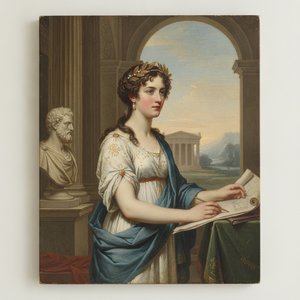
The Revival of Antiquity: Exploring Ideals of Beauty & Power in Neoclassical Portraiture
Explore the captivating world of Neoclassical portraiture! Discover the power & ideals behind masterpieces by David, Girodet & more. Expert analysis, custom reproductions & art appraisal at OriginalUniqueArt.

The Enduring Legacy of Oil on Canvas: Technique, History & Aesthetic Impact
Explore the rich history & techniques of oil painting – from Renaissance masters to Impressionism. Discover pigments, layering methods, and why this timeless medium endures. Expert insights for artists & art enthusiasts.
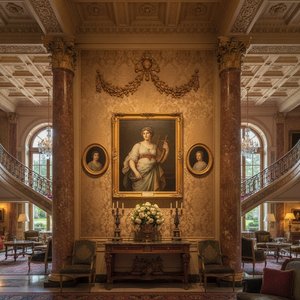
Neoclassical Portraiture: A Procurement Guide to Timeless Elegance for Luxury Hotel Interiors
A professional procurement guide for hotel designers sourcing Neoclassical portraiture. Discover how to integrate timeless elegance into luxury interiors with high-volume, hand-painted oil reproductions, custom sizing, and reliable global logistics for large-scale hospitality projects.