油彩画を購入
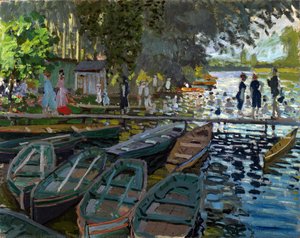
 舟の詳細







































 いずれかの辺が105 cm(約41インチ)を超えるアートワークまたは複製画の場合、フレームは分解されたキットの状態でお届けいたします。この方法は、輸送中の破損を防ぎ、安全に配送するために採用しております。


A Symphony of Light and Motion
Claude Monet's "Boats," painted in 1868, is far more than a mere depiction of vessels gliding across the water; it is a profound meditation on the ephemeral beauty of the natural world. As one gazes upon this canvas, the eye is immediately drawn to the rhythmic dance of three sailboats, their forms captured with a sense of weightless grace. The largest vessel anchors the left side of the composition, while smaller boats drift toward the right, creating a visual balance that mirrors the gentle ebb and flow of the tide.Within this lively scene, tiny figures of people and even a solitary dog dot the landscape, adding a layer of human warmth to the vastness of the sea. It is a moment frozen in time, capturing the vibrant energy of a day at Le Havre, where the boundary between the sky and the water seems to dissolve into a single, luminous atmosphere. For those seeking to infuse a room with vitality, this piece offers an unparalleled sense of movement and life.
The Revolutionary Brushstroke
To understand "Boats" is to witness the birth of a new way of seeing. Moving away from the rigid, meticulous details demanded by academic tradition, Monet embraced a technique that prioritized sensation over photographic accuracy. Influenced by his mentor Eugène Boudin, he utilized loose, visible brushstrokes that build texture and depth directly onto the canvas. This approach allows the light to appear as if it is truly vibrating upon the water's surface.By masterfully employing complementary colors—specifically the striking interplay between deep blues and warm oranges—Monet heightens the visual impact, creating a shimmering effect that mimics the sun's interaction with the waves. For the collector or interior designer, this technique offers a dynamic energy that can breathe life into any space, providing a focal point that changes character depending on the light of the room.
A Legacy of Observation and Nature
Set against the backdrop of Normandy during a period of rapid industrialization, "Boats" serves as a deliberate homage to the enduring power of nature. While the world around Le Havre was changing through mechanical progress, Monet remained steadfast in his pursuit of the plein air experience—painting directly from the landscape to capture its true essence. The boats themselves act as symbols of journey and connection, representing humanity's delicate relationship with the vast, unknown sea.This painting is not just a piece of maritime art; it is an invitation to slow down and appreciate the fleeting, transient moments that define our existence. Owning a high-quality reproduction of this masterpiece allows one to bring a piece of this historical serenity and artistic revolution into the modern home, serving as a timeless reminder of the beauty found in the simplest of observations.
Q&A
舟は手描きですか、それともプリントですか?
手描きによる制作:熟練した画家が、リネンキャンバスに油彩で舟を模写します。
舟のサイズはどれを選べばよいですか?
原画のサイズは100 x 80 cmです。 サイズは34.8 x 28.7 cm (¥31664)から241.9 x 199.8 cm (¥280540)まで展開しております。こちらのページ内の表に、主な工程とそれぞれの価格を記載しています。
配送にはどのくらいの時間がかかりますか?
配送には4〜5週間を要し、世界中どこでも速達便にて無料でお届けいたします。また、本ページではお急ぎの方向けの特急制作オプションもご用意しております。商品は、理由を問わず100日以内であれば全額返金での返品が可能です。
舟の原画はどこにありますか?
作品のオリジナルは、リスボンにあるCalouste Gulbenkian Foundationの所蔵です。
クロード・モネは舟の制作にどのような画材(メディア)を使用しましたか?
油彩 キャンバス
 設置イメージを表示

 シェアする
 シェアする
 詳細を見る
 解説シート


 ダウンロード
 似ている作品
 X線調査
 スライドショーを表示
 Q&A

 統計情報