プリント版に切り替え
 詳細を表示
詳細を表示







































 いずれかの辺が105 cm(約41インチ)を超えるアートワークまたは複製画の場合、フレームは分解されたキットの状態でお届けいたします。この方法は、輸送中の破損を防ぎ、安全に配送するために採用しております。


Camille on the Beach
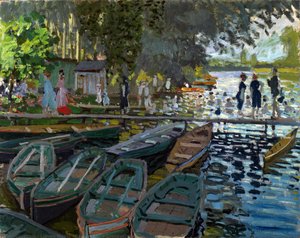
Claude Monet’s “Camille on the Beach,” painted in 1870, isn't merely a picturesque seascape; it’s a profound meditation on domestic tranquility and the artist’s evolving relationship with his future wife. Located at the Musée Marmottan Monet in Paris, this canvas embodies Monet’s revolutionary approach to Impressionism—capturing fleeting moments of beauty through luminous color and textured brushstrokes.
Composition & Technique The painting depicts Camille Doncieux strolling along Trouville Beach, Normandy, accompanied by a nanny. Monet skillfully employs broken color – applying paint in small, separate strokes rather than blending them seamlessly – to recreate the shimmering effect of sunlight on water and sand. Notice how Monet’s brushwork builds up layers of pigment, creating palpable texture that invites viewers into the scene. The flattened perspective contributes to the painting's serene atmosphere, prioritizing visual sensation over precise representation.
Historical Context & Symbolism “Camille on the Beach” emerged during a period of significant artistic experimentation and social upheaval. Impressionists were challenging academic conventions by rejecting idealized depictions of nature in favor of capturing subjective experience. Monet’s inclusion of Camille—a woman he adored—represents not only his personal affection but also a broader exploration of domestic life as an antidote to the anxieties of the era. The spoons, seemingly insignificant objects, symbolize nourishment and comfort – mirroring the quiet contentment conveyed by the scene.
Monet’s Series Paintings & Artistic Legacy Monet's fascination with capturing ephemeral light is evident in his dedication to painting the same subject repeatedly under varying conditions—a technique known as “series paintings.” While “Camille on the Beach” isn’t formally part of a specific series, it exemplifies Monet’s broader artistic philosophy: to distill the essence of nature into its most immediate visual impact. This approach profoundly influenced subsequent generations of artists and cemented Monet's place as one of the fathers of modern art.
Related Works & Further Exploration Consider comparing “Camille on the Beach” with Monet’s other beach scenes, such as “On the Beach at Trouville,” to appreciate the consistency of his artistic vision. Also delve into his monumental Water Lilies series—a testament to his unwavering pursuit of capturing the sublime beauty of the natural world. For a detailed examination of this masterpiece and its context, visit the Musée Marmottan Monet.
Q&A
ご購入前に、クロード・モネ作「ビーチでのカミーユ」 をご自身の壁に飾った様子を確認することはできますか?
クロード・モネ作「ビーチでのカミーユ」のARで見るページでは、対応端末を使用して拡張現実(AR)により、作品をご自身の空間に表示してご確認いただけます。
「ビーチでのカミーユ」はパブリックドメインですか?
クロード・モネ作「ビーチでのカミーユ」 の著作権について:本作品はパブリックドメイン(著作権消滅)です。これにより、画像の複製が自由に行えるかどうかが決まります。
「ビーチでのカミーユ」が制作されたとき、クロード・モネは何歳でしたか?
クロード・モネは30歳の時に「ビーチでのカミーユ」を制作しました。作家は1840年に生まれ、本作の制作年は1870年です。
この絵画の詳細を見る
 設置イメージを表示
 シェアする
シェアする シェアする
シェアする
 詳細を見る
詳細を見る ガイドを表示

 ダウンロード
 似ている作品
 X線調査
X線調査 スライドショーを表示
 Q&A
Q&A 統計情報
統計情報