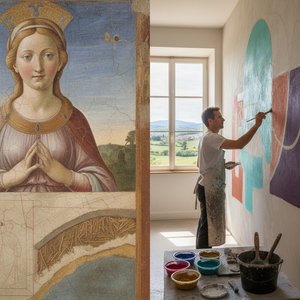
サイズ選択

() ·

あなたのために、手仕事で描かれた一枚の絵画

Apocalyptical Christ (detail)

手描き油彩複製画

当社のアーティストが、ご希望のサイズと額縁に合わせてキャンバスに手描きで制作する、オーダーメイドの油彩画です。 ( プリント版に切り替え デジタル画像販売へ切り替え)

作品解説

Explore Cimabue’s ‘Apocalyptical Christ’ (1280) – a pivotal Byzantine-inspired fresco showcasing early Renaissance realism & spiritual power. A masterpiece of the Trecento!

アーティストの略歴

イタリア絵画の先駆者シマブエは、ビザンツ様式とルネサンス様式の融合を特徴とし、特に聖母マテアとアレッスの洗礼堂のモザイクで知られる芸術家です。彼の作品は美術史における重要な転換点を示し、後の画家たちに大きな影響を与えました。

〜より ·

第1章

サイズはどのくらいが良いでしょうか?

スライドしてサイズを変更してください。左側の画像は、フレームの実際の幅を表示しています。作品の比率はそのまま維持されます。

標準サイズ
オーダーメイド
CM
INCH

作品のオリジナル比率に合わせた、当店の規定サイズからお選びください。

横幅
高さ

フレームや壁のスペースに合わせて、ご希望の幅と高さを入力してください。本作品は手描きのため、異なる比率のサイズをご希望の場合、絵画の周囲を少し広げて描くか、あるいは端を少しカットして調整することが可能です。お客様のご要望に合わせます。制作を開始する前に、仕上がりを確認するためのデジタルモックアップをお送りいたします。このページに表示されている画像は完成品の実物ではなく、あくまでモックアップによるイメージです。

第2章

どのような状態での配送をご希望ですか?

キャンバスの側面仕上げを選択

フレームを選択

Corner sample of the WhiteWrap canvas edge finish, stretched on 無垢材 bars
白の側面仕上げ ¥1
Corner sample of the BlurSideWrap canvas edge finish, stretched on 無垢材 bars
エッジぼかし仕上げ ¥1
Corner sample of the ExtendedWrap canvas edge finish, stretched on 無垢材 bars
回り込み仕上げ ¥1
Corner sample of the P118B picture frame: 成型ポリスチレン, 5 cm wide and 3 cm thick
P118B ¥10
Corner sample of the P118H picture frame: 成型ポリスチレン, 5 cm wide and 3 cm thick
P118H ¥10
Corner sample of the P118W picture frame: 成型ポリスチレン, 5 cm wide and 3 cm thick
P118W ¥10
Corner sample of the P438Z picture frame: 成型ポリスチレン, 5.5 cm wide and 3.5 cm thick
P438Z ¥10
Corner sample of the P508JH picture frame: 成型ポリスチレン, 7 cm wide and 3.5 cm thick
P508JH ¥12
Corner sample of the P508YH picture frame: 成型ポリスチレン, 7 cm wide and 3.5 cm thick
P508YH ¥12
Corner sample of the P805H picture frame: 成型ポリスチレン, 5 cm wide and 3.5 cm thick
P805H ¥10
Corner sample of the P805Z picture frame: 成型ポリスチレン, 5 cm wide and 3.5 cm thick
P805Z ¥10
Corner sample of the P919BZ picture frame: 成型ポリスチレン, 7 cm wide and 3.5 cm thick
P919BZ ¥10
Corner sample of the P919G picture frame: 成型ポリスチレン, 7 cm wide and 3.5 cm thick
P919G ¥10
Corner sample of the P919XJ picture frame: 成型ポリスチレン, 7 cm wide and 3.5 cm thick
P919XJ ¥10
Corner sample of the P959ZH picture frame: 成型ポリスチレン, 5 cm wide and 3 cm thick
P959ZH ¥10
Corner sample of the P968JZ picture frame: 成型ポリスチレン, 6 cm wide and 4 cm thick
P968JZ ¥12
Corner sample of the W106C picture frame: 無垢材, 5 cm wide and 3 cm thick
W106C ¥8
Corner sample of the W218G picture frame: 無垢材, 5 cm wide and 3 cm thick
W218G ¥10
Corner sample of the W218JH picture frame: 無垢材, 5 cm wide and 3 cm thick
W218JH ¥8
Corner sample of the W218Y picture frame: 無垢材, 5 cm wide and 3 cm thick
W218Y ¥10
Corner sample of the W307PJ picture frame: 無垢材, 6 cm wide and 3 cm thick
W307PJ ¥10
Corner sample of the W316G picture frame: 無垢材, 6 cm wide and 3 cm thick
W316G ¥10
Corner sample of the W316PJ picture frame: 無垢材, 6 cm wide and 3 cm thick
W316PJ ¥8
Corner sample of the W316Y picture frame: 無垢材, 6 cm wide and 3 cm thick
W316Y ¥10
Corner sample of the W398PJ picture frame: 無垢材, 5 cm wide and 3 cm thick
W398PJ ¥8
Corner sample of the W4111J picture frame: 無垢材, 6.5 cm wide and 3.5 cm thick
W4111J ¥10
Corner sample of the W500HY picture frame: 無垢材, 7 cm wide and 5 cm thick
W500HY ¥15
Corner sample of the W500JH picture frame: 無垢材, 7 cm wide and 5 cm thick
W500JH ¥15
Corner sample of the W692G picture frame: 無垢材, 8 cm wide and 4 cm thick
W692G ¥12
Corner sample of the W849H picture frame: 無垢材, 5 cm wide and 3 cm thick
W849H ¥8
Corner sample of the W940BG picture frame: 無垢材, 7.5 cm wide and 4.5 cm thick
W940BG ¥15
Corner sample of the W953PJ picture frame: 無垢材, 6 cm wide and 3.5 cm thick
W953PJ ¥8
Corner sample of the H24-GOLD picture frame: ジェッソ仕上げの木彫, 10 cm wide and 6 cm thick
H24-GOLD ¥30
Corner sample of the H24-SILVER picture frame: ジェッソ仕上げの木彫, 10 cm wide and 6 cm thick
H24-SILVER ¥30
Corner sample of the H36-GOLD picture frame: ジェッソ仕上げの木彫, 15 cm wide and 6.5 cm thick
H36-GOLD ¥45
Corner sample of the H36-SILVER picture frame: ジェッソ仕上げの木彫, 15 cm wide and 6.5 cm thick
H36-SILVER ¥45
額縁プレビュー
額装済み

額縁の形状: . 額縁を含む全体サイズ: .

第3章

誰が描き、何か変更すべき点はありますか?

変更可能な例:顔をお客様の写真に差し替え、ペットの変更(例:猫を犬に変更)、背景に隠しメッセージを追加、背景の風景や要素の変更。
ご注文後、OriginalUniqueArt.com のチームより詳細な手順についてメールをお送りし、仕上がりイメージ(モックアップ)をご提示いたします。

世界中への配送()は、通常の5週間ではなく、3〜4週間でお届けいたします。(4 11月)。品質には一切妥協いたしません。

第4章

仕上げのひと手間

美術館にあるような、銘板(ネームプレート)を。

刻印入りブロンズプレートの詳細

This elegant plaque features the artist's name and the title of the artwork, finely engraved for a timeless presentation.

It is made from bronze with a refined, elegant finish. The text is precisely laser-engraved for a sharp and permanent result. Measuring 9x2 cm, the plaque is compact yet easy to read. It's built to be durable and scratch-resistant, offering a professional, museum-quality look. Mounting is simple thanks to the included adhesive backing.

透明アクリル銘板の詳細

The plaque includes essential engraved details such as the artist's name, the title of the artwork, the date it was created, the type of media used-like oil on canvas or watercolor-a brief description of the piece, and a QR code that links to the complete artwork information.

It is crafted from clear acrylic, offering a sleek, modern appearance. The text is UV-engraved in black to ensure strong visual contrast. With a size of 10x15 cm, it ensures optimal readability. It comes equipped with two metal hooks for secure wall mounting. The plaque is designed to be weather-resistant, making it suitable for various environments, and it includes interactive features that work seamlessly with smartphone scanning.

黒アクリル製銘板の詳細

This elegant plaque includes engraved information such as the artist's name, the title of the artwork, the date it was created, the type of media used (like oil on canvas or watercolor), a short description of the artwork, and a QR code for quick access to more information.

The plaque itself is made from refined black acrylic with a premium finish. The text is laser-engraved in white for high contrast and readability. Its size is 10x15 cm, designed to be easy to read. It comes with two metal hooks for professional mounting. The design is sleek and fits any interior style. It is also weather-resistant and durable, with built-in digital integration for mobile compatibility.

保護用ニスをご希望ですか?

お届け希望日をお選びください

第5章

ご注文通りの絵画内容

Apocalyptical Christ (detail)

再現技法

複製画サイズ一覧

-

至高の熟練アーティスト

より細部までこだわった表現、洗練された技術、そして十分な制作時間

-

複製画用フレーム

-

-

いずれかの辺が105 cm(約41インチ)を超えるアートワークまたは複製画の場合、フレームは分解されたキットの状態でお届けいたします。この方法は、輸送中の破損を防ぎ、安全に配送するために採用しております。

組み立てには専門知識が必要です(DIY用製品ではありません)。
本キットは、経験豊富なプロの額装師が、木工用ボンド(別売)、キャンバス用プライヤー、およびボンドの乾燥時に桟を直角に保持するためのクランプを使用して、組み立ておよびキャンバスの張り作業を行う必要があります。不適切な組み立てやキャンバスの張りの不均一は、作品に永久的な損傷を与える恐れがあり、弊社の保証対象外となります。

  • すべての無垢材のパーツが含まれており、組み立てに最適なサイズに正確にカットされています。

  • 付属のネジを使用し、角の接合部には別途木工用ボンドをご用意ください(ボンドは付属しておりません)。ボンドは額装業者様にてご手配をお願いいたします。

  • プロ仕様の道具が必要ですが、キットには含まれていません:キャンバス用ストレッチングプライヤー(テンショナー)、および接着剤が乾燥するまで木枠を直角に固定するためのクランプ。

重要:
コーナーの接合部には木工用ボンドが必要です。また、ボンドが完全に乾くまでクランプでバーを固定しておく必要があり、組み立てたフレームにキャンバスを張るにはキャンバス用ストレッチングプライヤーが必要となります。これらの道具はキットに含まれておりません。このサイズをご注文される前に、経験豊富なプロの額装師(フライマー)の手配をお願いいたします。

キャプション

-

-

保護用ワニス

光沢ワニス(色彩を鮮やかに引き立て、光や湿気から保護します)

-

作品をカスタマイズ

カスタマイズの例:顔をお客様の写真に差し替える、ペットを追加する(例:猫を犬に変更)、背景に隠しメッセージを入れる、背景の風景や要素を変更する。

-

お急ぎ便

世界中への配送()は、通常の5週間ではなく、3〜4週間でお届けいたします。(4 11月)。品質には一切の妥協を許しません。

-

お急ぎ便

世界中への配送()は、5週間ほどでお届けします。(11 11月)。

込み

合計金額

¥ 47389

合計金額 ¥ 47389

ガラスオプションは、110cm未満のサイズでのみご利用いただけます。

すべての注文に同梱

  • 世界中へ無料エクスプレス配送
  • 高品質なリネンキャンバス
  • 配送時完全保険付
  • 関税・輸入税の払い戻し保証
  • 真の色彩再現に関する保証
  • 100日間返品保証(製造上の欠陥がある場合のみ)
  • 100% 全額返金保証
  • まとめ買い割引のご案内

Apocalyptical Christ (detail) – A Byzantine Echo in Florentine Art

The fresco depicting “Apocalyptical Christ” by Cimabue stands as an extraordinary testament to the artistic crossroads of the 13th century, marking a pivotal moment where Byzantine iconography began its gradual assimilation into nascent Italian sensibilities. Discovered within the serene sanctuary of San Francesco in Assisi, this monumental artwork offers a glimpse into the spiritual fervor and stylistic innovations that characterized the Trecento – a period preceding the Renaissance—and cemented Cimabue’s legacy as one of Florence's earliest masters. Its faded grandeur speaks volumes about its age, yet retains an undeniable power to captivate viewers centuries later.
  • Overall Impression: The image portrays Christ Pantocrator (Ruler of All), seated majestically on a throne, dominating the frame with his imposing stature and radiant halo. Surrounding him is a swirling circular background in shades of azure and gold—a deliberate allusion to the celestial realm—reflecting the profound influence of Byzantine artistic traditions. Visible signs of deterioration – cracks and discoloration – underscore its history but do not diminish its inherent beauty or symbolic significance.
  • Style & Technique: Cimabue’s approach is unmistakably Byzantine, prioritizing stylized figures with elongated proportions and employing a technique rooted in fresco painting—applying pigments mixed with water onto wet plaster. The flowing lines and curvilinear contours characteristic of Byzantine iconography are skillfully executed, mirroring the spiritual ethos of the time.
  • Composition & Symbolism: The central figure embodies divine authority through the halo, book (representing wisdom), and draped garments symbolizing royalty. These elements resonate deeply with Christian theology, reflecting the pervasive preoccupation with religious symbolism during Cimabue’s era. The flattened perspective contributes to a sense of solemnity and reinforces the artwork's contemplative mood.
  • Historical Context: Cimabue’s work represents a crucial transition from Byzantine artistic conventions toward the stylistic developments that would herald the Renaissance. He skillfully blended Byzantine influences with emerging Florentine realism, foreshadowing the humanist ideals and naturalistic representations that would soon redefine Western art.
  • Emotional Impact: Viewing “Apocalyptical Christ” evokes feelings of reverence, solemnity, and spiritual contemplation—a reflection of its purpose as a devotional artwork intended to inspire piety and convey the majesty of God.

Detailed Examination – Fresco Technique & Material Palette

The fresco technique itself is remarkable for its precision and durability. Cimabue utilized pigments derived primarily from earth minerals—ochre, umber, and sienite—combined with binders like egg yolk to achieve a rich textural surface. The careful layering of pigment ensured that the image would endure through time, preserving its original splendor despite centuries of exposure. The muted color palette—dominated by earthy tones contrasted with cooler blues—underscores the artwork’s contemplative atmosphere and reflects the stylistic preferences of Byzantine art.

Further Research & Comparative Analysis

As evidenced by “The Mocking of Christ” (Wikipedia), Cimabue's artistic vision extended beyond mere replication; he actively engaged in a dialogue with Byzantine precedents, subtly adapting them to Florentine sensibilities. The meticulous detail evident in both pieces—particularly the depiction of drapery folds and facial expressions—demonstrates Cimabue’s mastery of artistic craftmanship. Exploring similar artworks like “Apocalyptical Christ” (detail) – AFRIPICS– provides invaluable insight into the broader artistic landscape of the Trecento, illuminating Cimabue's role as a pioneer in shaping the trajectory of Italian art history.

A Legacy Enduring Through Time

“Apocalyptical Christ” remains an enduring symbol of Florentine artistic heritage—a masterpiece that continues to inspire admiration and scholarly debate. Its reproduction offers collectors and interior designers alike the opportunity to experience firsthand the grandeur and spiritual depth of Cimabue’s groundbreaking vision, transporting them back to a formative period in Western art history.

Q&A

Living Roomに「Apocalyptical Christ (detail)」を飾る場合、どのサイズがおすすめですか?

Living Roomに飾る場合、シマブエ作「Apocalyptical Christ (detail)」の推奨プリントサイズはLargeです。

シマブエ作「Apocalyptical Christ (detail)」のコントラストはどの程度ですか?

「Apocalyptical Christ (detail)」の明暗のコントラストはSereneと記録されています。コントラストとは、明るい部分と暗い部分がどの程度強く異なっているかを表す指標です。

「Apocalyptical Christ (detail)」はどの様式に属していますか?

シマブエ作「Apocalyptical Christ (detail)」に関連する芸術運動はProto-Renaissanceです。この分類により、本作は関連する他の芸術家や作品群の中に位置づけられます。

この絵画の詳細を見る

設置イメージを表示 ARで試着 プリント版に切り替え デジタル画像販売へ切り替え シェアする

詳細を見る ガイドを表示 お気に入りに追加 ダウンロード 似ている作品 X線調査 スライドショーを表示 Q&A 統計情報

数字で見る

  • 1280制作年
  • 29選べるフレーム一覧
  • 独自の比率による標準サイズ
  • 5制作と配送に数週間を要します
シマブエ

シマブエ

1240 - 1302, イタリア

シマブエについてのクイック・ファクト

  • Artistic Movement Or Style: ビザンチン様式とルネサンス様式
  • Artists Or Movements Influenced By This Artist: ['ジョットト・ディ・ボンドネ']
  • Artists Who Influenced This Artist: ['ギウント・ピサノ」「コッポ・ディ・マルコバルド']
  • Date Of Death: 1302年
  • Full Name: Giovanni Cimabue
  • Nationality: イタリア人
  • Notable Artworks: ['マエストラ」「十字架」「イエス・キリストの鞭打ち']
  • Place Of Birth: フィレンツェ、イタリア

作家プロフィール

Cimabue: Grandfather of the Italian Renaissance

Giovanni Cimabue, born Cenni di Pepo around 1240 in Florence, stands as a monumental figure—a bridge between the established artistic traditions of the Byzantine world and the burgeoning innovations that would define the Italian Renaissance. His life, though partially obscured by time and romanticized accounts – most notably those penned by Giorgio Vasari centuries later – marks an undeniable turning point in Western art history. Cimabue wasn’t simply a painter; he was a courageous innovator who dared to subtly challenge artistic conventions, laying the groundwork for the revolutionary changes that would soon sweep across Italy. Even his nickname, believed to mean “bull-headed,” hints at a strong will and perhaps a rebellious spirit—qualities demonstrably present in his willingness to experiment with form and expression. He represents a crucial moment where art began to shift from being solely devotional imagery towards something more humanistic and emotionally resonant.

Early Influences and Artistic Development

Initially immersed in the Italo-Byzantine style prevalent throughout Florence, Cimabue’s early work adhered closely to established aesthetic principles: flattened figures adorned with shimmering gold leaf, symbolic rather than realistic depictions of space, and a profound focus on religious iconography. However, even within these constraints, a nascent desire for naturalism began to emerge. He wasn't content merely replicating existing forms; he sought to imbue his paintings with a greater sense of life and emotional depth. While the precise nature of his early training remains debated, it’s likely he honed his skills within Florentine workshops, absorbing the techniques and influences of the time while simultaneously developing his own unique artistic voice. The Byzantine style, characterized by its formality and spiritual focus, provided him with a solid foundation, but Cimabue began to subtly introduce elements that would foreshadow the coming Renaissance—a greater attention to volume, more expressive facial features, and a nascent understanding of spatial relationships. This wasn’t a sudden break from tradition, but rather a gradual evolution, a delicate balancing act between honoring the past and embracing new possibilities.

Masterpieces and Artistic Innovations

Cimabue's legacy is cemented through a series of breathtaking works that showcase his evolving style. The *Maestà* (Louvre), originally created for the Church of San Francesco in Pisa, stands as one of his most celebrated masterpieces. This monumental altarpiece exemplifies his mastery of composition and use of color, while simultaneously hinting at the shift away from rigid Byzantine conventions. The figures, though still possessing a degree of formality, exhibit a newfound sense of volume and presence. The *Crucifixion* (San Domenico, Arezzo), dating around 1270, is particularly significant as an early demonstration of his departure from strict Byzantine norms. Here, the proportions are more realistic, and the emotional weight of the scene is palpable—a stark contrast to the often-distant depictions found in earlier religious art. Further evidence of Cimabue’s innovative spirit can be seen in works like the *Flagellation of Christ* (Frick Collection), generally attributed to his workshop. This complex composition reveals an evolving understanding of perspective and spatial relationships, showcasing a growing interest in creating more immersive and believable scenes. His contributions weren't limited to panel paintings; Cimabue also excelled as a mosaicist, contributing significantly to the decoration of the Baptistery of Florence—though these mosaics have unfortunately suffered from deterioration over time.

A Pivotal Teacher: Giotto and Beyond

Perhaps Cimabue’s most enduring legacy lies in his role as the teacher of Giotto di Bondone. While historical accounts vary regarding the exact nature of their relationship, it is widely accepted that Giotto received crucial training under Cimabue's guidance. However, Giotto would ultimately surpass his master, revolutionizing Italian painting with an even more radical embrace of naturalism and emotional realism. It’s a testament to Cimabue’s skill as a teacher that he fostered such talent, even knowing it might eclipse his own achievements. The story, often recounted by Vasari, of Giotto playfully painting a fly on Cimabue's face speaks volumes about the dynamic between master and pupil—a playful rivalry that ultimately pushed both artists to greater heights. Cimabue’s influence extended beyond Giotto, impacting numerous other artists of the period. He challenged the artistic norms of his time, demonstrating that art could be more than just religious symbolism; it could also reflect human emotion and experience. His willingness to experiment with form, proportion, and expression paved the way for the innovations of the Renaissance, establishing him as a crucial transitional figure in the history of Western art.

Enduring Significance

Cimabue passed away in 1302 in Pisa, leaving behind a body of work that continues to captivate and inspire. Despite his significant contributions, details surrounding his later life remain scarce. However, Cimabue’s artistic legacy resonates powerfully through the works of his students and the evolution of Italian art. He represents a crucial step in the development of Western painting, moving away from the stylized conventions of the Byzantine era towards a more humanistic and naturalistic approach. His paintings are not merely historical artifacts; they are windows into a pivotal moment in artistic history—a time when artists began to question established norms and explore new possibilities. He was a pioneer, a visionary who dared to challenge the status quo and lay the foundations for the artistic brilliance that would define the Renaissance. Cimabue’s work reminds us that even within tradition, there is always room for innovation, and that true artistry lies in the courage to push boundaries and explore new horizons.

作品詳細

  • Notable elements or techniques: Stylized figures; Halo; Book symbolism
  • Title: Apocalyptical Christ
  • Medium: Fresco
  • Year: 1280
  • Dimensions: 350 x 300 cm
  • Location: San Francesco Basilica, Assisi

アート・クイズ

各質問の正解は1つのみです。

設問 1:
What artistic tradition heavily influenced Cimabue’s ‘Apocalyptical Christ’?
設問 2:
The fresco utilizes a technique known as ______, characterized by applying pigments to wet plaster.
設問 3:
What symbolic element is prominently displayed in the image, representing divinity?
設問 4:
According to the description, what is the overall emotional impact of viewing ‘Apocalyptical Christ’?
設問 5:
What material was primarily used in Cimabue’s palette to achieve the artwork's earthy tones?