- ホーム

- キャンバスプリント用
- Bengt Nordenberg
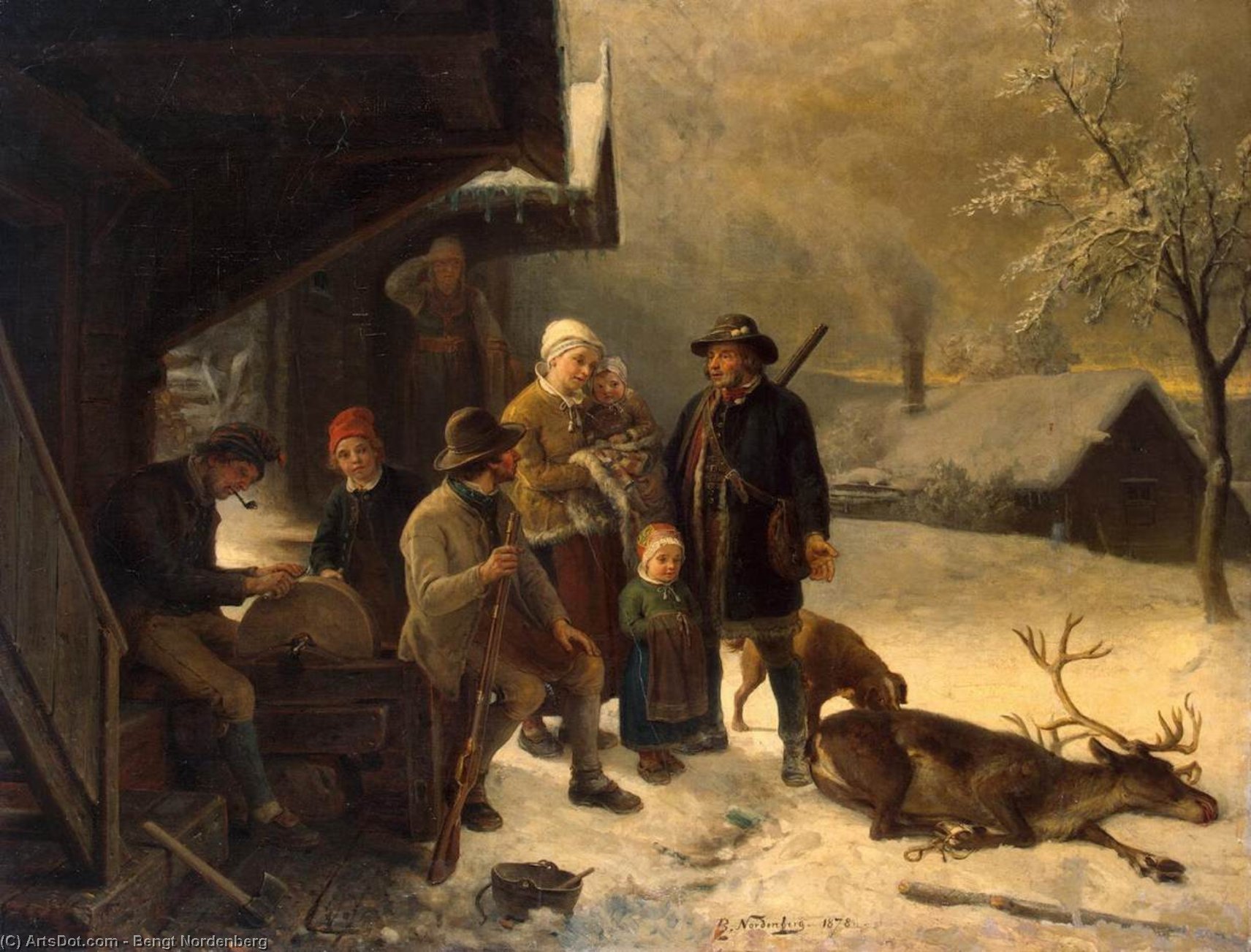
- Dead Stag
 手描き複製画を注文する
 シェアする
シェアする シェアする
シェアする
 詳細を見る
詳細を見る

 ダウンロード
 似ている作品
 X線調査
X線調査 スライドショー
Dead Stag
 Oil On Canvas
- WallArt
- Realism
 1878
1878 106.0 x 80.0 cm
 エルミタージュ美術館
 詳細を見る
詳細を見る




P118B $10

P118H $10

P118W $10

P438Z $10

P508JH $12

P508YH $12

P805H $10

P805Z $10

P919BZ $10

P919G $10

P919XJ $10

P959ZH $10

P968JZ $12

W106C $8

W218G $10

W218JH $8

W218Y $10

W307PJ $10

W316G $10

W316PJ $8

W316Y $10

W398PJ $8

W4111J $10

W500HY $15

W500JH $15

W692G $12

W849H $8

W940BG $15

W953PJ $8




作品のオリジナル比率に合わせた、当店の規定サイズからお選びください。

特定のフレームやスペースに合わせて、ご自身でサイズを指定することも可能です。選択されたサイズが元の画像の比率と一致しない場合、作品をトリミングするか、鏡面反射または単色での塗りつぶしによって画像を拡張いたします。制作を開始する前に、ご確認用のデジタルモックアップをお送りいたします。
画面上のプレビューには、実際のトリミングや拡張は反映されませんのでご注意ください。最終的な構図を正確に確認できるのは、モックアップのみとなります。
カスタムサイズも承っておりますが、元の比率を維持するためには、あらかじめ用意されたリストからサイズを選択することをお勧めいたします。


 ガラスオプションは、110cm未満のサイズでのみご利用いただけます。

Dead Stag
ジークレー/アートプリント
複製画のサイズ
-


合計金額
-
作品詳細説明
Dead Stag by Bengt Nordenberg, 1878 – A Symphony of Rural Resilience
The painting “Dead Stag” by Bengt Nordenberg, completed in 1878, stands as a testament to the Düsseldorf School’s unwavering commitment to realism infused with Romantic sentiment. More than just a depiction of hunting activity, it's an exploration of mortality interwoven with celebration—a poignant reminder of life’s cyclical nature rendered in meticulous detail against the stark backdrop of a winter landscape. Located within The Hermitage Museum in St. Petersburg, this monumental oil on canvas (106 x 80 cm) captures not merely what was seen but what felt – an emotional resonance that continues to captivate viewers today.- Subject Matter: The scene portrays a hunting party commemorating the successful kill of a deer during a snowy winter day. Figures are arranged in a triangular composition around the stag’s carcass, emphasizing both the grandeur of the hunt and the solemnity of acknowledging death's inevitable presence.
- Style & Technique: Nordenberg skillfully employs Impressionistic brushstrokes blended with Romantic ideals. Thick impasto technique dominates the surface, creating palpable textural depth and conveying a sense of immediacy—as if witnessing the event unfold before one’s eyes. The artist’s masterful use of glazing builds up layers of color, achieving luminosity and capturing the ethereal quality of winter light.
- Historical Context: Painted during the Victorian era, “Dead Stag” reflects the prevailing fascination with genre painting – a genre dedicated to portraying everyday life with psychological insight. Nordenberg's work aligns perfectly with Düsseldorf’s artistic ethos, prioritizing observation and emotional expression over idealized representations.
- Symbolism: The stag itself serves as a potent symbol of nobility, strength, and resilience—qualities celebrated by the hunters. Simultaneously, its lifeless form underscores the inescapable reality of mortality, prompting contemplation on life's transient beauty. The inclusion of a family group reinforces themes of community and familial bonds amidst the grandeur of the hunt.
- Emotional Impact: Viewing “Dead Stag” evokes a profound sense of melancholy tempered by joy—a recognition of both loss and triumph. Nordenberg’s masterful composition guides the eye across the canvas, immersing the viewer in the wintry landscape and capturing the palpable atmosphere of the hunting party.
- Dead Stag: Explore 'Dead Stag' by Bengt Nordenberg (1878). A dramatic oil painting of a hunting scene in a snowy landscape, showcasing realism & romanticism. Discover this Swedish masterpiece!
- NORDENBERG, Bengt: Swedish painter (b. 1822, Blekinge, d. 1902, Düsseldorf)
- Bengt Nordenberg: A Life in Swedish Genre Painting
- Dead Stag 1878 Bengt Nordenberg (Swedish,**1822- 1902 ...
- File:Dead Stag 1878 Bengt Nordenberg.jpg - Wikimedia Commons
アーティストの略歴
Bengt Nordenberg: A Life in Swedish Genre Painting
Early Life and Education
Bengt Nordenberg was born on April 22, 1822, in Jämshöga, a small village in southern Sweden. He experienced a childhood marked by poverty, which undoubtedly shaped his later artistic focus on everyday life. He began his artistic journey as an apprentice to a painter in Sölvesborg, gaining foundational skills before pursuing formal training.
In 1843, Nordenberg moved to Stockholm to study at the prestigious Royal Swedish Academy of Arts. This marked a crucial step in his development, providing him with access to academic instruction and exposure to contemporary artistic trends.
Düsseldorf Period and Influences
A pivotal moment in Nordenberg’s career came in 1851 when he traveled to Düsseldorf, Germany. This city was a major center for the Düsseldorf School of Painting, known for its realistic depictions of genre scenes and landscapes.
- He initially studied under Theodor Hildebrandt, but later came under the significant influence of Adolph Tidemand.
- Tidemand’s emphasis on portraying Norwegian rural life resonated deeply with Nordenberg, shaping both his style and subject matter.
- For a period, Nordenberg even worked as an assistant to Tidemand, creating reproductions of his paintings – a valuable learning experience.
Artistic Development and Themes
Nordenberg’s artistic development was characterized by a commitment to realism and a deep interest in portraying the lives of ordinary people. While initially influenced by Tidemand, he gradually developed his own distinct style.
- His early works focused on scenes from Dalarna, Skåne, and Blekinge – regions of Sweden known for their unique cultural traditions and picturesque landscapes.
- He skillfully captured the essence of rural life, depicting everyday activities, customs, and social interactions with sensitivity and detail.
- Later in his career, Nordenberg also painted portraits of middle-class and upper-class individuals, as well as religious paintings and altarpieces, demonstrating his versatility.
Travels and Later Life
In 1856, Nordenberg received a travel grant from the Swedish state, allowing him to broaden his artistic horizons.
- He studied with Thomas Couture in Paris for a year and a half.
- He made brief returns to Düsseldorf before settling there permanently in 1858.
Düsseldorf became his home for the rest of his life, where he continued to paint and exhibit his work until his death in 1902.
Major Achievements and Historical Significance
Although not as widely recognized today as some of his contemporaries, Bengt Nordenberg was a significant figure in Swedish art during the 19th century.
- His genre paintings provide valuable insights into the social and cultural life of Sweden during this period.
- He successfully blended elements of realism with romantic sensibilities, creating works that are both visually appealing and historically informative.
- Notable works include Rowing to the Church, Dalarna (1854), The Veterans (1882), and Leaving Home (1876).
Nordenberg’s legacy lies in his ability to capture the spirit of Swedish life with authenticity and artistic skill, making him a notable representative of the Düsseldorf School and a valuable contributor to Swedish art history.

Bengt Nordenberg
1822 - 1902 , Sweden
基本情報
- Birth Date: April 22, 1822
- Birth Place: Jämshöga, Sweden
- Death Date: 1902
- Influenced By: Adolph Tidemand, Theodor Hildebrandt
- Movement: Düsseldorf School of Painting
- Name: Bengt Nordenberg
- Nationality: Swedish
- Notable Works:
- Rowing to the church, Dalarna
- The veterans
- A torn goatsheppard family with goats
- Winter travel
- Portrait of Pehr Hörberg
- Leaving home
関連記事

19th Century Masterpieces: 10 Paintings That Defined an Era | OriginalUniqueArt
Journey through 19th century art with OriginalUniqueArt! Explore 10 iconic paintings – from Monet & Renoir to Courbet – and discover the stories behind Romanticism, Realism & Impressionism. Find museum-quality reproductions for your home decor. Explore the full collection online!
ナショナル・ギャラリーの至宝25選:名画が語る芸術と歴史 | OriginalUniqueArt
ワシントン美術館の至宝25選。セザンヌ、マティス、ピカソ…名画に秘められた物語と色彩を紐解きます。OriginalUniqueArtで高品質な絵画複製やインテリアアートを見つけ、お部屋に芸術の輝きを。今すぐコレクションをご覧ください!
メトロポリタン美術館の至宝25選:名画とアートが語る歴史と美【OriginalUniqueArt】
メトロポリタン美術館の至宝25選。モネ、ゴッホ、レンブラント…名画に秘められた物語と技法を紐解きます。印象派からルネサンスまで、時代を超えて輝く芸術作品をウォールアートで暮らしに取り入れませんか?OriginalUniqueArt.comで全コレクションをご覧ください。

ジェームズ・マクニール・ホイストラー:至高の25選 - 美と調和を求めた芸術家の軌跡 | OriginalUniqueArt
ジェームズ・マクニール・ホイストラーの至高の25選。ノクターン、印象派、美しい色彩に満ちた作品群を紐解きます。OriginalUniqueArtで高品質なアートプリントとインテリアをお楽しみください。名画の世界へ – OriginalUniqueArt.com
Iconic Art of the 18th & 19th Centuries: Masterpieces for Your Home | OriginalUniqueArt
Journey through 18th & 19th century art! Explore iconic masterpieces by Monet, Van Gogh & more. Discover the stories behind these timeless paintings and find museum-quality reproductions for your home at OriginalUniqueArt.com.


