- ホーム

- デジタル画像一覧
- Balcomb Greene
- Untitled (35 4)

 プレビュー
プレビュー
 シェアする
シェアする シェアする
シェアする
 詳細を見る
詳細を見る

 ダウンロード
 似ている作品
 X線調査
X線調査 スライドショー
Untitled (35 4)
 1935
1935 19.0 x 23.0 cm
 詳細を見る
詳細を見る
オンラインプレビューをはるかに凌ぐ、高解像度で鮮明なデジタル画像をご購入いただけます。
各ファイルは、社内の専門家が高度なツールと熟練した手作業によるレタッチを用いて、細心の注意を払って準備されています。すべての画像において、卓越した鮮明度、正確な色彩再現性、そして繊細なディテールを保証いたします。
最終ファイルは、プロフェッショナルな編集・印刷環境ですぐにご利用いただけるよう最適化された状態で、72時間以内にメールにてお届けいたします。これは、一流のデザインスタジオ、出版社、ギャラリーから信頼されているものと同等の品質です。
デジタルアート
個人での鑑賞、印刷、クリエイティブなプロジェクト用に、高解像度ファイルをダウンロードできます。 ( プリント版に切り替え 手描き画への切り替え)
デジタル画像のご注文に付随する特典
高品質なデジタル画像配信を、確かな品質で。
OriginalUniqueArt.com を選ぶことは、単に画像を手に入れることではありません。それは、プロの手によって精密に仕上げられ、満足保証が付いた高品質なデジタルアートワークを受け取ることを意味します。ご注文いただいた際に自動的に付随する内容は、以下の通りです:

メールですぐにお届け
ご注文から72時間以内に、高解像度のデジタル画像ファイルがメールでお手元に届きます。すぐにそのままご利用いただけます。

AI技術で最適化されたデジタルファイル
お客様の作品は、高度なAIツールと専門家による手作業の編集を組み合わせてプロフェッショナルに最適化されており、細部のディテール、鮮明さ、そして正確な色再現性を最大限に引き出しています。

一生涯無料の再送サービス
ファイルを誤って削除したり、紛失してしまったりしましたか?ご安心ください。いつでも無料で再送いたします。

輸入手数料は一切かかりません
関税や手数料、配送料を気にすることなく、お気に入りのアートワークをすぐにお楽しみいただけます。デジタルダウンロードは常に免税です。

色彩再現の保証
プロ仕様のツールとカラーマネジメント技術を用いることで、デジタル画像が元の色を最大限に忠実に再現することを保証いたします。

60日間満足保証
ご購入いただいたデジタル画像にご満足いただけない場合は、60日以内であれば、修正または100%の返金(理由を問う必要はありません)をさせていただきます。

100% 返金保証
ご満足いただけない場合は、デジタルファイルを受け取ってから60日以内であれば、理由を問わず全額返金いたします。

まとめ買い割引
3枚購入で10%OFF - 5枚購入で15%OFF - 10枚以上購入で20%OFF。クリエイティブなプロジェクト、ギャラリー、エージェンシーに最適です。
作品の詳細
Artistic Style and Influences
Balcomb Greene's artistic style is characterized by his use of geometric shapes and abstract forms. In "Untitled (35-4)", he employs a guitar shape with a large circle in the center, surrounded by smaller circles and squares. This composition reflects his interest in exploring the relationship between form and space. Key elements of this artwork include:- The use of geometric shapes to create a sense of harmony and balance
- The incorporation of abstract forms to add complexity and depth
- The artist's experimentation with different materials and techniques
Conservation and Preservation
The Smithsonian American Art Museum has taken great care in conserving and preserving "Untitled (35-4)". The museum's conservation efforts ensure that the artwork remains in excellent condition for future generations to appreciate. Notable features of the conservation process include:- The use of specialized techniques to preserve the delicate paper and gouache
- The careful handling and storage of the artwork to prevent damage
- The museum's commitment to providing a stable environment for the artwork
作家の略歴
A Life Dedicated to the Evolving Language of Abstraction
Balcomb Greene, born John Wesley Greene in 1904 in Millville, New York, embarked on a remarkable artistic journey that mirrored the seismic shifts occurring within the American art world throughout the 20th century. Initially steered toward a religious path by his father, a Methodist minister, Greene’s intellectual curiosity led him to Syracuse University where he immersed himself in philosophy and psychology. This early exploration of the human condition, of thought and perception, would subtly inform his later artistic endeavors, even as he moved decisively away from representational forms. A pivotal moment arrived with his marriage to fellow artist Gertrude Glass Greene in 1926, a partnership that proved not only personally fulfilling but also creatively catalytic. Together, they ventured to Paris in 1931, a city then pulsating with avant-garde energy, and it was there, amidst the ferment of modernism, that Greene truly discovered his calling as a painter. The influence of pioneers like Juan Gris, Piet Mondrian, Pablo Picasso, and Henri Matisse became apparent, yet Greene wasn’t content to merely emulate; he sought to forge his own distinct visual vocabulary.From Geometric Precision to Expressive Figuration
Greene's early work was characterized by a rigorous commitment to non-objective abstraction – geometric planes interlocking and overlapping in carefully considered compositions. These weren’t simply aesthetic exercises, however; they were explorations of spatial relationships, of color as an independent force, and of the fundamental building blocks of visual experience. He became a central figure in the burgeoning American abstract art movement, co-founding and serving as the first chairman of *American Abstract Artists* (AAA) in 1936. This organization was crucial in advocating for the acceptance of abstraction at a time when it faced considerable resistance from both critics and the public. Simultaneously, Greene engaged with socially conscious art through his work with the Works Progress Administration (WPA), creating significant murals for the Williamsburg Houses and the 1939 New York World’s Fair – early examples of abstract art integrated into public spaces. However, the 1940s witnessed a profound shift in Greene's artistic approach. While remaining deeply committed to formal concerns, he began to reintroduce the human figure into his compositions. This wasn’t a rejection of abstraction but rather an expansion of its possibilities. He explored themes of light and shadow with increasing intensity, imbuing his figures with a sense of psychological depth and emotional resonance. His work became more expressive, less concerned with pure geometry and more focused on conveying the “intuitive spirit” of man.Recognition and Enduring Legacy
Throughout his career, Balcomb Greene exhibited extensively, showcasing his evolving style at prestigious galleries such as Bertha Schaefer Gallery in New York, Feingarten Gallery in Los Angeles, and Saidenberg Gallery in New York. A significant milestone was the retrospective exhibition held at the Whitney Museum of American Art in 1961, a testament to the breadth and depth of his artistic achievement. In 1972, he was elected as an Associate member of the National Academy of Design, further solidifying his standing within the American art establishment. Beyond these accolades, Greene’s lasting impact lies in his role as a tireless advocate for abstract art and his willingness to challenge conventional boundaries. He bridged the gap between pure abstraction and expressive figuration, demonstrating that these seemingly disparate approaches could coexist and enrich one another. His murals remain important examples of early abstract public art, while his paintings continue to captivate viewers with their subtle complexities and emotional power.A Voice for Modernism
Balcomb Greene’s historical significance extends beyond his individual artistic contributions. He was a crucial voice in promoting modernism during a period when it was often misunderstood or dismissed. Through his involvement with the AAA, his writings, and his teaching – he held positions at Carnegie Institute of Technology and Black Mountain College – he helped to cultivate a more receptive audience for abstract art. His commitment to an independent artistic vision, often diverging from prevailing trends, established him as a unique and influential figure in American modernist art. He wasn’t simply following a prescribed path; he was actively shaping the discourse around abstraction, pushing its boundaries, and exploring its potential to express profound human experiences. His work serves as a reminder that true artistic innovation requires both technical mastery and an unwavering dedication to one's own creative impulses.Key Characteristics of His Work
- Early Abstraction: Geometric forms, interlocking planes, non-representational compositions.
- Shift to Figuration: Incorporation of the human figure in the 1940s, exploring light and shadow.
- Influences: Cubism, Neo-Plasticism, Surrealism, but maintaining a distinct individual style.
- WPA Murals: Significant examples of early abstract public art at Williamsburg Houses and the 1939 World’s Fair.
- Advocacy for Abstraction: Founding member and first chairman of American Abstract Artists (AAA).
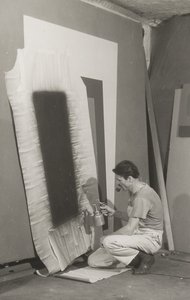
Balcomb Greene
1904 - 1990 , United States of America
プロフィール概要
- Artistic Movement Or Style: Abstract Expressionism
- Artists Or Movements Influenced By This Artist: American Abstract Artists
- Artists Who Influenced This Artist:
- Juan Gris
- Piet Mondrian
- Pablo Picasso
- Henri Matisse
- Date Of Birth: May 22, 1904
- Date Of Death: Nov 12, 1990
- Full Name: Balcomb Greene
- Nationality: American
- Notable Artworks:
- Untitled (39 03)
- Untitled (34 8)
- Way Down Blue
- Place Of Birth: Millville, USA

