
 プレビュー
プレビュー
 シェアする
シェアする シェアする
シェアする
 詳細を見る
詳細を見る

 ダウンロード
 似ている作品
 X線調査
X線調査 スライドショー
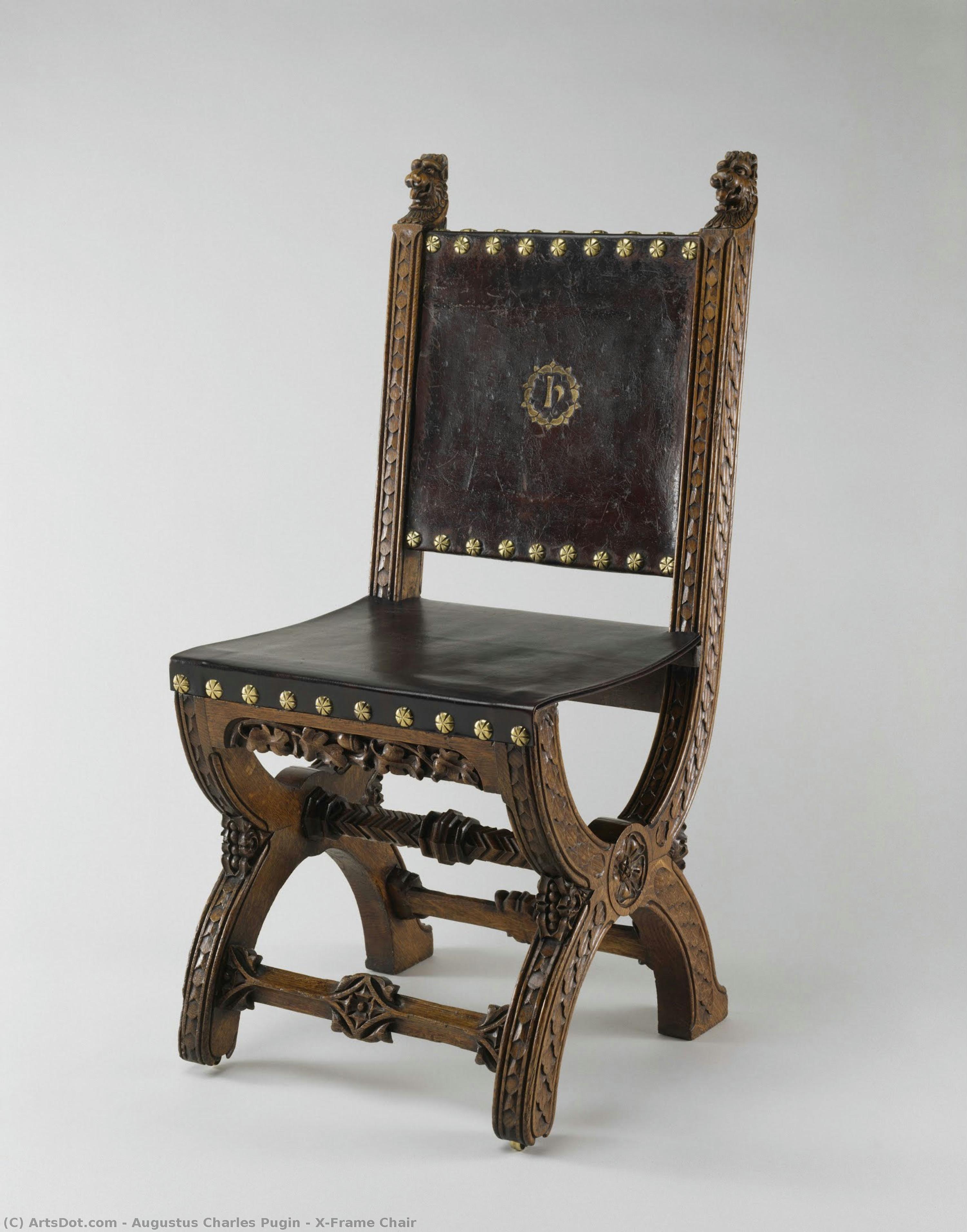
X-Frame Chair
 1847
1847 45.0 x 100.0 cm
 詳細を見る
詳細を見る
ジークレー/アートプリント
迅速な制作と多彩な仕上げオプションを備えた、ミュージアムクオリティのジークレーまたはキャンバスプリント。 ( 手描きの絵画を購入 画像を購入)




































作品のオリジナル比率に合わせた、当店の規定サイズからお選びください。

特定のフレームやスペースに合わせて、ご自身でサイズを指定することも可能です。選択されたサイズが元の画像の比率と一致しない場合、作品をトリミングするか、鏡面反射または単色での塗りつぶしによって画像を拡張いたします。制作を開始する前に、ご確認用のデジタルモックアップをお送りいたします。
画面上のプレビューには、実際のトリミングや拡張は反映されませんのでご注意ください。最終的な構図を正確に確認できるのは、モックアップのみとなります。
カスタムサイズも承っておりますが、元の比率を維持するためには、あらかじめ用意されたリストからサイズを選択することをお勧めいたします。


 ガラスオプションは、110cm未満のサイズでのみご利用いただけます。

X-Frame Chair
ジークレー/アートプリント
複製画のサイズ
-


合計金額
$ 80
作品詳細説明
アーティストの略歴
The Architect of Shadows: The Life and Legacy of Augustus Charles Pugin
In the grand tapestry of nineteenth-century design, few threads are as intricate or as influential as those woven by Augustus Charles Pugin. A figure whose work bridged the gap between meticulous scientific observation and the romanticized grandeur of the past, Pugin emerged as a pivotal force in the Gothic Revival movement. Though his name may not always command the immediate recognition of the great masters of oil painting, his impact on the very fabric of British architecture and decorative arts remains profound. Born into an era of rapid industrial transformation, he dedicated his life to capturing the soul of the Gothic style, ensuring that the elegance of medieval craftsmanship was not lost to the encroaching shadows of modernity.
Pugin’s journey was one defined by a deep, scholarly devotion to the structural and ornamental nuances of history. As a French-born British artist, draughtsman, and writer, he possessed a unique dual perspective—the precision of a continental trained eye paired with an intense passion for the English architectural heritage. His early mastery of the draughtsman’s craft allowed him to document the complexities of stone, wood, and glass with an accuracy that was both artistic and educational. Through his detailed illustrations, he did more than merely record buildings; he breathed life into their forgotten details, inviting a new generation to rediscover the spiritual and aesthetic power of the Gothic form.
A Visionary of the Gothic Revival
The true significance of Pugin’s contribution lies in his ability to translate historical motifs into a functional language for contemporary design. He was not merely a nostalgic observer but a visionary who understood that for an architectural style to survive, it must be documented, studied, and then re-applied to the living world. His seminal work, Specimens of Gothic Architecture, serves as a testament to this dedication. In these pages, his pen traced the delicate tracery of windows, the strength of pointed arches, and the intricate patterns of medieval ornamentation, providing a blueprint for the architects who would follow in his footsteps.
His influence extended far beyond the printed page, permeating the realms of:
- Architectural Illustration: Creating highly detailed records that served as essential references for the reconstruction and preservation of historic structures.
- Decorative Arts: Designing patterns and motifs that could be integrated into everything from furniture to metalwork, ensuring a cohesive Gothic aesthetic across various media.
- Design Theory: Promoting the idea that beauty in design is inextricably linked to structural honesty and historical continuity.
Through his tireless work as a designer and writer, Pugin helped shape the visual identity of an era. His ability to blend the technical rigor of a draughtsman with the poetic sensibility of an artist allowed him to influence not just the way buildings looked, but the way people perceived the relationship between history, art, and the built environment. He remains a cornerstone figure for anyone seeking to understand the resurgence of medievalism in the nineteenth century, leaving behind a legacy of intricate beauty that continues to inspire awe and reverence.

augustus charles pugin
1812 - 1852 , France
基本情報
- Artistic Movement Or Style: Literary nonsense; Illustration
- Artists Or Movements Influenced By This Artist:
- Lewis Carroll
- Victorian Illustration
- Artists Who Influenced This Artist:
- William Blake
- John Tenniel
- Date Of Birth: May 12, 1812
- Date Of Death: January 29, 1888
- Full Name: Edward Lear
- Nationality: English
- Notable Artworks:
- The Fortress of San George
- Limner's Book of Nonsense
- Place Of Birth: England

