プリント版に切り替え
 詳細を表示
詳細を表示







































 いずれかの辺が105 cm(約41インチ)を超えるアートワークまたは複製画の場合、フレームは分解されたキットの状態でお届けいたします。この方法は、輸送中の破損を防ぎ、安全に配送するために採用しております。


August Macke’s ‘Girls Under Trees’: A Snapshot of Joyful Modernity
August Macke's “Girls Under Trees” (1914) isn't merely a depiction of children playing in the woods; it’s a vibrant distillation of early 20th-century optimism and a powerful expression of German Expressionism. Painted just before the artist’s tragically short life, this work captures a fleeting moment of communal joy – a scene brimming with youthful energy and a profound connection to nature. Macke masterfully employs bold color and dynamic brushstrokes to convey not just what he saw, but how he *felt* about it: a sense of unburdened happiness and the simple pleasures of life.
The Artist and His Time
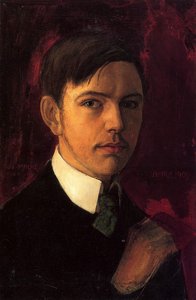
Born in Meschede, Germany, in 1887, August Macke was a pivotal figure within the burgeoning movement of German Expressionism. His artistic journey was marked by rapid experimentation, influenced initially by Impressionist techniques before evolving into a uniquely expressive style. The context of his work is crucial; 1914 represents a period of intense artistic innovation across Europe, with artists grappling with modernity and seeking new ways to represent the human experience. Macke’s membership in “Der Blaue Reiter” (The Blue Rider) – a group dedicated to exploring non-representational art and spiritual themes – highlights his engagement with these avant-garde currents. His brief but impactful career was cut short by the outbreak of World War I, leaving behind a legacy of intensely colored and emotionally charged paintings.
A Symphony of Color and Form
Macke’s technique is immediately striking. He utilizes loose, almost frantic brushstrokes to create a sense of movement and spontaneity. The figures aren't rendered with meticulous detail; instead, they are suggested through blocks of color and simplified forms. This approach aligns perfectly with the Expressionist desire to convey emotion rather than objective reality. Notice how he blends the children’s dresses – greens, blues, yellows – seamlessly into the surrounding foliage, dissolving the boundaries between figure and landscape. The composition itself is dynamic, drawing the viewer's eye across the canvas through a carefully orchestrated arrangement of shapes and colors. This technique reflects Macke's interest in integrating elements of the avant-garde, particularly the influence of Orphism—the use of color to create visual rhythms and harmonies.
Symbolism and Emotional Resonance
"Girls Under Trees" resonates with a powerful sense of nostalgia and innocence. The children’s carefree laughter and joyful interaction evoke a longing for simpler times – a sentiment deeply rooted in the anxieties of a rapidly changing world. The trees themselves, rendered as monumental forms, symbolize strength, stability, and connection to nature—themes central to many Expressionist works. Macke's ability to capture this emotional core through his distinctive style elevates the painting beyond a mere depiction of children; it becomes a timeless meditation on joy, community, and the beauty of the natural world. The painting’s enduring appeal lies in its ability to tap into universal human emotions – a reminder that even amidst chaos and uncertainty, moments of pure happiness can be found.
Q&A
「Girls under Trees」はいつの時代のものですか?
アウグスト・マッケ作「Girls under Trees」はEarly Modern時代の作品です。この時代背景が、本作の歴史的な文脈を形作っています。
アウグスト・マッケ作「Girls under Trees」をスライドショーで閲覧するには、どうすればよいですか?
スライドショーはこちら:アウグスト・マッケ作「Girls under Trees」のスライドショーページ。
アウグスト・マッケ作「Girls under Trees」の制作時期はいつですか?
アウグスト・マッケ作「Girls under Trees」の制作年は1914年です。
この絵画の詳細を見る
 設置イメージを表示
 シェアする
シェアする シェアする
シェアする
 詳細を見る
詳細を見る ガイドを表示

 ダウンロード
 似ている作品
 X線調査
X線調査 スライドショーを表示
 Q&A
Q&A 統計情報
統計情報