
 設置イメージを確認
 送る
送る シェア
シェア
 詳細情報
詳細情報 ガイドを表示

 画像をダウンロード
 似ている作品
 X線調査
X線調査 スライドショー
 Q&A
Q&A 統計情報
統計情報Emil Hertzka

- 29.0 x 36.0 cm


 続きを読む
続きを読む
ジークレー/アートプリント
スピーディーな制作と多彩な仕上げオプションが魅力の、ミュージアムクオリティなジークレー・キャンバスプリント。 ( 手描きの複製画を注文する デジタル画像販売へ切り替え)




P118B ¥10

P118H ¥10

P118W ¥10

P438Z ¥10

P508JH ¥12

P508YH ¥12

P805H ¥10

P805Z ¥10

P919BZ ¥10

P919G ¥10

P919XJ ¥10

P959ZH ¥10

P968JZ ¥12

W106C ¥8

W218G ¥10

W218JH ¥8

W218Y ¥10

W307PJ ¥10

W316G ¥10

W316PJ ¥8

W316Y ¥10

W398PJ ¥8

W4111J ¥10

W500HY ¥15

W500JH ¥15

W692G ¥12

W849H ¥8

W940BG ¥15

W953PJ ¥8




作品のオリジナル比率に合わせた、当店の規定サイズからお選びください。

額縁や壁のスペースに合わせて、ご希望の幅と高さを入力してください。プリントはカットすることは可能ですが、元の画像より大きくすることはできないため、異なる比率のサイズを選択された場合は、画像の一部が欠けることになります。印刷を開始する前に、内容を確認していただくためのデジタルモックアップをお送りいたします。このページに表示されている画像は、実際のカット後の状態を示すものではありません。実際の仕上がりはモックアップにてご確認ください。


 ガラスオプションは、110cm未満のサイズでのみご利用いただけます。

Emil Hertzka
ジークレー/アートプリント
複製画サイズ一覧
-


合計金額
¥ 12626
A Portrait of Ambition: Emil Hertzka by Arnold Schoenberg
This intimate portrait, rendered in 1910, offers a rare glimpse into the burgeoning artistic ambitions of Arnold Schoenberg, one of the most revolutionary figures in musical history. Painted by Schoenberg himself – a surprising and revealing act – the work transcends a simple likeness; it’s a carefully constructed statement about his aspirations and the perceived value of his increasingly influential art. The subject, a man with a distinguished reddish-brown beard and mustache, gazes directly at the viewer, an arresting intensity that speaks to Schoenberg's own self-assurance and desire for recognition. The slightly faded appearance of the painting lends it an aged quality, hinting at the passage of time and perhaps a subtle acknowledgement of the challenges he faced in establishing his reputation.
The Context of Innovation
- Vienna's Artistic Landscape: 1910 Vienna was a crucible of artistic innovation. Schoenberg, along with figures like Alban Berg and Anton Webern, was at the forefront of the Second Viennese School, challenging traditional harmonic structures and paving the way for atonality – a radical departure from established musical norms.
- Hertzka's Role: Emil Hertzka was a prominent art dealer who recognized Schoenberg’s potential early on. The correspondence between them reveals Schoenberg’s strategic thinking; he understood the power of association and sought to leverage his reputation within the music world to gain wider acceptance for his visual work.
- A Moment of Transition: This painting represents a pivotal moment in Schoenberg's career, just as he was solidifying his position as a leading composer and beginning to explore new artistic avenues.
Symbolism and Technique – A Calculated Impression
Schoenberg’s technique is characterized by a meticulous attention to detail, particularly in the rendering of the subject's facial features and the textures of his clothing. The use of muted tones and subtle gradations of light and shadow creates a sense of depth and realism, while simultaneously conveying an air of formality and sophistication. The glasses worn by the sitter are not merely a stylistic choice; they suggest intellectualism and perhaps a detachment from conventional perspectives – qualities central to Schoenberg’s revolutionary approach to music. The direct gaze of the subject is particularly significant, demanding engagement from the viewer and subtly asserting Schoenberg's confidence in his artistic abilities.
Beyond the Brushstroke: A Statement of Value
The inscription accompanying the painting – “You know that I paint. What you do not know is that my work is highly praised by experts…” – reveals Schoenberg’s anxieties and strategic calculations. He was acutely aware of the skepticism surrounding his foray into visual art, particularly given his groundbreaking musical innovations. By emphasizing the praise he received from "experts," he sought to bypass public opinion and directly appeal to a discerning audience. His desire for a patron, coupled with his assertion that owning a painting by him would be “much more interesting” than commissioning a work from a lesser-known artist, underscores his ambition to establish himself as a significant figure in both the music and art worlds. This portrait is not simply a representation of a man; it’s a carefully crafted testament to Schoenberg's belief in his own artistic genius.
よくあるご質問
アーノルド・シェーンベルク作「Emil Hertzka」の手描き複製画を販売しているのはどこですか?
アーノルド・シェーンベルク作「Emil Hertzka」の手描き複製画は、当サイトの手描き油彩複製画ページよりリネンキャンバスに手描きされた油彩複製画にてご購入いただけます。
アーノルド・シェーンベルク作「Emil Hertzka」のデジタル画像はどこで購入できますか?
アーノルド・シェーンベルク作「Emil Hertzka」のデジタルイメージは、こちらのデジタル画像ページにてご購入いただけます:高解像度デジタル画像のダウンロード
Early Modern Musicの作品「Emil Hertzka」は、どのような感情を伝えていますか?
「Emil Hertzka」は、Early Modern Musicのムーブメントにおいて、Reflectiveな情緒を湛えています。
アーティストについて
幼少期と音楽への第一歩
アルノルト・シェーンベルクは、オーストリア系アメリカ人の作曲家であり、1874年9月13日、オーストリアのウィーンに生を受けました。彼の幼少期は、靴屋を営む父のもと、決して裕福とは言えない質素な環境の中にありました。しかし、その内なる音楽への情熱は、彼を独学という険しい道へと駆り立て、自らの手で音楽の深淵へと踏み込ませたのです。音楽的進化と代表作
シェーンベルクの初期作品、例えば 『変容した夜』(1899年) は、ブラームスとワーグナーの様式を融合させた見事なシンセシスを示していました。やがて彼は、アントン・ヴェベルン や アルバン・ベルク と共に、新ウィーン楽派の中核を担う存在へと成長を遂げます。その後の 弦楽四重奏曲第2番 (1907–1908年)、『期待』(1909年)、そして 『ピエロ・ルナール』(1912年) といった作品群は、無調音楽への革新的なアプローチを象徴するものとなりました。教授活動と亡命、そして晩年
1933年、ナチスの台頭により、シェーンベルクの音楽は「退廃芸術」の烙印を押され、彼はプロイセン芸術アカデミーを辞任することを余儀なくされました。その後、彼はアメリカへと渡り、カリフォルニア大学ロサンゼルス校(UCLA)などで教鞭を執りました。現在、同大学の施設には彼の名を冠したものが存在しています。 [https://OriginalUniqueArt.com/@/arnold-sochenberg](OriginalUniqueArtでシェーンベルクの生涯と作品についてさらに詳しく知る)。- シェーンベルクは映画音楽の探求や、より調性的な音楽の作曲にも取り組み、1939年には 室内交響曲第2番 を完成させました。
- また、バイロンに倣い、『ナポレオンへの頌歌』(1942年) においてファシズムの暴君を風刺しました。
- 戦後のウィーンからは名誉市民権を贈られましたが、晩年は病に伏しており、その様子は 弦楽三重奏曲 (1946年) にも刻まれています。
遺産と影響力
ホロコーストの悲劇が世界に知れ渡る中、シェーンベルクは 『ワルシャワの生存者』(1947年) を通じて、犠牲者たちを追悼しました。1951年には、イスラエル・コンサバトリーおよび音楽院から名誉会長に選出されました。 [https://OriginalUniqueArt.com/@@/a@d3bqc7-the-museum-destroyed-by-fire-(united-states)](彼の作品が与えた影響についてOriginalUniqueArtで詳しく学ぶ)。 重要なポイント:- シェーンベルクの革新的な音楽は、20世紀のクラシック音楽において最も影響力があり、かつ論争を巻き起こしたものの一つでした。
- 少なくとも三世代にわたる作曲家たちが、彼の形式的な原理を継承・発展させました。
- 彼の美学と音楽史的見解は、音楽学者のテオドール・W・アドルノやカール・ダールハウスにも多大な影響を与えました。

アーノルド・シェーンベルク
1874 - 1951 , オーストリア
アーティスト情報
- Artistic Movement Or Style: 十二音技法、表現主義
- Artists Or Movements Influenced By This Artist:
- アントン・ウェーベルン
- アルバン・ベルク
- Artists Who Influenced This Artist:
- ヨハネス・ブラームス
- リヒャルト・ワーグナー
- Date Of Birth: 1874年9月13日
- Date Of Death: 1951年
- Full Name: アーノルド・シェーンベルク
- Nationality: オーストリア系アメリカ人
- Notable Artworks:
- 組曲 作品29
- ミュージック・タイプライター
- スタッフライナー
- Place Of Birth: オーストリア、ウィーン
関連記事

Timeless Vienna: Capturing the Imperial Elegance of Austria Through the Lens of Art History
Explore the imperial grandeur of Vienna through art history. Discover the architectural mastery of Otto Wagner and the elegance of the Secessionist movement in this sophisticated guide to Austria's timeless aesthetic legacy.

Beyond Symbolism: Exploring the Spiritual Landscapes of Mikalojus Konstantinas Čiurlionis's Art
Explore the captivating world of Mikalojus Konstantinas Čiurlionis, a pioneer of abstract art. Discover his unique blend of music and painting, spiritual themes, and lasting influence on Lithuanian culture. Learn more at OriginalUniqueArt.
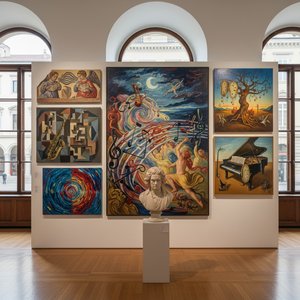
Harmonies on Canvas: Exploring the Visual Representation of Music in Art History
Explore the fascinating history of music's visual representation in art! From ancient symbolism to modern abstraction, discover how artists have captured sound and emotion on canvas. Expert insights & stunning examples.

グスタフ・クリムト傑作25選:華麗なる装飾性と象徴が織りなす世界 | OriginalUniqueArt
グスタフ・クリムトの傑作25選。華麗なる装飾性と象徴が織りなす世界を紐解きます。キス、ポートレートなど、美術史に残る名画の物語と技法をOriginalUniqueArtで。高品質複製画やインテリアアートも豊富に。今すぐコレクションをご覧ください。

The Vienna Secession: A Rebellion of Form & Spirit in Fin-de-Siècle Art
Discover the revolutionary Vienna Secession art movement! Explore Klimt, Olbrich & more. Learn about its history, characteristics & lasting influence on modern art. High-quality reproductions available.


