
 設置イメージを表示
 シェアする
シェアする シェアする
シェアする
 詳細を見る
詳細を見る ガイドを表示

 ダウンロード
 似ている作品
 X線調査
X線調査 スライドショーを表示
 Q&A
Q&A 統計情報
統計情報Walking Lion


 詳細を表示
詳細を表示
ジークレー/アートプリント
スピーディーな制作と多彩な仕上げオプションが魅力の、ミュージアムクオリティなジークレー・キャンバスプリント。 ( 手描き複製画を注文する デジタル画像販売へ切り替え)




P118B ¥10

P118H ¥10

P118W ¥10

P438Z ¥10

P508JH ¥12

P508YH ¥12

P805H ¥10

P805Z ¥10

P919BZ ¥10

P919G ¥10

P919XJ ¥10

P959ZH ¥10

P968JZ ¥12

W106C ¥8

W218G ¥10

W218JH ¥8

W218Y ¥10

W307PJ ¥10

W316G ¥10

W316PJ ¥8

W316Y ¥10

W398PJ ¥8

W4111J ¥10

W500HY ¥15

W500JH ¥15

W692G ¥12

W849H ¥8

W940BG ¥15

W953PJ ¥8




作品のオリジナル比率に合わせた、当店の規定サイズからお選びください。

額縁や壁のスペースに合わせて、ご希望の幅と高さを入力してください。プリントはカットすることは可能ですが、元の画像より大きくすることはできないため、異なる比率のサイズを選択された場合は、画像の一部が欠けることになります。印刷を開始する前に、内容を確認していただくためのデジタルモックアップをお送りいたします。このページに表示されている画像は、実際のカット後の状態を示すものではありません。実際の仕上がりはモックアップにてご確認ください。


 ガラスオプションは、110cm未満のサイズでのみご利用いただけます。

Walking Lion
ジークレー/アートプリント
複製画サイズ一覧
-


合計金額
¥ 12795
A Regal Presence: Deconstructing the Majesty of Barye’s Walking Lion
Antoine-Louis Barye's "Walking Lion," a bronze sculpture dating from the mid-19th century, isn’t merely a depiction of an animal; it’s a visceral embodiment of power, grace, and untamed wilderness. Born in Paris during a period of profound artistic transformation – the rise of Romanticism – Barye sought to move beyond the static formality of Neoclassical sculpture, instead capturing the dynamic energy and raw emotion inherent in the natural world. This particular piece, rendered with an almost palpable sense of movement, invites us into the heart of the lion’s spirit, a testament to Barye's revolutionary approach to animal representation.
The sculpture immediately commands attention through its sheer physicality. The bronze itself, meticulously cast and patinated to achieve a rich, burnished surface, speaks volumes about Barye’s mastery of lost-wax casting – a technique demanding both technical precision and artistic intuition. Notice the subtle variations in tone; the darker recesses of the musculature contrast beautifully with the highlights that accentuate the lion's powerful form. The texture is crucial: it’s not smooth or polished, but retains a tactile quality, hinting at the rough hide and formidable strength beneath. The wooden base, deliberately simple and rectangular, provides a grounding element, anchoring this embodiment of wildness within a contained space.
Capturing the Spirit of the Animalier
Barye’s work falls squarely within the burgeoning “animalier” movement – a trend that championed the study and representation of animals in sculpture. Prior to Barye, depictions of lions were often idealized or stylized, frequently serving as symbols of royalty or military might. However, Barye sought to capture the *essence* of the lion, its predatory instincts, its territoriality, and its inherent wildness. He achieved this through an intensely detailed anatomical study, meticulously rendering every muscle fiber, every ripple of fur, and every glint of light on the bronze surface. The pose itself – a deliberate stride forward, head held high – conveys a sense of confident authority and unwavering determination.
Consider the influence of Romanticism, which emphasized emotion, individualism, and the sublime power of nature. Barye’s lion embodies these ideals perfectly. It's not simply a beautiful animal; it’s a force of nature, a symbol of courage and resilience. The sculpture resonates with a primal energy, evoking a sense of awe and respect for the untamed wilderness.
Symbolism and Historical Context
The lion has long held significant symbolic weight across cultures – representing strength, nobility, justice, and vigilance. In ancient Egypt, it was associated with the sun god Ra; in Judeo-Christian tradition, it symbolizes Christ as “the Lion of Judah.” Barye’s sculpture taps into this rich tapestry of symbolism, reinforcing the lion's image as a creature of power and majesty. Furthermore, Barye’s work emerged during a period of significant social and political upheaval – the rise of nationalism, the Napoleonic Wars, and the burgeoning industrial revolution. His sculptures served as a powerful antidote to the rigid formality of classical art, offering instead a celebration of the natural world and its inherent beauty.
A Legacy in Bronze: Barye’s Enduring Influence
Antoine-Louis Barye remains one of the most celebrated sculptors of the 19th century. His pioneering work as an animalier fundamentally changed the way artists approached the representation of animals, paving the way for future generations of sculptors and artists. “Walking Lion” stands as a prime example of his genius – a captivating blend of technical skill, artistic vision, and profound understanding of the natural world. Today, reproductions of this iconic sculpture continue to inspire and delight, offering a tangible connection to a bygone era of artistic innovation and romantic fervor.
Q&A
アントワーヌ=ルイ・バリー作「Walking Lion」には何が描かれ、どのような情緒が漂っていますか?
アントワーヌ=ルイ・バリー作「Walking Lion」は、bronze sculpture, lion, barye, animalier, power, grace, movementを描き出し、Romanticな情緒を湛えています。主題と雰囲気が相まって、作品の物語を形作っています。
「Walking Lion」の作者であるアントワーヌ=ルイ・バリーには、他に知られている名前はありますか?
「Walking Lion」の作者であるアントワーヌ=ルイ・バリーには、他にアントワーヌ・ルイ・バリー, アントワーヌ・バリーといった名称でも記録されています。
「Walking Lion」はどのような作品ですか?
アントワーヌ=ルイ・バリー作「Walking Lion」はWallArtに分類されます。このカテゴリーは、原画の作品形式を表しています。
作家プロフィール
動物彫刻の先駆者:アントワーヌ=ルイ・バリーの生涯と遺産
1795年9月24日、パリに生を受けたアントワーヌ=ルイ・バリーは、19世紀の彫刻界において極めて重要な役割を担う人物として登場しました。彼は単に動物を描写しただけではありません。かつて見たこともないような劇的な緊張感と解剖学的な正確さを作品に吹き込み、動物の形態に特化したジャンルである「アニミエ(animalier)」を、紛れもない純粋芸術の領域へと押し上げたのです。バリーの歩みは、彫刻家の工房ではなく、父の跡を継ぐ金細工師の見習いとして始まりました。この初期の修行が、彼のキャリアを通じて計り難い価値を持つこととなる、細部への緻密なこだわりと卓越した技術の習得をもたらしました。彼はフランソワ=ジョゼフ・ボシオやアントワーヌ=ジャン・グロといった彫刻家たちの下でさらなる研鑽を積み、古典的な原則を吸収しながら、同時に独自のロマン主義的な感性を育んでいきました。エコール・デ・ボザールでの正規の教育は強固な基礎を与えましたが、彼の芸術的ビジョンに真の火を灯したのは、1823年頃、パリの植物園(ジャルダン・デ・プランタージュ)で出会った生きた世界、すなわちそこに息づく動物たちとの邂逅でした。金細工師からアニミエへ:独自の様式の確立
バリーによる動物観察への献身は、一種の執念とも言えるものでした。彼は単に眺めるのではなく、彼らの解剖学的構造、動き、そして行動を深く研究し、素描し、緻密に分析しました。しかし、このリアリズムへの追求は、決して冷徹で臨床的なものではありませんでした。そこにはロマン主義運動の特徴である、感情の昂ぶりが満ち溢れていたのです。学生時代に制作された「ライオンに食われるクロトナのミロ」(1819年)や「エリマントスの猪を伴うヘラクレス」(1م20年頃)といった初期作品には、ダイナミックな構図と劇的な物語性を生み出す彼の才能の片鱗が見て取れます。しかし、バリーが真に自身の代名詞となる様式を確立したのは、サロンで大きな旋風を巻き起こした記念碑的な石膏像「ガビアル・クロコダイルを喰らう虎」(1831年)や、ブロンズ鋳造による「蛇を締め上げるライオン」(1832年)といった作品を通じてでした。これらは単なる静止した表現ではなく、自然界における生存競争の残酷な美しさを捉え、剥き出しの力が時間の中に凍りついた瞬間そのものでした。彼は単なる模倣を超え、動物の生命の本質――その強靭さ、敏捷さ、そして飼い慣らされることのない精神――を表現することに成功したのです。彼の作品は、文明社会の枠組みを超えた体験を渇望するロマン主義的な情熱を反映し、エキゾチックで野生的なものへの高まる大衆の関心と深く共鳴しました。主要作品と記念碑的な依頼作品
キャリアを通じて、バリーは驚くほど多種多様な彫刻を生み出し、その一つひとつが動物の形態と動きを捉える比類なき技術を証明していました。象徴的な「ガビアル・クロコダイルを喰らう虎」や「蛇を締め上げるライオン」にとどまらず、「テセウスとミノタウロス」(1843年)、「ヒッポグリフに乗るロジャーとアンジェリカ」(1846年)、「ラピスとケンタウロス」(1848年)、「野ウサギを喰らうジャガー」(1850年)といった傑作は、彼の多才さと想像力の豊かさを物語っています。また、彼は捕食者同士の遭遇を描くことだけに限定されませんでした。神話的な場面も探求し、動物研究で培ったダイナミックなエネルギーと解剖学的な精密さを、それらの主題にも注ぎ込んだのです。その才能は小規模なブロンズ像に留まりませんでした。バリーは記念碑的な作品の権威ある依頼も受けており、フランスの不屈の精神の象徴である「七月革命記念柱のライオン」や、パリのチュイルリー庭園を飾る彫刻などもその一部です。これらの大規模なプロジェクトは、自身の芸術的ビジョンを公共芸術へと昇華させる彼の能力を示し、フランスを代表する彫刻家としての地位を不動のものにしました。影響、苦闘、そして永遠の意義
バリーの作品は、多様な影響の結晶でした。彫刻に漂う劇的な緊張感には、ロマン主義が重んじた感情と個人主義が明白に現れています。同時に、解剖学的な正確さと理想化された形態へのこだわりには、古典芸術からのインスピレーションが見て取れます。しかし、彼を真に際立たせていたのは、植物園での数え切れないほどの時間を通じて培われた、科学的な観察アプローチでした。批評家からの絶賛を浴びながらも、バリーの人生は決して平坦なものではありませんでした。経営上の才覚に欠けていたこともあり、キャリアの大部分において経済的な困難に直面しました。1848年の破産により、彼は自らのモデルや型を売却せざるを得なくなり、その結果、市場には質の低い模倣品が溢れ、彼の名声に傷がつく時期もありました。1854年には国立自然史博物館のデッサン教授としてある程度の安定を得ましたが、彼の天才性が真に正当に評価されたのは、死後のことでした。今日、アントワーヌ=ルイ・バリーは「近代動物彫刻の父」として広く認識されています。後世の芸術家たちに与えた影響は疑いようもなく、その作品は力強さ、リアリズム、そして永遠の美しさによって称えられ続けています。彼はアニミエというジャンルを、単なるニッチな追求から、尊敬されるべき芸術表現の形態へと昇華させ、彫刻史に消えることのない足跡を残したのです。彼の遺産は、今もなお世界中のコレクターや美術館において、畏敬と称賛の念を呼び起こし続けています。
アントワーヌ=ルイ・バリー
1796 - 1875 , フランス
プロフィール概要
- Artistic Movement Or Style: ロマン主義
- Artists Or Movements Influenced By This Artist: ['動物彫刻家']
- Artists Who Influenced This Artist:
- フランソワ=ジョゼフ・ボジオ
- アントワーヌ=ジャン=グロ男爵
- Date Of Birth: 1795年9月24日
- Date Of Death: 1875年6月25日
- Full Name: アントワーヌ=ルイ・バリー
- Nationality: フランス
- Notable Artworks:
- ガビアルを食らう虎
- 蛇を押しつぶすライオン
- テセウスとミノタウロス
- ロジャーとアンジェリカ
- ラピスとケンタウロス
- 野ウサギを食らうジャガー
- Place Of Birth: フランス、パリ
関連記事

The Enduring Legacy of Bronze: History, Technique & Artistic Expression for the Collector
Explore the rich history & enduring appeal of bronze sculpture with expert insights for collectors at OriginalUniqueArt. Learn about casting techniques, iconic artists, and collecting tips.

Bronze Sculptures That Defined Art History | OriginalUniqueArt
Journey through art history with our Top 10 bronze sculptures! Explore masterpieces by Rodin, Michelangelo & more. Discover stories behind iconic statues and find museum-quality reproductions for your home decor at OriginalUniqueArt.com.
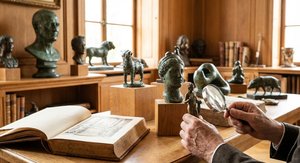
The Enduring Legacy of Bronze Sculpture: A Collector's Guide to Form & Cultural Significance
Explore the rich history & enduring appeal of bronze sculpture with expert insights for collectors at OriginalUniqueArt. Learn about casting techniques, iconic artists, and collecting tips to build a discerning art collection.

Bronze Age to Modern Masters: 10 Sculptures That Redefined Art | OriginalUniqueArt
Journey through art history with 10 legendary bronze sculptures – from Michelangelo's David to Rodin’s Thinker. Explore the stories, techniques & timeless beauty of these masterpieces. Find museum-quality reproductions & elevate your home decor on OriginalUniqueArt.com.

The Enduring Legacy of Bronze: A Historical & Artistic Exploration for the Collector
Explore the rich history & enduring appeal of bronze sculpture with expert insights for collectors at OriginalUniqueArt. Learn about casting techniques, iconic artists, collecting tips & contemporary interpretations.

