

 設置イメージを確認
 送る
送る シェア
シェア
 詳細情報
詳細情報 ガイドを表示

 画像をダウンロード
 似ている作品
 X線調査
X線調査 スライドショー
 統計情報
統計情報The Theorbo Player
 Oil On Canvas
- WallArt
- Baroque
 1615
1615- Early Modern
 119.0 x 85.0 cm
 ガッレリア・サバウダ
 続きを読む
続きを読む
ジークレー/アートプリント
スピーディーな制作と多彩な仕上げオプションが魅力の、ミュージアムクオリティなジークレー・キャンバスプリント。 ( 手描きの複製画を注文する デジタル画像販売へ切り替え)




P118B ¥10

P118H ¥10

P118W ¥10

P438Z ¥10

P508JH ¥12

P508YH ¥12

P805H ¥10

P805Z ¥10

P919BZ ¥10

P919G ¥10

P919XJ ¥10

P959ZH ¥10

P968JZ ¥12

W106C ¥8

W218G ¥10

W218JH ¥8

W218Y ¥10

W307PJ ¥10

W316G ¥10

W316PJ ¥8

W316Y ¥10

W398PJ ¥8

W4111J ¥10

W500HY ¥15

W500JH ¥15

W692G ¥12

W849H ¥8

W940BG ¥15

W953PJ ¥8




作品のオリジナル比率に合わせた、当店の規定サイズからお選びください。

額縁や壁のスペースに合わせて、ご希望の幅と高さを入力してください。プリントはカットすることは可能ですが、元の画像より大きくすることはできないため、異なる比率のサイズを選択された場合は、画像の一部が欠けることになります。印刷を開始する前に、内容を確認していただくためのデジタルモックアップをお送りいたします。このページに表示されている画像は、実際のカット後の状態を示すものではありません。実際の仕上がりはモックアップにてご確認ください。


 ガラスオプションは、110cm未満のサイズでのみご利用いただけます。

The Theorbo Player
ジークレー/アートプリント
複製画サイズ一覧
-


合計金額
¥ 12582
The Resonance of Skill: An Encounter with The Theorbo Player
To gaze upon this portrait is to step directly into the vibrant, intellectual atmosphere of early seventeenth-century Italy. Antiveduto Gramatica’s depiction of The Theorbo Player is far more than a mere likeness; it is a carefully constructed tableau vivant, capturing not just a man, but an entire cultural moment—the confluence of artistry, scholarship, and refined leisure during the Baroque dawn. The subject commands attention with his posture and the magnificent instrument cradled in his hands. His attire, featuring that distinctive ruffled collar, whispers tales of period formality, suggesting a gentleman whose life was interwoven with the pleasures and prestige of music.
A Study in Composition and Symbolism
Gramatica’s genius lies in how he balances the central figure against the surrounding scholarly accoutrements. Notice the placement of the objects: to the left, two volumes rest upon a surface, suggesting deep learning; near the bottom right, another book anchors the composition, while a simple bowl occupies the lower left quadrant. These elements are not arbitrary additions. They function as visual signifiers, elevating the musician from mere entertainer to an educated *artista*. The Theorbo itself—a complex and resonant instrument—becomes the focal point of this intellectual portraiture. It speaks to a time when musical mastery was considered a profound form of human accomplishment, worthy of permanent commemoration alongside classical literature.
Technique and Historical Context
Painted around 1615, this work emerges from the rich, transitional period leading into full Baroque splendor. While Gramatica’s biography notes his foundational training in engraving, the resulting painting exhibits a mastery of portraiture that grounds it firmly within the era's aesthetic currents. The handling of light across the man’s suit and the polished wood of the instrument suggests a skilled application of oil paint, allowing for subtle gradations of shadow and highlight. It is a testament to an artist navigating the burgeoning styles of Rome and Siena, creating a piece that feels both historically authentic and intimately personal.
Bringing Baroque Elegance Home
For the discerning collector or designer seeking to infuse a space with the gravitas and romance of history, this reproduction offers unparalleled depth. Imagine this scene rendered in your drawing-room: the quiet dignity of the musician contrasted against the implied energy of his art form. Owning a piece like this is acquiring a narrative—a tangible connection to the patronage systems and cultural values of the early 17th century. It serves not only as decoration but as a sophisticated conversation starter, inviting viewers to contemplate the enduring power of art and intellect.
よくあるご質問
Antiveduto Gramatica作「The Theorbo Player」の色彩の彩度はどの程度ですか?
Antiveduto Gramatica作「The Theorbo Player」の色調は、Subtle Colorな彩度を持っています。彩度とは、色の鮮やかさや落ち着きの度合いを表すものです。
「The Theorbo Player」は、美術史においてどのような位置を占めているのでしょうか?
歴史的に見て、「The Theorbo Player」は、より広範なEarly Modern時代におけるBaroqueの作品です。
Antiveduto Gramatica作「The Theorbo Player」の色味の強さはどの程度ですか?
「The Theorbo Player」の彩度はMonochromaticです。彩度とは、色の鮮やかさの度合いを表します。
アーティストについて
Antiveduto Gramatica: A Quiet Voice Amidst Baroque Splendor
Antiveduto Gramatica (1571-1626) stands as a fascinating figure in the burgeoning Italian Baroque, an artist whose output, though relatively modest compared to contemporaries like Caravaggio or Bernini, possesses a distinctive aesthetic and a profound connection to the intellectual currents of his time. Born in Siena—though precise details regarding his birthplace remain elusive—Gramatica’s early life was shaped by familial aspirations for artistic renown, foreshadowing a career dedicated to mastering the craft of painting. His apprenticeship with Giovanni Domenico Angelini in Perugia provided invaluable foundational experience, primarily focused on producing small-scale copper engravings—a technique that would inform his later stylistic choices and demonstrate an understanding of visual communication beyond mere fresco decoration.
Gramatica quickly established himself as an independent artist in Rome around 1591, capitalizing on the burgeoning artistic environment fostered by papal patronage. He gained renown for his skill in crafting portraits of prominent men, earning him the moniker “gran capadamente,” referencing his specialization in heads of figures. This mastery of portraiture allowed him to navigate the complex social hierarchies of Rome, capturing not just the likeness but the very essence of the era's elite. His association with the Accademia di San Luca proved pivotal, cementing his ties to Cardinal Francesco Maria del Monte—a figure whose influence extended far beyond artistic circles and who championed humanist ideals amidst the turbulent political landscape of Rome. Gramatica’s election as “principe” of the academy in 1624 reflected this connection and underscored the importance of scholarly pursuits alongside artistic creation.
The Artistry of Detail and Devotion
Gramatica's artistic style is characterized by a meticulous attention to detail and an understated elegance that distinguishes him from the more flamboyant expressions of Baroque art. Unlike many artists of his era who embraced dramatic chiaroscuro to create theatrical tension, Gramatica often employed a more controlled light, allowing for a clarity that highlights the textures of fabric, the warmth of skin, and the profound emotion within his subjects. This is perhaps most movingly seen in works such as Mary Magdalene at the Tomb, where he captures a poignant moment of grief and faith, utilizing rich detail to ground a sacred historical scene in a palpable, human reality.
His repertoire extended beautifully from religious iconography to secular portraiture and allegorical studies. In his depictions of musicality, such as The Theorbo Player, one can observe the rich Baroque textures and the intimate connection between the performer and their instrument. Furthermore, his ability to weave intellectual symbolism into his work is evident in pieces like La Musa Urania, where a woman with a mirror reflects the introspective and scholarly spirit of the age. Through these varied subjects, Gramatica demonstrated a versatile hand capable of both the sacred and the cerebral.
Legacy and Historical Significance
The historical significance of Antiveduto Gramatica lies in his role as a bridge between the late Renaissance traditions and the emerging Baroque sensibility. While he did not seek to overturn the established order with radical naturalism, his refined technique and ability to infuse portraiture with psychological depth contributed significantly to the Roman school's evolution. His life and work serve as a testament to the importance of the Accademia di San Luca in fostering an environment where art and intellect could coexist.
To reflect on Gramatica's contributions is to appreciate the subtle nuances of the Italian Baroque:
- Technical Precision: His background in engraving brought a unique, fine-lined clarity to his oil paintings.
- Intellectual Depth: His connection to humanist patrons like Cardinal Del Monte infused his work with layers of symbolic meaning.
- Portraiture Mastery: He remains a vital figure for studying the evolution of character studies and the depiction of status in 17th-century Rome.

Antiveduto Gramatica
1571 - 1626 , Italy
アーティスト情報
- Full Name: antiveduto gramatica
- Nationality: Italian
- Date Of Birth: 1571
- Date Of Death: 1626
- Place Of Birth: Siena, Italy
- Notable Artworks:
- St. Cecília and two musician angels
- Mary Magdalene at the Tomb
- Virgin and Child with Saint Anne
- Artistic Movement Or Style: Proto-Baroque
- Artists Who Influenced This Artist: Giovanni domenico angelini
- Artists Or Movements Influenced By This Artist: Raphael
関連記事

バロック美術を極めた至宝:時代を彩る10大名作の世界
バロック美術の華!カラヴァッジョ、ベルニーニら巨匠が創り上げた10大名作を徹底解剖。ドラマチックな色彩と豪華絢爛の世界観に触れ、至宝のアートプリントで空間を彩ろう。OriginalUniqueArt.comで美術館品質の複製と洗練されたインテリアを見つけましょう!

Baroque Classicism: The Grandeur of Order and Drama in 17th-Century Art History
Explore the profound elegance of Baroque Classicism. Discover how 17th-century masters synthesized dramatic emotion with classical order through the lens of the Counter-Reformation and the works of legends like Carlo Maratta and Andrea Sacchi.

Baroque Classicism: Reconciling Drama & Order in 17th-Century Art
Explore the captivating world of Baroque Classicism! Discover its history, key artists like Caravaggio & Rubens, and defining characteristics. Expert insights & high-quality reproductions at OriginalUniqueArt.

バロック美術の真髄:光と影、劇的な動性が描き出す17世紀ヨーロッパの情熱
バロック美術の核心である光と影の技法や、カラヴァッジョからハルスに至る巨匠たちの情熱を専門的に解説します。17世紀ヨーロッパが放つ劇的な美の世界を今すぐ体験してください。
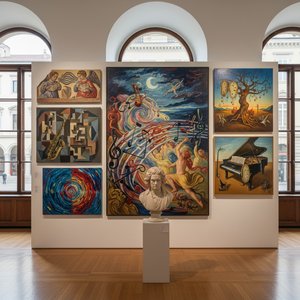
Harmonies on Canvas: Exploring the Visual Representation of Music in Art History
Explore the fascinating history of music's visual representation in art! From ancient symbolism to modern abstraction, discover how artists have captured sound and emotion on canvas. Expert insights & stunning examples.