油彩画を購入
 untitled (8167)のすべて







































 いずれかの辺が105 cm(約41インチ)を超えるアートワークまたは複製画の場合、フレームは分解されたキットの状態でお届けいたします。この方法は、輸送中の破損を防ぎ、安全に配送するために採用しております。


Identification of the Artwork and Artist
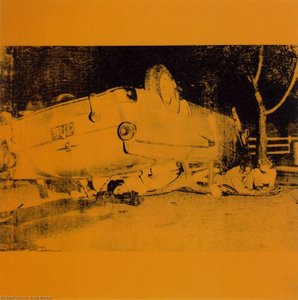
untitled (8167) is a work by the American artist Andy Warhol. Created between 1963 and 1968, the piece emerged during a prolific period in which Warhol explored the medium of film. This era marked a significant shift in his practice as he moved toward the mechanical processes that would define his reputation.
The work reflects the artist's engagement with the burgeoning spirit of Pop Art. During this time, Warhol's studio, known as The Factory, became a central hub for experimentation. His focus on the repetitive nature of imagery and the intersection of mass production and fine art is present in this composition.
Visual Composition and Subject Matter
The composition centers on a doorway topped by a window. Two green doors flank the central entrance, creating a sense of architectural symmetry. Within the window, a collection of objects is crowded together, including framed photographs and various toys. A teddy bear is positioned prominently among these items, acting as a focal point within the glass pane.
The arrangement suggests a domestic interior, though the placement of objects feels haphazard. Books are scattered throughout the scene, some resting near the top of the window and others positioned closer to the bottom. In the upper right corner, a clock hangs, marking the space with a sense of quiet observation. The clutter of the window creates a dense, layered effect against the more structured lines of the door.
Artistic Technique and Style
Warhol utilized a bold silkscreen printing process to execute this work, opting for a mechanized method rather than traditional brushstrokes. By overlaying silkscreen printing onto the subject matter, the artist moved away from the hand of the painter toward an aesthetic of mass production. This approach emphasizes the repetitive nature of imagery found in commercial media.
The composition is characterized by a deliberate lack of meticulous detail. Instead of precise rendering, the arrangement of objects creates a sense of clutter and disorganization. This intentional lack of refinement mirrors the fragmented way information is processed in a consumer-driven society.
Related Works by Andy Warhol
Warhol’s exploration of domesticity and the mundane finds parallels in his broader catalog. His fascination with the repetitive nature of consumer culture is evident in works such as Campbell's soup cans (1962). These pieces reflect a similar interest in the visual language of mass production and the objects that define everyday American life.
The artist also applied his mechanical approach to portraiture and celebrity. His output includes Che Guevara and Triple Elvis (1963), works that engage with the construction of public persona. Other significant pieces include Liza Minnelli, 1979, which continues his investigation into the intersection of fame and imagery.
Q&A
untitled (8167)は手描きですか、それともプリントですか?
手描きによる制作:熟練した画家が、リネンキャンバスに油彩でuntitled (8167)を模写します。
untitled (8167)のサイズはどれを選べばよいですか?
サイズは28.8 x 34.7 cm (¥35156)から200.2 x 241.4 cm (¥312088)まで展開しております。こちらのページ内の表に、主な工程とそれぞれの価格を記載しています。
配送にはどのくらいの時間がかかりますか?
配送には4〜5週間を要し、世界中どこへでも速達便にて無料でお届けいたします。また、本ページではお急ぎの方向けの特急制作オプションもご用意しております。商品は、理由を問わず100日以内であれば全額返金での返品が可能です。
アンディ・ウォーホルはuntitled (8167)の制作にどのような画材(メディア)を使用しましたか?
Painting
 設置イメージを表示

 シェアする
 シェアする
 詳細を見る
 解説シート


 ダウンロード
 似ている作品
 X線調査
 スライドショーを表示
 Q&A

 統計情報