プリント版に切り替え
 詳細を表示
詳細を表示







































 いずれかの辺が105 cm(約41インチ)を超えるアートワークまたは複製画の場合、フレームは分解されたキットの状態でお届けいたします。この方法は、輸送中の破損を防ぎ、安全に配送するために採用しております。


The Arresting Power of the Everyday
In the vibrant landscape of 1963, Andy Warhol unleashed a visual provocation that would forever alter the trajectory of modern art. Untitled (3181) is not merely a depiction of a common street fixture; it is an intentional disruption of the viewer's gaze. A singular, crimson stop sign dominates the canvas, its bold red hue acting as a visceral command to pause and contemplate. Behind this iconic symbol, a muted cityscape unfolds—a delicate, almost ghostly architecture that provides a somber contrast to the foreground's intensity. This juxtaposition creates a profound tension between the familiar, regulated world of urban life and the raw, unyielding energy of Pop Art, inviting anyone who stands before it to find extraordinary meaning within the ordinary.
The Mechanics of Mass Production
To understand the soul of this piece, one must look through the lens of Warhol’s revolutionary technique. Eschewing the traditional, heavy layers of oil paint favored by the Abstract Expressionists, Warhol embraced the silkscreen printing process—a method borrowed directly from the world of commercial advertising and industrial manufacturing. By transferring photographic images onto acetate and rolling them repeatedly over paper, he achieved a level of uniformity that mirrored the mass-produced goods of the era. The subtle presence of halftone dots creates a textured surface that mimics the grain of newsprint or magazine advertisements, blurring the line between fine art and consumer media. This calculated use of repetition serves as a profound commentary on the burgeoning culture of replication, where the unique is replaced by the infinitely reproducible.
A Reflection of a Changing World
Emerging during the height of the Kennedy administration, Untitled (3181) captures the pulse of an America caught between unprecedented economic prosperity and a growing fascination with celebrity and mass media. Warhol’s work acts as a mirror to a society increasingly defined by what it consumes. By elevating a mundane traffic sign to the status of a masterpiece, he challenged the elitism of the art world, suggesting that the true icons of our age are found in the streets and on the supermarket shelves. For the contemporary collector or interior designer, this piece offers more than just a striking visual; it provides a sophisticated dialogue between history and modernity. Its bold colors and graphic clarity make it an unparalleled centerpiece for any space, injecting a sense of historical weight and avant-garde spirit into a modern aesthetic.
Q&A
アンディ・ウォーホル作「untitled (3181)」は、どの部屋に飾るのがおすすめですか?
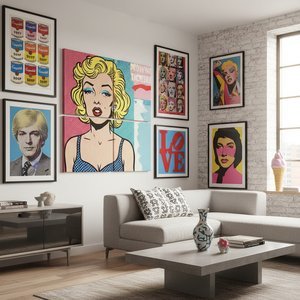
アンディ・ウォーホル作「untitled (3181)」 は、Living Room に飾るのがおすすめです。作品の主題、色彩、そして雰囲気に合わせたご提案です。
アンディ・ウォーホル作「untitled (3181)」の手描き複製画はどこで購入できますか?
アンディ・ウォーホル作「untitled (3181)」の手描き複製画は、こちらの手描き油彩複製画ページから直接ご注文いただけます:リネンキャンバスに手描きされた油彩複製画(受注制作)
「untitled (3181)」の閲覧数はどのくらいですか?
アンディ・ウォーホル作「untitled (3181)」に関する統計情報は、作品の閲覧統計ページでご確認いただけます。こちらでは、作品の月間訪問数、アーティストの作品への訪問数、および最近の訪問者の国別・言語別の内訳をご覧いただけます。
この絵画の詳細を見る
 設置イメージを表示
 シェアする
シェアする シェアする
シェアする
 詳細を見る
詳細を見る ガイドを表示

 ダウンロード
 似ている作品
 X線調査
X線調査 スライドショーを表示
 Q&A
Q&A 統計情報
統計情報