

 設置イメージを確認
 送る
送る シェア
シェア
 詳細情報
詳細情報 ガイドを表示

 画像をダウンロード
 似ている作品
 X線調査
X線調査 スライドショー
 統計情報
統計情報Untitled
 Charcoal
- WallArt
- Expressionism
 1970
1970- Modern
 29.0 x 23.0 cm
 Museu do Caramulo
 続きを読む
続きを読む
このページに掲載されている作品は著作権法によって保護されており、当社の許可なく同一の複製物を制作または販売することは法律で禁じられています。この保護は、以下のような国際条約に基づき執行されます。 ベルヌ条約 および、以下の条項に定められたものを含む各国の法律により、 米国著作権法 第17編。
敬意を払った法的な代替手段として、私たちはオリジナルにインスピレーションを与えられた、カスタムの手描きアートワークを提供しています。私たちの熟練したプロのアーティストは、元の作品が持つスタイル、情緒、そして芸術的なエッセンスを注意深く研究し、独自の創作物でありながら、同じ感性を呼び起こすような、新しくユニークな作品を作り上げます。
この手法は、著作権で保護された作品の複製や複写を伴わないため、著作権法に完全に準拠しています。これは単なる模倣ではなく、創造的な再解釈です。元の作品からインスピレーションを受けつつも、それとは異なる、全く新しい絵画を生み出すものです。
手描き油彩複製画
当社のアーティストが、お客様のご希望のサイズと額縁に合わせて、キャンバスに手描きで制作する油彩画です。 ( プリント版に切り替え デジタル画像販売へ切り替え)




































作品のオリジナル比率に合わせた、当店の規定サイズからお選びください。

フレームや壁のスペースに合わせて、ご希望の幅と高さを入力してください。本作品は手描きのため、異なる比率のサイズをご希望の場合、絵画の周囲を少し広げて描くか、あるいは端を少しカットして調整することが可能です。お客様のご要望に合わせます。制作を開始する前に、仕上がりを確認するためのデジタルモックアップをお送りいたします。このページに表示されている画像は完成品の実物ではなく、あくまでモックアップによるイメージです。
ご注文後、OriginalUniqueArt.com チームより詳細な指示をお送りするとともに、仕上がりイメージ(モックアップ)をご提供いたします。


 ガラスオプションは、110cm未満のサイズでのみご利用いただけます。

Untitled
再現技法
複製画サイズ一覧
-


合計金額
¥ 47606
The Raw Energy of Line and Shadow
In this evocative charcoal drawing from 1970, the Portuguese visionary Ana Hatherly de Sousa invites us into a world where nature is stripped of its serenity and reimagined as a site of profound kinetic energy. The work presents a dense, chaotic field of tall grasses or reeds, yet it transcends mere botanical representation to become an exploration of pure movement. There is no quiet meadow here; instead, the viewer is met with a swirling, turbulent landscape where dark, rhythmic lines dance across the paper in a state of unrestrained motion. The composition lacks a traditional focal point, intentionally guiding the eye on a wandering journey through an intricate network of shadows and light, much like a traveler lost within a thicket of wild growth.
The technique employed by Hatherly is as visceral as the subject matter itself. Utilizing the direct application of charcoal, the artist achieves a palpable sense of texture and physicality that demands attention. The varying thickness of each stroke—some heavy and smudged, others sharp and decisive—creates a dramatic interplay of depth. Through the masterful manipulation of density, light emerges from the darkness; where the charcoal is sparse, the paper breathes, suggesting highlights amidst the gloom, while the concentrated black masses suggest deep, impenetrable shadows. This tactile approach transforms the two-dimensional surface into a three-dimensional experience of grit and grace.
Expressionism and the Spirit of the Unseen
While the subject matter is representational, the soul of the piece is deeply rooted in Expressionism. Hatherly de Sousa, a polymath whose intellect spanned philology, poetry, and film, brings a linguistic sensitivity to her visual marks, treating each line as a word in an unspoken poem of struggle and vitality. The artwork eschews realistic precision in favor of emotional truth, capturing the "wildness" of the natural world through an almost violent application of medium. There is a palpable sense of tension within the frame, a suggestion of the internal struggles found within both nature and the human psyche.
For the discerning collector or interior designer, this piece offers a sophisticated layer of intellectual and aesthetic depth. Its monochromatic palette and abstract qualities make it an incredibly versatile choice for modern, minimalist, or industrial interiors, where it can serve as a powerful anchor of texture and mood. As a high-quality reproduction, it brings the raw, avant-garde spirit of 20th-century Portuguese experimentalism into the contemporary home, offering a window into a moment of pure, unadulterated creative impulse.
よくあるご質問
Ana Hatherly De Sousa作「Untitled」の雰囲気はどのように表現されていますか?
Ana Hatherly De Sousa作「Untitled」の全体的なムードはBoldです。このムードは、作品が持つ全体的な雰囲気。
学生向けのAna Hatherly De Sousa作「Untitled」に関するファクトシートはありますか?
Ana Hatherly De Sousa作「Untitled」には、ガイドページをご用意しています。これは、学生や教室での学習用に設計された、印刷可能な作品解説シートです。
Ana Hatherly De Sousa作「Untitled」 のプリントはどこで購入できますか?
Ana Hatherly De Sousa作「Untitled」のプリントをご希望の方は、こちらのファインアートプリントページよりご注文いただけます:コットンキャンバスまたはアーカイブ品質のキャンバスペーパーに施されたファインアートプリント。
アーティストについて
A Life Interwoven: The Multifaceted Art of Ana Hatherly
Ana Hatherly de Sousa (1929-2015) was a singular figure in Portuguese art and culture, defying easy categorization as she moved fluidly between poetry, visual art, filmmaking, academia, and essay writing. Born in Porto, Portugal, her intellectual journey began with a degree in Germanic Philology from the University of Lisbon, followed by doctoral studies in Hispanic Studies at the University of California, Berkeley. This foundation in language and literature would prove crucial to her later explorations of form, meaning, and the very nature of artistic expression. However, Hatherly’s path wasn't one of linear progression; it was a constant questioning and re-evaluation of boundaries, a deliberate blurring of disciplines that positioned her as a pioneer of experimental art in Portugal. She spent years as a professor of human and social sciences at the New University of Lisbon, fostering critical thought and challenging conventional artistic norms within the academic sphere.The Genesis of Experimentation: Poetry and Visual Dialogue
Hatherly emerged during a period of significant political and cultural change in Portugal, and her work often reflected this turbulent context. She is widely recognized as one of the key figures in the Portuguese experimental poetry movement (Po.Ex) beginning in 1959, collaborating with artists like E.M. de Melo e Castro and António Aragão. This group sought to break away from traditional poetic forms, embracing visual elements, typography, and a radical approach to language itself. For Hatherly, this wasn’t simply about aesthetic innovation; it was about challenging the status quo and exploring new ways of communicating meaning in a rapidly changing world. Her early work demonstrates a fascination with concrete poetry, where the physical arrangement of words on the page became as important as their semantic content. This interest evolved into visual poetry, where text and image intertwined to create complex, layered compositions. She often described her process as beginning “with writing,” seeing herself as a writer who ventured into visual art through experimentation with language, but equally acknowledging that painting could be a starting point for literary exploration—a testament to the interconnectedness of all artistic forms in her worldview.Abstract Expressions and Political Undertones
Throughout her career, Hatherly’s visual work gravitated towards abstraction. Her paintings and drawings are characterized by bold lines, stark contrasts, and gestural energy. Pieces like the 1970 charcoal drawing of grasses reveal a turbulent emotionality reminiscent of Expressionism, while later monochrome abstract works from 1997 showcase complex networks of interwoven lines evoking unease and texture—a style often compared to Jackson Pollock’s action painting. However, Hatherly's abstraction was never purely formal; it frequently carried political undertones. Her art served as a vehicle for exploring themes of power, resistance, and social injustice. The series featuring stark black lines on cream backgrounds exemplifies this approach, conveying energy and disruption through raw texture and gestural abstraction. She wasn’t interested in creating decorative objects but rather in provoking thought and challenging viewers to confront uncomfortable truths.A Transdisciplinary Legacy: Film, Teaching & Beyond
Hatherly's artistic output extended far beyond poetry and painting. She ventured into filmmaking, exploring the possibilities of visual narrative and experimental techniques. Her work as an educator was equally significant; she fostered a spirit of critical inquiry at AR.CO in Lisbon and later established the Institute of Portuguese Studies at the Universidade Nova de Lisboa. This commitment to teaching reflects her belief in the importance of artistic education and the power of dialogue. She actively participated in literary associations, co-founding the PEN Club Português and receiving recognition for her book *Rilkeana*. Her vast body of work—spanning art, film, poetry, novels, essays, translations—is deeply multidimensional, defying labels and boundaries.Historical Significance & Enduring Influence
Ana Hatherly’s legacy lies in her unwavering commitment to experimentation and her refusal to be confined by traditional artistic categories. She was a true innovator, pushing the boundaries of Portuguese art and paving the way for future generations of artists. Her work continues to resonate today, inspiring those who seek to challenge conventions and explore new forms of expression. The Google Arts & Culture exhibition dedicated to her work, alongside scholarly analyses from institutions like UC Berkeley and the Taylor Institution Library at Oxford University, demonstrate the enduring relevance of her artistic vision. She remains a pivotal figure in understanding the development of avant-garde art in Portugal and its connection to broader European movements, a testament to her intellectual curiosity, artistic courage, and profound impact on the cultural landscape.
Ana Hatherly De Sousa
1929 - 2015 , Portugal
アーティスト情報
- Full Name: Ana Hatherly de Sousa
- Nationality: Portuguese
- Date Of Birth: 1929
- Date Of Death: 2015
- Place Of Birth: Porto, Portugal
- Notable Artworks:
- Untitled (1970)
- Untitled (1997)
- From the series
- Of Human Servitude 1997
- Artistic Movement Or Style: Experimental poetry/art
関連記事

Mastering the Line: A Comprehensive Expert Guide to Technical Precision and Expressive Depth in Drawing
Elevate your artistic practice with this expert guide to mastering the line. Discover advanced techniques in graphite, charcoal, and contour drawing designed for art students seeking technical precision and expressive depth in their fine art studies.

ゴヤ傑作25選:スペインの魂を揺さぶる、深遠な芸術の世界 | OriginalUniqueArt
ゴヤ傑作25選:ロマン主義を代表するスペインの巨匠、フランシスコ・デ・ゴヤの世界へ。黒衣の女からマハまで、魂を揺さぶる絵画の物語と技法を紐解きます。OriginalUniqueArtで高品質なアートレプリカを見つけ、インテリアに深みと風格を。今すぐコレクションをご覧ください。
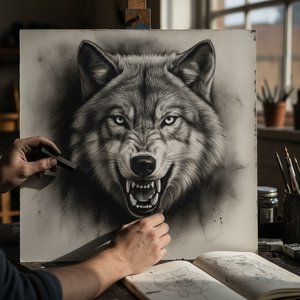
Charcoal Art Mastery: A Visual Journey Through Raw Power, Deep Shadows, and Expressive Texture
Master the raw power of charcoal art. Explore professional techniques in chiaroscuro, texture, and shadow to elevate your sketches from simple lines to high-impact, expressive masterpieces. A visual guide for art students seeking technical precision and emotional depth.

About Us
Discover our story! We bring world-class art into your life through expert curation, personalized creations, and free previews. Trusted by individuals and businesses since 2000.

Mastering Charcoal: The Definitive Expert Guide to Capturing Profound Depth, Texture, and Shadow
Elevate your artistry with this definitive expert guide to mastering charcoal. Designed for art students, learn professional techniques for capturing profound depth, intricate textures, and dramatic shadows through advanced blending and chiaroscuro methods.