

 設置イメージを確認
 送る
送る シェア
シェア
 詳細情報
詳細情報 ガイドを表示

 画像をダウンロード
 似ている作品
 X線調査
X線調査 スライドショー
 Q&A
Q&A 統計情報
統計情報Materfamilias
 Oil On Canvas
- WallArt
- Realism
 1883
1883- 19th Century
 115.0 x 159.0 cm
 Wolverhampton Art Gallery
 続きを読む
続きを読む
このページに掲載されている作品は著作権法によって保護されており、当社の許可なく同一の複製物を制作または販売することは法律で禁じられています。この保護は、以下のような国際条約に基づき執行されます。 ベルヌ条約 および、以下の条項に定められたものを含む各国の法律により、 米国著作権法 第17編。
この手法は、著作権で保護された作品の複製や複写を伴わないため、著作権法に完全に準拠しています。これは単なる模倣ではなく、創造的な再解釈です。元の作品からインスピレーションを受けつつも、それとは異なる、全く新しい絵画を生み出すものです。
ジークレー/アートプリント
スピーディーな制作と多彩な仕上げオプションが魅力の、ミュージアムクオリティなジークレー・キャンバスプリント。 ( 手描きの複製画を注文する デジタル画像販売へ切り替え)




P118B ¥10

P118H ¥10

P118W ¥10

P438Z ¥10

P508JH ¥12

P508YH ¥12

P805H ¥10

P805Z ¥10

P919BZ ¥10

P919G ¥10

P919XJ ¥10

P959ZH ¥10

P968JZ ¥12

W106C ¥8

W218G ¥10

W218JH ¥8

W218Y ¥10

W307PJ ¥10

W316G ¥10

W316PJ ¥8

W316Y ¥10

W398PJ ¥8

W4111J ¥10

W500HY ¥15

W500JH ¥15

W692G ¥12

W849H ¥8

W940BG ¥15

W953PJ ¥8




作品のオリジナル比率に合わせた、当店の規定サイズからお選びください。

額縁や壁のスペースに合わせて、ご希望の幅と高さを入力してください。プリントはカットすることは可能ですが、元の画像より大きくすることはできないため、異なる比率のサイズを選択された場合は、画像の一部が欠けることになります。印刷を開始する前に、内容を確認していただくためのデジタルモックアップをお送りいたします。このページに表示されている画像は、実際のカット後の状態を示すものではありません。実際の仕上がりはモックアップにてご確認ください。


 ガラスオプションは、110cm未満のサイズでのみご利用いただけます。

Materfamilias
ジークレー/アートプリント
複製画サイズ一覧
-


合計金額
¥ 12633
A Tender Moment Captured in Oil
In the quietude of a rocky landscape, Alfred William Strutt’s 1883 masterpiece, Materfamilias, invites the viewer into a sanctuary of maternal devotion. This exquisite oil on canvas is far more than a mere depiction of animals; it is a profound meditation on the universal essence of nurturing. The composition centers on a large, soulful brown dog, whose calm and protective presence serves as the emotional anchor of the piece. Surrounding her are several puppies, captured in various stages of curiosity and rest, their small forms creating a sense of rhythmic movement against the rugged terrain. Through Strutt’s masterful hand, the scene transcends simple animal portraiture to become a poignant symbol of the unbreakable bonds that define family life.
The technique employed by Strutt is a testament to the heights of 19th-century Realism. By utilizing the rich, layered textures of oil on canvas, the artist breathes life into the very fur of the subjects and the coarse grain of the stones. There is a palpable warmth in the color palette, where earthy tones and soft highlights dance across the scene, creating an atmosphere that feels both intimate and lifelike. This meticulous attention to detail—the way light catches the edge of a puppy’s ear or the subtle shadows tucked within the rocky crevices—ensures that the painting possesses a three-dimensional vitality. For the discerning collector, this level of craftsmanship offers a window into a bygone era of observational excellence.
Historically, Materfamilias emerges from a period where artists sought to find extraordinary emotion within ordinary subjects. Strutt, influenced by his upbringing steeped in both craftsmanship and scientific observation, brings a disciplined yet emotive eye to this work. The painting resonates with the Victorian appreciation for domesticity and the sanctity of the natural order. It evokes a sense of nostalgia and peace, making it an ideal centerpiece for any sophisticated interior. Whether placed in a sunlit library or a contemporary living space, a high-quality reproduction of this work serves as a constant reminder of the enduring strength found in tenderness and the quiet beauty of life's most fundamental connections.
よくあるご質問
「Materfamilias」の色味は、鮮やかですか、それとも落ち着いていますか?
Alfred William Strutt作「Materfamilias」の色調は、Balanced Softの彩度とVividの強さを備えています。
Alfred William Strutt作「Materfamilias」 がギフトとしておすすめな理由は何ですか?
Comfortingな情緒を湛えた「Alfred William Strutt作「Materfamilias」」は、Mother's Dayへの贈り物としておすすめです。
Alfred William Strutt作「Materfamilias」のコントラストはどの程度ですか?
「Materfamilias」の明暗のコントラストはStatementと記録されています。コントラストとは、明るい部分と暗い部分がどの程度強く異なっているかを表す指標です。
アーティストについて
The Intersection of Precision and Poetic Vision
Alfred William Strutt (1856–1924) remains a captivating figure in the tapestry of British art, representing a unique moment where the meticulous rigor of scientific observation met the sweeping emotionality of the Victorian era. Born in New Zealand to the visionary William Thomas Strutt—a man whose innovations in iron framing would forever alter the landscape of architecture—Alfred was raised in an environment where craftsmanship and structural integrity were paramount. This early exposure to the principles of engineering and fine detail instilled in him a profound respect for the physical world, a quality that would later define his artistic signature. His upbringing allowed him to bridge the gap between the burgeoning scientific inquiries of the late 19th century and the established traditions of Romanticism.
His formative years, spent navigating the intellectual corridors of Chelmsford and Cambridge, provided the academic foundation necessary for his multifaceted career. Under the guidance of his father and through his association with the rigorous atmosphere of Trinity College, Strutt developed a worldview that saw no conflict between the analytical eye and the creative spirit. His early training in engraving and drawing, influenced by the historical documentation styles of Joseph Strutt, taught him the importance of precision. This technical mastery allowed him to move seamlessly between genres, from the delicate, intimate textures of portraiture to the expansive, atmospheric grandeur of landscape painting.
A Mastery of Light, Texture, and Narrative
Strutt’s body of work is characterized by an extraordinary ability to capture both the tangible weight of the material world and the ephemeral nature of light. In his more intimate works, such as Young woman holding a book, he demonstrates a profound sensitivity to the Victorian soul. Through the careful rendering of heavy silk, ornate fabrics, and the soft luminosity of skin, he invites the viewer into a private moment of contemplation. Here, the subject is not merely a figure in a frame but a vessel for themes of literacy, interiority, and the quiet dignity of intellectual life. The book itself serves as a powerful symbol, acting as a bridge between the external social reality and the boundless reaches of the human imagination.
When his gaze turned toward the natural world or historical epic, Strutt’s technique expanded to embrace the dramatic influences of masters like Turner and Constable. His landscapes often possess a rhythmic vitality, where the interplay of light and shadow creates a sense of living breath within the canvas. Whether depicting the serene biblical narratives of Jerusalem Pilgrims or the rugged, untamed beauty found in scenes like Up to His Knees, his brushwork remains remarkably controlled yet emotionally resonant. He possessed a rare talent for utilizing warm tones and detailed compositions to evoke a sense of nostalgia and reverence, making his historical scenes feel less like distant memories and more like present, breathing realities.
Legacy of an Observational Pioneer
The significance of Alfred William Strutt lies in his refusal to separate the observer from the creator. While many of his contemporaries were moving toward purely abstract or impressionistic expressions, Strutt maintained a commitment to the "modern observation" of reality—a belief that true art must be rooted in an accurate understanding of form and structure. This commitment was perhaps most visible in his fascination with the structural revolutions of his time; just as his father utilized iron to redefine safety and aesthetics in architecture, Alfred used the structural elements of composition to reinforce the emotional impact of his subjects.
His contributions to the art world are marked by several enduring achievements:
- Technical Versatility: The seamless transition between the minute details of portraiture and the large-scale drama of historical and landscape painting.
- Symbolic Depth: The integration of contemporary Victorian values, such as the importance of literature and education, into fine art compositions.
- Historical Synthesis: A unique ability to blend the Romantic tradition with a burgeoning scientific interest in the natural world's mechanics.
Today, Strutt’s work serves as a vital historical record, capturing the aesthetic transitions of a century in flux. His paintings remain much more than mere depictions; they are windows into an era that sought to find harmony between the progress of industry and the enduring beauty of the natural and human spirit.

アーティスト情報
- Artistic Movement Or Style: Victorian Painting
- Artists Or Movements Influenced By This Artist: ['Royal Academy']
- Artists Who Influenced This Artist: ['William Wynne Ryland']
- Date Of Birth: July 3, 1825
- Date Of Death: January 3, 1915
- Full Name: Alfred William Strutt
- Nationality: British
- Notable Artworks:
- The Old Cottage
- Horses
- Place Of Birth: Teignmouth, Devonshire
関連記事
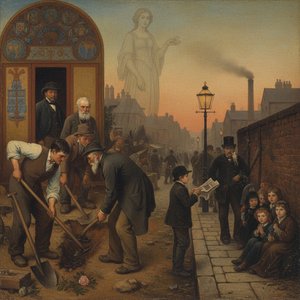
Ford Madox Brown: Pre-Raphaelite Visionary & Victorian Social Commentary
Explore the life & art of Ford Madox Brown, a pivotal Pre-Raphaelite painter renowned for his powerful social commentary and masterpiece 'Work'. Discover his lasting influence on British art history.

The Enduring Legacy of Oil on Canvas: Technique, History & Aesthetic Impact
Explore the rich history & techniques of oil painting – from Renaissance masters to Impressionism. Discover pigments, layering methods, and why this timeless medium endures. Expert insights for artists & art enthusiasts.
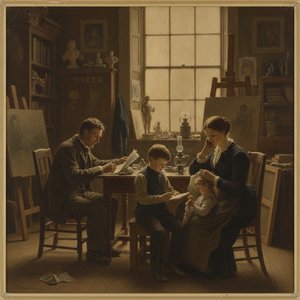
Victorian Realism: Capturing the Soul and Intricate Detail of a Golden Era
Explore the exquisite world of Victorian Realism. Discover how 19th-century masters captured unparalleled detail and emotion through oil painting, and learn to curate these timeless masterpieces for your luxury interior collection.

Romantic Realism's Finest: 10 Masterpieces for Your Home | OriginalUniqueArt
Explore 10 defining masterpieces of Romantic Realism! Discover Courbet, Millet & Daumier's powerful paintings—capturing emotion and social realities. Find museum-quality reproductions for your home at OriginalUniqueArt.com.

Oil on Canvas: A Historical & Technical Exploration of a Timeless Artistic Medium
Explore the rich history & enduring techniques of oil painting on canvas. Discover the science behind its longevity, conservation practices, and contemporary relevance. Expert insights for art enthusiasts.