プリント版に切り替え
 続きを読む
続きを読む







































 いずれかの辺が105 cm(約41インチ)を超えるアートワークまたは複製画の場合、フレームは分解されたキットの状態でお届けいたします。この方法は、輸送中の破損を防ぎ、安全に配送するために採用しております。


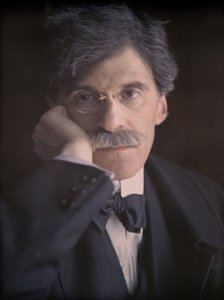
A Moment Frozen in Time: Alfred Stieglitz’s “Katherine” (1905)
Alfred Stieglitz's "Katherine," created in 1905, is more than just a photograph; it’s a poignant snapshot of early 20th-century life and a testament to Stieglitz’s groundbreaking vision. This intimate portrait, measuring 20 x 17 cm, captures a young girl – Katherine – lost in the pages of a book, her gaze directed towards the viewer with an almost unsettling directness. The stark black and white tones amplify the image's inherent drama, drawing attention to the textures of her dress and the delicate curve of her hand holding the volume. The photograph’s power resides not just in its technical execution – a hallmark of Stieglitz’s meticulous approach – but also in the palpable sense of nostalgia it evokes, transporting us back to a time when childhood innocence seemed particularly vulnerable.
Pictorialism and the Rise of Photography as Art
- Historical Context: “Katherine” was produced during a pivotal moment for photography. Stieglitz, along with other artists like Edward Steichen, was instrumental in establishing photography as a legitimate art form, challenging the prevailing view that it was merely a mechanical process for documenting reality.
- Pictorialist Movement: Stieglitz’s work aligns perfectly with the Pictorialist movement, which sought to emulate the expressive qualities of painting through careful composition, soft focus, and manipulated printing techniques. This is evident in the photograph's gentle tones and deliberate blurring, creating an almost dreamlike quality.
- Stieglitz’s Influence: Stieglitz’s influence extended beyond simply producing beautiful images; he actively promoted photography as a serious artistic medium through exhibitions like the Photo-Secession group, laying the groundwork for future generations of photographers.
Symbolism and Narrative within the Frame
The seemingly simple composition of “Katherine” is rich with symbolic potential. The girl’s intense gaze suggests a contemplative spirit, perhaps hinting at the anxieties and uncertainties of the era. The book she holds represents knowledge, imagination, and escape – themes frequently explored in Stieglitz's work. Notably, the inclusion of the knife nearby introduces an element of unease and ambiguity. While its precise meaning remains open to interpretation, it could symbolize vulnerability, danger, or even the creative process itself—a tool for shaping ideas and realities. The partially visible figure on the left adds another layer of complexity, suggesting a hidden narrative or perhaps representing the societal constraints placed upon young women at the time.
Technique and Reproduction – A Legacy Preserved
OriginalUniqueArt’s hand-painted reproductions meticulously recreate Stieglitz's original vision. Utilizing archival quality materials and employing skilled artisans, each reproduction captures the nuances of light, shadow, and texture that define this iconic image. The process begins with a high-resolution scan of the original photograph, followed by painstaking manual painting to faithfully reproduce every detail. This ensures that the emotional impact and artistic merit of “Katherine” are preserved for generations to come. The resulting reproduction offers an unparalleled opportunity to own a piece of photographic history – a tangible connection to one of the most influential figures in the art world.
よくあるご質問
アルフレッド・スティーグリッツ作「Katherine (1905)」に似た作品はどこで見つけることができますか?
「Katherine (1905)」に似た作品は、作品の似ている作品ページに掲載されています。
「Katherine (1905)」のPictorialist Photography様式には、どのような情緒的なトーンが漂っていますか?
「Katherine (1905)」は、Pictorialist Photographyのムーブメントにおいて、Nostalgicな情緒を湛えています。
「Katherine (1905)」の原画は、どの美術館に収蔵されていますか?
アルフレッド・スティーグリッツ作「Katherine (1905)」の真作はAmon Carter Museum of American Art, フォートワース, アメリカ合衆国に所蔵されています。複製画(レプリカ)を用いることで、ご自宅でも作品をお楽しみいただけます。
 送る
送る シェア
シェア
 詳細情報
詳細情報 ガイドを表示

 画像をダウンロード
 似ている作品
 スライドショー
 Q&A
Q&A 統計情報
統計情報