

 設置イメージを確認
 送る
送る シェア
シェア
 詳細情報
詳細情報 ガイドを表示

 画像をダウンロード
 似ている作品
 X線調査
X線調査 スライドショー
 統計情報
統計情報Red Lily Pads (Nénuphars rouges)


 続きを読む
続きを読む
ジークレー/アートプリント
スピーディーな制作と多彩な仕上げオプションが魅力の、ミュージアムクオリティなジークレー・キャンバスプリント。 ( 手描きの複製画を注文する デジタル画像販売へ切り替え)




P118B $10

P118H $10

P118W $10

P438Z $10

P508JH $12

P508YH $12

P805H $10

P805Z $10

P919BZ $10

P919G $10

P919XJ $10

P959ZH $10

P968JZ $12

W106C $8

W218G $10

W218JH $8

W218Y $10

W307PJ $10

W316G $10

W316PJ $8

W316Y $10

W398PJ $8

W4111J $10

W500HY $15

W500JH $15

W692G $12

W849H $8

W940BG $15

W953PJ $8




作品のオリジナル比率に合わせた、当店の規定サイズからお選びください。

特定のフレームやスペースに合わせて、ご自身でサイズを指定することも可能です。選択されたサイズが元の画像の比率と一致しない場合、作品をトリミングするか、鏡面反射または単色での塗りつぶしによって画像を拡張いたします。制作を開始する前に、ご確認用のデジタルモックアップをお送りいたします。
画面上のプレビューには、実際のトリミングや拡張は反映されませんのでご注意ください。最終的な構図を正確に確認できるのは、モックアップのみとなります。
カスタムサイズも承っておりますが、元の比率を維持するためには、あらかじめ用意されたリストからサイズを選択することをお勧めいたします。


 ガラスオプションは、110cm未満のサイズでのみご利用いただけます。

Red Lily Pads (Nénuphars rouges)
ジークレー/アートプリント
複製画サイズ一覧
-


合計金額
$ 80
A Dance of Light and Reflection: Unveiling Calder’s “Red Lily Pads”
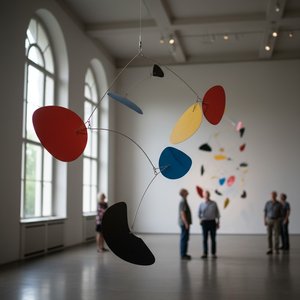
Alexander Milne Calder's "Red Lily Pads (Nénuphars rouges)" isn’t merely a depiction of a serene pond; it’s an invitation to lose oneself in the delicate balance of form, color, and movement. Created in 1956, this captivating sculpture – captured through a masterful photograph – embodies Calder's signature approach: embracing chance and celebrating the ephemeral beauty of nature within a distinctly modern aesthetic. The piece resides within a contemporary architectural space, its organic shapes echoing the curves of the surrounding walls, creating an illusion of seamless integration between art and environment.
The composition immediately draws the eye to the central arrangement of circular lily pads, rendered in a vibrant coral-red that commands attention against the cool neutrality of the white architecture. These aren’t static forms; they possess a subtle dynamism, hinting at an unseen movement – perhaps the gentle sway of water or the whisper of air currents. The delicate wires and rods connecting them are almost invisible, yet crucial to the sculpture's overall effect, suggesting a complex network of support and balance. Calder masterfully utilizes negative space, allowing the surrounding walls to contribute significantly to the artwork’s visual weight and sense of openness.
The Legacy of a Pioneer: Calder and His Architectural Sculptures
To fully appreciate “Red Lily Pads,” it's essential to understand Alexander Milne Calder’s broader artistic trajectory. Born in Aberdeen, Scotland, in 1846, he initially trained as a stonemason before embarking on a career that would ultimately define him as one of the 20th century’s most innovative sculptors. His early work focused on monumental commissions for public buildings, notably his groundbreaking design for Philadelphia City Hall – a project that spanned two decades and involved over 250 individual sculptures. This experience profoundly shaped Calder's approach to architectural sculpture, instilling in him a deep appreciation for the interplay between form, space, and function.
Calder’s fascination with movement is evident throughout his oeuvre, but it’s perhaps most powerfully expressed in his mobiles – kinetic sculptures that respond to air currents. “Red Lily Pads” represents a shift towards a more static form while retaining this core principle of dynamic balance. The photograph captures a fleeting moment of equilibrium, suggesting the constant negotiation between stability and motion that characterizes Calder's work.
Symbolism and Emotional Resonance
The lily pad itself is a potent symbol – representing tranquility, purity, and rebirth. In this context, however, Calder subverts traditional associations, transforming these symbols into an abstract meditation on form and color. The red hue adds a layer of intensity, evoking feelings of passion, energy, and perhaps even a hint of melancholy. The surrounding white walls create a sense of serenity and contemplation, inviting the viewer to lose themselves in the sculpture’s visual rhythm.
Ultimately, “Red Lily Pads” is more than just a beautiful image; it's an invitation to experience the world through Calder’s unique lens. It speaks to our innate desire for balance, harmony, and connection with nature – qualities that resonate deeply in today’s increasingly complex and chaotic environment.
アーティストについて
アレクサンダー・ミルン・カルダーの生涯と芸術
1846年、スコットランドのアバディーンで生まれたアレクサンダー・ミルン・カルダーは、アメリカ彫刻界に大きな足跡を残した芸術家です。彼の名は、フィラデルフィア市庁舎の壮大な建築彫刻によって広く知られるようになりましたが、その芸術的遺産は単なる作品にとどまらず、息子のアレクサンダー・スターリング・カルダー、そして孫のアレクサンダー“サンディ”・カルダーへと受け継がれ、20世紀の彫刻界に輝かしい光を放ちました。スコットランドからアメリカへ:初期のキャリアと芸術的探求
カルダーは、エジンバラ王立美術院に通いながら、彫刻家ジョン・リンドのもとでその才能を開花させました。その後ロンドンに移り、アルバート記念碑の制作にも携わりましたが、1868年にアメリカへと渡りフィラデルフィアに定住します。そこで彼はジョセフ・A・ベイリーに師事し、さらにペンシルベニア美術アカデミーでトーマス・エイキンズの指導を受けました。この時期、カルダーは古典的な彫刻技法を習得しながらも、独自の芸術的表現を模索し始めます。彼の初期作品には、その探求心と繊細な技術が垣間見られます。フィラデルフィア市庁舎:壮大な挑戦と芸術の結晶
カルダーの名声を決定づけたのは、フィラデルフィア市庁舎への大規模な彫刻委託です。このプロジェクトは、大理石と青銅を駆使した250点を超える作品群で構成され、完成までに20年という長期間を要しました。その中心となるのが、市庁舎の塔を飾る巨大なブロンズ像「ウィリアム・ペン」です。カルダーは、この壮大なプロジェクトを通して、彫刻家としての卓越した技術と創造性を発揮し、フィラデルフィアの象徴的なランドマークを作り上げました。また、「インディアン像」や「サウス・ポータル」「ウェスト・ポータル」など、市庁舎内の他の彫刻作品も、色彩豊かな照明によってその細部まで美しく表現され、見る者を魅了します。芸術的遺産:世代を超えて受け継がれる創造性
カルダーの芸術的遺産は、彼の作品にとどまらず、息子のアレクサンダー・スターリング・カルダー、そして孫のアレクサンダー“サンディ”・カルダーへと受け継がれました。アレクサンダー・スターリング・カルダーは建築彫刻家として活躍し、孫のアレクサンダー“サンディ”・カルダーは、空中で動き続けるモビールという革新的な彫刻形式を創造し、20世紀美術に大きな影響を与えました。カルダーの芸術精神は、世代を超えて受け継がれ、現代アートの世界にもその足跡を残しています。後世への貢献と評価
アレクサンダー・ミルン・カルダーの作品は、スミソニアンアメリカ美術館やトリノ市立近代現代美術館など、世界中の様々な美術館で展示されています。彼の芸術的功績は、美術愛好家や研究者によって高く評価されており、その貢献は今後も長く称えられ、研究され続けることでしょう。カルダーの作品を鑑賞することは、19世紀彫刻の美しさと、アメリカ彫刻界における家族の創造性の輝きに触れる貴重な機会となるはずです。- 代表作: フィラデルフィア市庁舎、ウィリアム・ペン像、インディアン像
- 影響を受けた芸術家: ジョン・リンド
- 生年月日: 1846年8月23日
- 没年月日: 1923年6月14日
- 国籍: スコットランド系アメリカ人

アレクサンダー・ミルヌ・カルダー
1898 - 1976 , イギリス
アーティスト情報
- Artistic Movement Or Style: 建築彫刻
- Artists Or Movements Influenced By This Artist:
- アレクサンダー・スターリング・カルダー
- アレクサンダー・カルダー
- Artists Who Influenced This Artist: ['ジョン・リンド']
- Date Of Birth: 1846年8月23日
- Date Of Death: 1923年6月14日
- Full Name: アレクサンダー・ミルン・カルダー
- Nationality: スコットランド系アメリカ人
- Notable Artworks (List Of Titles):
- フィラデルフィア市庁舎
- ウィリアム・ペン像
- インディアンの像
- Place Of Birth (City And Country): スコットランド、アバディーン
関連記事

The Enduring Form: Exploring Themes & Techniques in Sculpture Across Historical Periods
Explore the rich history of sculpture from ancient masterpieces to contemporary innovations. Discover key techniques, influential artists & investment potential for discerning art collectors.

Bronze Sculptures That Defined Art History | OriginalUniqueArt
Journey through art history with our Top 10 bronze sculptures! Explore masterpieces by Rodin, Michelangelo & more. Discover stories behind iconic statues and find museum-quality reproductions for your home decor at OriginalUniqueArt.com.

Kandinsky's Masterpieces: 25 Paintings That Define Abstract Art | OriginalUniqueArt
Journey through Wassily Kandinsky's 25 most iconic abstract paintings. Explore his revolutionary use of color, form & spiritual expressionism. Find museum-quality Kandinsky reproductions and elevate your home decor with OriginalUniqueArt.com. Discover all masterpieces on OriginalUniqueArt.com!
Alexander Calder: Kinetic Sculpture, Mobile Art & the Poetics of Chance
Explore the revolutionary world of Alexander Calder's kinetic sculptures & mobiles. Discover insights for collectors, acquisition advice, and the enduring legacy of this modern master. Expert analysis & art valuation.

抽象表現主義を定義する十大傑作:芸術と装飾の深遠な旅
抽象表現主義を定義する10の傑作。ポロック、ロスコら巨匠たちの情熱と色彩の世界へ。各作品に込められた物語と技法を紐解き、至高のアート体験を。OriginalUniqueArt.comで、ミュージアムクオリティの複製画や洗練されたインテリアアイデアを発見してください。
