

 設置イメージを確認
 送る
送る シェア
シェア
 詳細情報
詳細情報 ガイドを表示

 画像をダウンロード
 似ている作品
 X線調査
X線調査 スライドショー
 統計情報
統計情報Lobster Trap and Fish Tail


 続きを読む
続きを読む
ジークレー/アートプリント
スピーディーな制作と多彩な仕上げオプションが魅力の、ミュージアムクオリティなジークレー・キャンバスプリント。 ( 手描きの複製画を注文する デジタル画像販売へ切り替え)




P118B $10

P118H $10

P118W $10

P438Z $10

P508JH $12

P508YH $12

P805H $10

P805Z $10

P919BZ $10

P919G $10

P919XJ $10

P959ZH $10

P968JZ $12

W106C $8

W218G $10

W218JH $8

W218Y $10

W307PJ $10

W316G $10

W316PJ $8

W316Y $10

W398PJ $8

W4111J $10

W500HY $15

W500JH $15

W692G $12

W849H $8

W940BG $15

W953PJ $8




作品のオリジナル比率に合わせた、当店の規定サイズからお選びください。

特定のフレームやスペースに合わせて、ご自身でサイズを指定することも可能です。選択されたサイズが元の画像の比率と一致しない場合、作品をトリミングするか、鏡面反射または単色での塗りつぶしによって画像を拡張いたします。制作を開始する前に、ご確認用のデジタルモックアップをお送りいたします。
画面上のプレビューには、実際のトリミングや拡張は反映されませんのでご注意ください。最終的な構図を正確に確認できるのは、モックアップのみとなります。
カスタムサイズも承っておりますが、元の比率を維持するためには、あらかじめ用意されたリストからサイズを選択することをお勧めいたします。


 ガラスオプションは、110cm未満のサイズでのみご利用いただけます。

Lobster Trap and Fish Tail
ジークレー/アートプリント
複製画サイズ一覧
-


合計金額
$ 80
Alexander Milne Calder’s Minimalist Dance of the Deep
Alexander Milne Calder's "Lobster Trap and Fish Tail," created in 1939, isn’t merely a depiction of marine life; it’s an embodiment of movement captured within a strikingly reductive aesthetic. This captivating abstract composition, rendered in the restrained palette of black, white, and varying shades of grey against a subtly lit expanse of pale gray, immediately draws the eye into its dynamic arrangement. The artwork speaks to a profound sense of fluidity and grace, achieved through the elongated, curving forms that dominate the canvas – stylized fish tails intertwined with what appears to be a lobster trap, creating an intriguing visual dialogue.
Calder’s approach leans heavily towards geometric abstraction, prioritizing line and form over realistic representation. The technique employed suggests a deliberate fusion of digital painting and illustration, resulting in a remarkably clean and precise execution. Notice the careful delineation of shapes – ovals morphing into elongated teardrops, culminating in simplified fins—each element contributing to the overall sense of controlled motion. Texture is subtly implied through variations in line weight and shading, rather than relying on literal surface detail, adding depth without sacrificing the artwork’s inherent minimalism.
A Reflection of Calder's Artistic Evolution
Understanding "Lobster Trap and Fish Tail" requires a brief journey into the life and work of Alexander Milne Calder. Born in Aberdeen, Scotland, in 1846, Calder initially trained as a sculptor under John Rhind, honing his skills at the Royal Academy in Edinburgh before migrating to London and working on the Albert Memorial. His subsequent move to Philadelphia in 1868 marked a pivotal moment, where he studied with Joseph A. Bailly and Thomas Eakins at the Pennsylvania Academy of Fine Arts. This period saw him gain recognition for monumental works like the Philadelphia City Hall sculpture – a complex undertaking involving over 250 individual pieces—and the colossal bronze statue of William Penn. Calder’s later career embraced kinetic art, experimenting with mobiles that responded to air currents and gravity, pushing the boundaries of sculptural form.
Interestingly, his grandson, Alexander “Sandy” Calder, continued this legacy, further developing the principles of chance and movement within sculpture. The influence of Joan Miró's biomorphic surrealism and Martha Graham’s choreography is palpable in Calder’s approach to motion – a deliberate harnessing of mechanical forces to evoke a sense of organic fluidity.
Symbolic Currents and Spatial Dynamics
Beyond its formal qualities, "Lobster Trap and Fish Tail" invites contemplation on deeper symbolic meanings. The arrangement of the fish tails, diagonally intersecting with a central mobile element, creates a powerful visual rhythm, suggesting an ongoing, almost perpetual movement. The lobster trap itself adds a layer of complexity, hinting at themes of capture, vulnerability, and perhaps even the precariousness of existence within the vastness of the ocean. The predominantly light gray background serves as a crucial anchor, emphasizing the shapes and contributing to the artwork’s serene yet dynamic mood.
Calder's masterful use of negative space—the expansive light gray field—is integral to the composition’s balance and overall impact. It allows the abstracted forms to breathe, preventing the piece from feeling cluttered or overwhelming. The flattened perspective, typical of abstract art, further enhances this sense of spaciousness, inviting viewers to lose themselves within the sculpture's graceful dance.
A Timeless Piece for Interior Spaces
"Lobster Trap and Fish Tail" is more than just a beautiful artwork; it’s a testament to Calder’s innovative spirit and his ability to capture the essence of movement. A hand-painted reproduction offers an exceptional opportunity to bring this captivating piece into your home or office, adding a touch of sophisticated serenity and visual intrigue. Its minimalist design complements a wide range of interior styles, while its subtle dynamism injects a sense of life and energy into any space. Consider it not just as decoration, but as a thoughtful meditation on form, motion, and the enduring beauty of the natural world.
アーティストについて
アレクサンダー・ミルン・カルダーの生涯と芸術
1846年、スコットランドのアバディーンで生まれたアレクサンダー・ミルン・カルダーは、アメリカ彫刻界に大きな足跡を残した芸術家です。彼の名は、フィラデルフィア市庁舎の壮大な建築彫刻によって広く知られるようになりましたが、その芸術的遺産は単なる作品にとどまらず、息子のアレクサンダー・スターリング・カルダー、そして孫のアレクサンダー“サンディ”・カルダーへと受け継がれ、20世紀の彫刻界に輝かしい光を放ちました。スコットランドからアメリカへ:初期のキャリアと芸術的探求
カルダーは、エジンバラ王立美術院に通いながら、彫刻家ジョン・リンドのもとでその才能を開花させました。その後ロンドンに移り、アルバート記念碑の制作にも携わりましたが、1868年にアメリカへと渡りフィラデルフィアに定住します。そこで彼はジョセフ・A・ベイリーに師事し、さらにペンシルベニア美術アカデミーでトーマス・エイキンズの指導を受けました。この時期、カルダーは古典的な彫刻技法を習得しながらも、独自の芸術的表現を模索し始めます。彼の初期作品には、その探求心と繊細な技術が垣間見られます。フィラデルフィア市庁舎:壮大な挑戦と芸術の結晶
カルダーの名声を決定づけたのは、フィラデルフィア市庁舎への大規模な彫刻委託です。このプロジェクトは、大理石と青銅を駆使した250点を超える作品群で構成され、完成までに20年という長期間を要しました。その中心となるのが、市庁舎の塔を飾る巨大なブロンズ像「ウィリアム・ペン」です。カルダーは、この壮大なプロジェクトを通して、彫刻家としての卓越した技術と創造性を発揮し、フィラデルフィアの象徴的なランドマークを作り上げました。また、「インディアン像」や「サウス・ポータル」「ウェスト・ポータル」など、市庁舎内の他の彫刻作品も、色彩豊かな照明によってその細部まで美しく表現され、見る者を魅了します。芸術的遺産:世代を超えて受け継がれる創造性
カルダーの芸術的遺産は、彼の作品にとどまらず、息子のアレクサンダー・スターリング・カルダー、そして孫のアレクサンダー“サンディ”・カルダーへと受け継がれました。アレクサンダー・スターリング・カルダーは建築彫刻家として活躍し、孫のアレクサンダー“サンディ”・カルダーは、空中で動き続けるモビールという革新的な彫刻形式を創造し、20世紀美術に大きな影響を与えました。カルダーの芸術精神は、世代を超えて受け継がれ、現代アートの世界にもその足跡を残しています。後世への貢献と評価
アレクサンダー・ミルン・カルダーの作品は、スミソニアンアメリカ美術館やトリノ市立近代現代美術館など、世界中の様々な美術館で展示されています。彼の芸術的功績は、美術愛好家や研究者によって高く評価されており、その貢献は今後も長く称えられ、研究され続けることでしょう。カルダーの作品を鑑賞することは、19世紀彫刻の美しさと、アメリカ彫刻界における家族の創造性の輝きに触れる貴重な機会となるはずです。- 代表作: フィラデルフィア市庁舎、ウィリアム・ペン像、インディアン像
- 影響を受けた芸術家: ジョン・リンド
- 生年月日: 1846年8月23日
- 没年月日: 1923年6月14日
- 国籍: スコットランド系アメリカ人

アレクサンダー・ミルヌ・カルダー
1898 - 1976 , イギリス
アーティスト情報
- Artistic Movement Or Style: 建築彫刻
- Artists Or Movements Influenced By This Artist:
- アレクサンダー・スターリング・カルダー
- アレクサンダー・カルダー
- Artists Who Influenced This Artist: ['ジョン・リンド']
- Date Of Birth: 1846年8月23日
- Date Of Death: 1923年6月14日
- Full Name: アレクサンダー・ミルン・カルダー
- Nationality: スコットランド系アメリカ人
- Notable Artworks (List Of Titles):
- フィラデルフィア市庁舎
- ウィリアム・ペン像
- インディアンの像
- Place Of Birth (City And Country): スコットランド、アバディーン
関連記事

Beyond Form & Color: Geometric Abstraction's Evolution in 20th/21st Century Art
Explore the evolution of geometric abstraction from Cubism to contemporary art. Discover key artists like Malevich & Mondrian, investment insights, and expert collecting advice at OriginalUniqueArt.
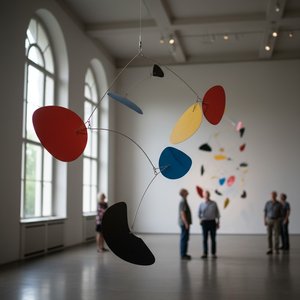
Alexander Calder: Kinetic Sculpture, Mobile Art & the Poetics of Chance
Explore the revolutionary world of Alexander Calder's kinetic sculptures & mobiles. Discover insights for collectors, acquisition advice, and the enduring legacy of this modern master. Expert analysis & art valuation.

幾何学的抽象絵画を定義した傑作10選|アート、アーティスト、インテリア装飾
モンドリアン、マレーヴィチ…幾何学的抽象絵画を代表する傑作10選。各作品の背景や色彩構成、アーティストの情熱に迫ります。美術館品質の複製画はOriginalUniqueArt.comで。オンラインでアートコレクションをご覧ください。

Bronze Sculptures That Defined Art History | OriginalUniqueArt
Journey through art history with our Top 10 bronze sculptures! Explore masterpieces by Rodin, Michelangelo & more. Discover stories behind iconic statues and find museum-quality reproductions for your home decor at OriginalUniqueArt.com.

Neo-Abstract Art: The High-Impact Evolution of Modern Visual Energy and Geometric Sophistication
Discover the power of Neo-Abstract art. Explore how bold geometric forms and high-impact visual energy are redefining modern design. Learn to curate sophisticated, high-energy spaces with the latest trends in contemporary abstraction and structural color.
