プリント版に切り替え
 続きを読む
続きを読む







































 いずれかの辺が105 cm(約41インチ)を超えるアートワークまたは複製画の場合、フレームは分解されたキットの状態でお届けいたします。この方法は、輸送中の破損を防ぎ、安全に配送するために採用しております。


A Moment of Urgent Communication
Albrecht Dürer’s “The Great Courier” is more than just a depiction of a man on horseback; it's a meticulously crafted distillation of the Renaissance spirit – a testament to human observation, technical mastery, and the enduring power of communication. Created in 1495, this black-and-white engraving transports us to a world where speed and authority were paramount, where messages carried across vast distances held immense significance. The scene unfolds with dynamic energy: a rider, clad in what appears to be a richly adorned tunic, charges forward on a powerful horse, conveying an undeniable sense of urgency. Dürer doesn’t simply show movement; he captures the *feeling* of it – the strain in the horse's muscles, the rider’s focused gaze, and the implied momentum that propels them onward.
Northern Renaissance Precision
Dürer’s style firmly anchors “The Great Courier” within the Northern Renaissance tradition, a period characterized by an unparalleled dedication to detail and realism. Unlike the more idealized forms of Italian Renaissance art, Dürer's work embraces a grounded approach, meticulously rendering every element with astonishing precision. The artist’s mastery of engraving is immediately apparent in the incredibly controlled linework – each stroke deliberate, each shadow subtly defined. The use of hatching and cross-hatching creates a remarkable illusion of depth and texture, transforming flat paper into a convincing representation of form. Notice how Dürer employs these techniques to suggest the weight of the horse’s body, the folds in the rider's clothing, and even the subtle roughness of the landscape beyond.
- Line as Form: The primary element is line; it defines shape, creates texture, and establishes perspective.
- Hatching & Cross-hatching: These techniques build tonal values, adding depth and realism.
- Geometric Precision: While organic shapes dominate, the circular emblem hints at a symbolic order.
A Symphony of Gray
The monochromatic palette – shades of gray, black, and white – is not merely a limitation; it’s a deliberate choice that amplifies the engraving's impact. The stark contrast between light and dark creates a dramatic effect, emphasizing the figures against the blurred background. This technique highlights Dürer’s skill in manipulating tonal values to create a sense of three-dimensionality, making the scene feel remarkably tangible. The absence of color forces the viewer to focus on the intricacies of line and texture, deepening their engagement with the artwork.
Symbolism and Historical Context
“The Great Courier” transcends a simple depiction of a messenger; it’s imbued with symbolic weight. The rider's posture and the horse’s frantic pace communicate urgency and purpose – conveying an important message, perhaps even a royal decree or vital news. This theme resonated deeply within Renaissance society, where swift communication was essential for governance and diplomacy. The emblem at the top left corner likely held further significance, potentially representing heraldry, family lineage, or the authority of the messenger’s patron. Considering Dürer's time, this piece reflects a world grappling with expanding trade routes, burgeoning cities, and increasingly complex political landscapes – all demanding efficient means of communication.
よくあるご質問
ご購入前に、アルブレヒト・デューラー作「The Great Courier」 をご自身の壁に飾った様子を確認することはできますか?
「The Great Courier」は、拡張現実(AR)でのプレビューが可能です。対応デバイスで作品のARプレビューページを表示すると、ご自身の空間に作品を配置してご確認いただけます。
「The Great Courier」のNorthern Renaissanceの背景には、どの国のルーツがあるのでしょうか?
「The Great Courier」は、ドイツに生まれたアルブレヒト・デューラーによって、Northern Renaissanceのムーブメントの中で制作されました。アーティストの出自は、この作品をドイツのアーティストたちが実践したNorthern Renaissanceへと結びつけています。
「The Great Courier」の原画は、どの美術館に収蔵されていますか?
アルブレヒト・デューラー作「The Great Courier」の真作はドレスデン版画 sưu集, ドレスデン, ドイツに所蔵されています。複製画(レプリカ)を用いることで、ご自宅でも作品をお楽しみいただけます。
More about this painting
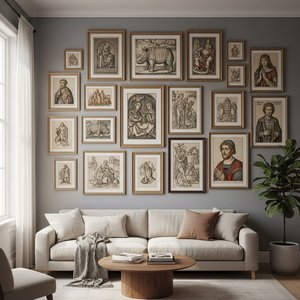
 設置イメージを確認
 送る
送る シェア
シェア
 詳細情報
詳細情報 ガイドを表示

 画像をダウンロード
 似ている作品
 X線調査
X線調査 スライドショー
 Q&A
Q&A 統計情報
統計情報