
 設置イメージを表示
 シェアする
シェアする シェアする
シェアする
 詳細を見る
詳細を見る ガイドを表示

 ダウンロード
 似ている作品
 X線調査
X線調査 スライドショーを表示
 Q&A
Q&A 統計情報
統計情報Judas

- 96.0 x 130.0 cm


 詳細を表示
詳細を表示
このページに掲載されている作品は著作権法によって保護されており、当社の許可なく同一の複製物を制作または販売することは法律で禁じられています。この保護は、以下のような国際条約に基づき執行されます。 ベルヌ条約 および、以下の条項に定められたものを含む各国の法律により、 米国著作権法 第17編。
この手法は、著作権で保護された作品の複製や複写を伴わないため、著作権法に完全に準拠しています。これは単なる模倣ではなく、創造的な再解釈です。元の作品からインスピレーションを受けつつも、それとは異なる、全く新しい絵画を生み出すものです。
ジークレー/アートプリント
スピーディーな制作と多彩な仕上げオプションが魅力の、ミュージアムクオリティなジークレー・キャンバスプリント。 ( 手描き複製画を注文する デジタル画像販売へ切り替え)




P118B ¥10

P118H ¥10

P118W ¥10

P438Z ¥10

P508JH ¥12

P508YH ¥12

P805H ¥10

P805Z ¥10

P919BZ ¥10

P919G ¥10

P919XJ ¥10

P959ZH ¥10

P968JZ ¥12

W106C ¥8

W218G ¥10

W218JH ¥8

W218Y ¥10

W307PJ ¥10

W316G ¥10

W316PJ ¥8

W316Y ¥10

W398PJ ¥8

W4111J ¥10

W500HY ¥15

W500JH ¥15

W692G ¥12

W849H ¥8

W940BG ¥15

W953PJ ¥8




作品のオリジナル比率に合わせた、当店の規定サイズからお選びください。

額縁や壁のスペースに合わせて、ご希望の幅と高さを入力してください。プリントはカットすることは可能ですが、元の画像より大きくすることはできないため、異なる比率のサイズを選択された場合は、画像の一部が欠けることになります。印刷を開始する前に、内容を確認していただくためのデジタルモックアップをお送りいたします。このページに表示されている画像は、実際のカット後の状態を示すものではありません。実際の仕上がりはモックアップにてご確認ください。


 ガラスオプションは、110cm未満のサイズでのみご利用いただけます。

Judas
ジークレー/アートプリント
複製画サイズ一覧
-


合計金額
¥ 12801
Judas – A Study in Regret and Betrayal by Albert Tucker
Albert Tucker’s “Judas,” painted in 1955, isn't merely a depiction of the biblical figure; it’s a profoundly unsettling exploration of guilt, isolation, and the enduring consequences of transgression. Rendered in his signature Expressionistic style, the painting immediately commands attention with its earthy palette – deep browns, ochres, and muted yellows—a visual embodiment of sorrow and decay. Tucker masterfully employs visible brushstrokes, layering paint to create a textured surface that feels both rough and vulnerable, mirroring the subject’s internal turmoil.
The composition is strikingly intimate, focusing on Judas's face – a study in shadowed features and downcast eyes. The figure dominates the frame, positioned slightly off-center within a tightly cropped space, creating a dynamic tension that draws the viewer into his despair. A stark rectangular block, held firmly by his hands, acts as a powerful visual barrier, isolating him from any potential solace or connection. This deliberate framing amplifies the sense of loneliness and reinforces the weight of his actions.
The Language of Expressionism
Tucker’s choice of technique is crucial to understanding the painting's emotional resonance. He eschews realistic representation in favor of a highly expressive approach, utilizing jagged lines to define Judas’s features – emphasizing the sharp edges of his regret and the fractured nature of his psyche. The brushwork itself is deliberately visible, conveying a sense of urgency and immediacy. Thick impasto builds up on certain areas, particularly around the face, creating a tactile quality that invites close inspection and encourages an emotional response.
The use of color further enhances this expressive intent. The dominant earth tones evoke a feeling of heaviness and stagnation, while the strategic application of red – in the hair and skin—adds a dramatic intensity to the scene, symbolizing both passion and violence. The diffused lighting, lacking any clear source, contributes to the overall atmosphere of gloom and despair, casting long shadows that seem to cling to Judas’s form.
Symbolism and Historical Context
“Judas” is steeped in religious symbolism, depicting a pivotal moment in Christian scripture – the betrayal of Jesus Christ. The scattered coins at the base of the painting are a potent reminder of the thirty pieces of silver Judas received for his treachery, representing the material cost of his actions. The rectangular block itself has been interpreted as a symbol of burden or perhaps even a barrier—a physical manifestation of the guilt and shame he carries.
Understanding the historical context is key to appreciating the painting’s depth. Created during a period of significant social and political upheaval, Tucker's work often grappled with themes of alienation, morality, and the complexities of human relationships. His exploration of Judas reflects a broader concern with the darker aspects of human nature – the capacity for betrayal and the enduring consequences of wrongdoing. The painting’s creation coincided with Tucker’s own personal struggles, adding another layer of emotional intensity to the work.
A Timeless Portrait of Regret
“Judas” is more than just a historical depiction; it's a hauntingly beautiful portrait of regret and isolation. Tucker’s masterful use of color, composition, and technique creates an image that lingers in the mind long after viewing. It serves as a powerful reminder of the enduring consequences of our choices and the profound impact of betrayal—a timeless meditation on human fallibility and the search for redemption.
Q&A
Albert Tucker作「Judas」のコントラストはどの程度ですか?
Albert Tucker作「Judas」のコントラストレベルはStatementです。
Albert Tucker作「Judas」の実寸(サイズ)はどのくらいですか?
「Judas」の原画のサイズは96 x 130 cmです。原画の寸法は、複製画のサイズをお選びいただく際の参考としてお役立ていただけます。
「Judas」には、どのような情緒や感情が込められているのでしょうか?
「Judas」は、DramaticなムードにMelancholicな感情が添えられた作品です。
作家プロフィール
Albert Tucker: A Life Bridging Mathematics and Art
- Born: Oshawa, Canada (1905)
- Died: 1995
Albert William Tucker was a remarkable figure whose life defied easy categorization. While primarily recognized as a distinguished Canadian mathematician, his legacy extends into the realm of art and intellectual history. He is celebrated for significant contributions to topology, game theory (particularly for popularizing the "Prisoner's Dilemma"), and non-linear programming, while also leaving behind a body of artistic work that reflects themes of alienation, morality, and social commentary.
Early Life and Education: A Foundation in Mathematics
Tucker’s journey began in Oshawa, Ontario. His upbringing emphasized education, fostering an early aptitude for mathematics. He pursued his undergraduate studies at the University of Toronto, earning a B.A. in 1928 and an M.A. in 1929. His pursuit of advanced knowledge led him to Princeton University where he earned his Ph.D. under the guidance of Solomon Lefschetz in 1932 with a dissertation titled *An Abstract Approach to Manifolds*. This period laid the groundwork for his future contributions, establishing a strong foundation in abstract mathematics.
Mathematical Contributions and Legacy
- The Prisoner's Dilemma: Tucker is widely known for giving name and interpretation to Merrill M. Flood and Melvin Dresher’s model of cooperation and conflict, solidifying its place as a cornerstone of game theory.
- Karush-Kuhn-Tucker Conditions: His work on the Karush-Kuhn-Tucker conditions significantly advanced non-linear programming.
- Mathematical Education: Tucker was deeply committed to mathematics education, serving as chair of the AP Calculus committee for the College Board (1960-1963) and actively participating with the Committee on the Undergraduate Program in Mathematics (CUPM). He also served as president of the Mathematical Association of America (MAA) from 1961-1962.
- Mentorship: Tucker’s influence extended through his mentorship of numerous prominent figures, including Nobel Prize winners John Nash and Lloyd Shapley, and Turing Award winner Marvin Minsky. His collaborations with Harold W. Kuhn further enriched the mathematical landscape.
Tucker's legacy is not solely confined to his direct contributions; it also encompasses his role as a vital source for oral histories within the mathematics community, solidifying his position as a respected and influential figure.
Artistic Expression: Themes of Isolation and Social Commentary
While primarily known for his mathematical achievements, Tucker was also an artist. His paintings, often characterized by expressive figurative styles, explored themes of alienation, morality, and the complexities of human existence. His artistic output reflects a keen observation of social issues and wartime experiences, offering poignant commentary on the human condition.
- Style: Expressionism
- Recurring Themes: Isolation, contemplation, moral dilemmas, depictions of city life, wartime experiences.
Notable artworks such as "Philosopher" exemplify his ability to convey profound emotions through bold lines, dramatic lighting, and a rich color palette. His artistic vision provides another layer to understanding the multifaceted nature of Albert Tucker's intellectual pursuits.

Albert Tucker
1905 - 1995 , Canada
プロフィール概要
- Full Name: Albert William Tucker
- Nationality: Canadian
- Date Of Birth: 1905
- Date Of Death: 1995
- Place Of Birth: Oshawa, Canada
- Notable Artworks:
- Philosopher
- Memory of Leonski
- Artistic Movement Or Style: Expressionism
関連記事
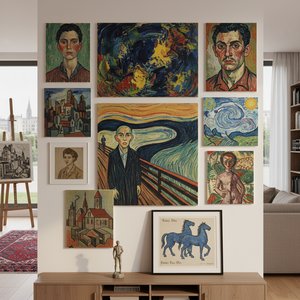
表現主義を彩る至宝:アート史に刻まれた10の傑作
表現主義の心を揺さぶる10選。ムンク、キルヒナーら巨匠の傑作を紐解き、色彩とエモーションの世界へ。OriginalUniqueArt.comで、時代を超越したアートをあなたの空間に取り入れませんか?高品質な複製絵画やインテリアアイデアが満載。

German Expressionism's 10 Defining Masterpieces | Art for Your Home
Explore 10 defining German Expressionism masterpieces – from Munch's 'The Scream' to Kandinsky’s abstracts. Discover the artists, stories & bold colors behind this powerful art movement. Find museum-quality reproductions at OriginalUniqueArt.com.
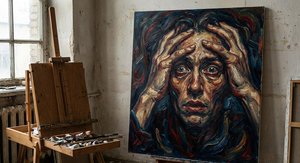
Figurative Expressionism: Emotional Intensity & Subjective Reality in 20th-Century Art
Explore the powerful world of Figurative Expressionism with OriginalUniqueArt. Discover key artists like Kirchner & Beckmann, understand its emotional depth, and learn how to collect this influential 20th-century art movement.

The Raw Emotion of Expressionism: A Deep Dive into its History, Characteristics & Enduring Influence
Explore the raw emotion of Expressionism with OriginalUniqueArt. Discover its history, key artists like Kirchner & Munch, and lasting influence on modern art. Expert insights for collectors & enthusiasts.

Albert Kretschmer: Capturing 19th-Century Costume & the Seeds of Expressionism
Explore the exquisite costume studies of Albert Kretschmer (1825-1891). Discover his detailed illustrations, influence on art history & connection to early Expressionism. Learn about collecting this remarkable artist's work.