

 設置イメージを確認
 送る
送る シェア
シェア
 詳細情報
詳細情報 ガイドを表示

 画像をダウンロード
 似ている作品
 X線調査
X線調査 スライドショー
 統計情報
統計情報German Atelierwand
 Oil On Canvas
- WallArt
- Realism
 1872
1872 111.0 x 79.0 cm
 ハンブルク美術館
 続きを読む
続きを読む
ジークレー/アートプリント
スピーディーな制作と多彩な仕上げオプションが魅力の、ミュージアムクオリティなジークレー・キャンバスプリント。 ( 手描きの複製画を注文する デジタル画像販売へ切り替え)




P118B $10

P118H $10

P118W $10

P438Z $10

P508JH $12

P508YH $12

P805H $10

P805Z $10

P919BZ $10

P919G $10

P919XJ $10

P959ZH $10

P968JZ $12

W106C $8

W218G $10

W218JH $8

W218Y $10

W307PJ $10

W316G $10

W316PJ $8

W316Y $10

W398PJ $8

W4111J $10

W500HY $15

W500JH $15

W692G $12

W849H $8

W940BG $15

W953PJ $8




作品のオリジナル比率に合わせた、当店の規定サイズからお選びください。

特定のフレームやスペースに合わせて、ご自身でサイズを指定することも可能です。選択されたサイズが元の画像の比率と一致しない場合、作品をトリミングするか、鏡面反射または単色での塗りつぶしによって画像を拡張いたします。制作を開始する前に、ご確認用のデジタルモックアップをお送りいたします。
画面上のプレビューには、実際のトリミングや拡張は反映されませんのでご注意ください。最終的な構図を正確に確認できるのは、モックアップのみとなります。
カスタムサイズも承っておりますが、元の比率を維持するためには、あらかじめ用意されたリストからサイズを選択することをお勧めいたします。


 ガラスオプションは、110cm未満のサイズでのみご利用いただけます。

German Atelierwand
ジークレー/アートプリント
複製画サイズ一覧
-


合計金額
$ 80
A Chaotic Symphony of Faces: Unpacking Adolph von Menzel’s “German Atelierwand”
Adolph von Menzel's "German Atelierwand" (1872) isn’t merely a painting; it’s an immersive experience, a visual plunge into the depths of human consciousness. Immediately arresting, the work confronts the viewer with a densely packed tableau – a swirling vortex of hundreds of faces emerging from a suffocatingly dark background. It's a scene that simultaneously evokes claustrophobia and overwhelming presence, hinting at both judgment and profound melancholy. Menzel, a master of realism and a keen observer of his time, doesn’t offer easy answers or comforting narratives; instead, he presents us with a raw, unsettling exploration of mortality, power, and the burden of history.
The painting's genesis lies within Menzel’s own studio – specifically, a wall in his workshop. This intimate setting lends an air of vulnerability to the scene, suggesting that these faces aren’t merely representations but fragments of the artist’s own psyche and perhaps reflections on the artistic process itself. The sheer number of portraits, ranging from recognizable historical figures to distorted, almost grotesque visages, creates a sense of collective memory, a chaotic archive of human experience.
Expressionist Roots in a Realist Framework
While firmly rooted in the tenets of German Realism – Menzel’s meticulous attention to detail and his commitment to portraying life as he saw it – “German Atelierwand” exhibits characteristics that foreshadow Expressionism. The fractured lines, the jarring juxtapositions of light and shadow, and the overwhelming emotional intensity all point towards a desire to convey inner turmoil rather than simply depict external reality. Menzel’s use of impasto—thickly applied paint—further amplifies this effect, creating a tactile surface that vibrates with energy and contributes significantly to the painting's unsettling atmosphere.
The technique itself is masterful. Menzel employs a layered approach, building up the composition through countless glazes and brushstrokes. This creates a remarkable sense of depth and movement, as if the faces are constantly shifting and merging within the darkness. The color palette—dominated by deep reds, browns, and ochres—reinforces this feeling of gloom and foreboding, punctuated only by the stark highlights that illuminate certain features, drawing our attention to their anguish or perhaps their silent judgment.
Symbolism and Historical Weight
Beyond its immediate visual impact, “German Atelierwand” is rich in symbolic potential. The dark background can be interpreted as representing the unknown, the void of death, or perhaps the collective unconscious. The faces themselves are not simply individuals; they embody a multitude of historical figures, memories, and anxieties. Some scholars have suggested that Menzel was alluding to the concept of “damned souls” – a common theme in medieval art—while others see echoes of the Nuremberg Trials and the weight of past injustices. The inclusion of plaster casts, particularly the headless torso, adds another layer of complexity, hinting at themes of mortality, fragmentation, and the ephemeral nature of beauty.
The painting’s creation coincided with a period of significant social and political upheaval in Germany, marked by rising nationalism and anxieties about the future. Menzel's work reflects these concerns, offering a powerful meditation on the human condition amidst times of uncertainty. It is a testament to his ability to capture not just the outward appearance of reality but also the underlying currents of emotion and thought that shape our experience.
A Timeless Masterpiece: Reproduction Possibilities
“German Atelierwand” remains a profoundly moving and intellectually stimulating work of art. OriginalUniqueArt offers meticulously crafted, hand-painted reproductions that faithfully capture Menzel’s original vision—the dramatic lighting, the intricate detail, and the overwhelming emotional intensity. These reproductions provide an exceptional opportunity to bring this iconic masterpiece into your home or office, allowing you to contemplate its enduring power and symbolism for years to come.
アーティストについて
写実主義の巨匠、アドルフ・フォン・メンツェルの生涯と世界
19世紀ドイツを代表する画家、アドルフ・フリードリヒ・エルドマン・フォン・メンツェル(Adolph Friedrich Erdmann von Menzel)は、単なる絵描きを超え、時代の生活を鋭く記録した視覚的な年代記者でした。1815年12月8日、ポーランドのブレスラウ(現在のヴロツワフ)に生まれ、彼の道のりは、美術アカデミーの神聖なホールではなく、父親の石版画工房という実用的な世界から始まりました。この幼少期からの再現と細部への没頭は、彼の美的感覚を深く形作ることになります。当初、父親からは教授職への道が期待されていましたが、若き日のアドルフの芸術への情熱は抑えられず、1833年にベルリン美術アカデミーで短期間学ぶものの、その後は主に独学での探求へと進みます。彼はすぐに、精密な描写力と日常的な光景の本質を捉える並外れた能力を発揮し、当初は石版画を通して、やがて絵画やエッチングの世界へと領域を広げました。メンツェルの人生は観察に捧げられたものでした。周囲の世界をキャンバスや紙の上に翻訳することに情熱を注ぎ、写真のような写実性でありながら、常に微妙な感情の深みを湛えた作品を生み出しました。歴史的壮大さから親密な瞬間へ
メンツェルの芸術的なアウトプットは驚くほど多様で、歴史画、風俗画、肖像画、風景画など多岐にわたります。初期の成功は、フリードリヒ大王の治世を描いた歴史作品の挿絵を通して得られました。彼の正確さと物語性への献身は、プロイセンにおける高まるナショナリズムと共鳴し、大きな反響を呼びました。これらの大規模な構図は彼を主要な歴史画家として確立し、政治的・社会的な変化が激しい時代において、愛国的なイメージに対する大衆の欲求を満たしました。しかし、彼の遺産を真に不動のものとしたのは、一見地味に見える風俗画や現代生活への親密な研究でした。1872年から1875年にかけて完成した『鉄鋼圧延工場』は、その規模だけでなく、産業労働の容赦ない描写において記念碑的な業績として位置づけられます。これはロマンチック化された産業ではなく、率直で生々しく、そして現代的でありました。巨大な歴史叙述に加えて、メンツェルはフランス窓から垣間見える光景、宮殿の庭園の一場面、あるいは微妙なジェスチャーや表情を通して個性を明らかにするシンプルな肖像画など、静かな瞬間の中に美しさを見出しました。影響と芸術的発展
メンツェルは主に独学でしたが、芸術的な影響を否定することはできません。彼はオランダ絵画の巨匠たち—光と影の習熟度、日常的な生活を高尚な芸術へと昇華させる能力—を賞賛し、これらの影響は彼の構図や色彩の使い方に見て取れます。しかし、彼は独自のドイツの道を切り開き、同時代の他の画家に見られる露骨なロマン主義を拒否し、より客観的で分析的なアプローチを採用しました。彼の作品はフランスの芸術家たちにも共鳴し、エドガー・ドガはメンツェルの技術を深く賞賛し、彼の作品を模写し、「現存する最高の巨匠」と宣言さえしました。この相互尊重は、国籍の違いを超えた写実主義と観察への共通のコミットメントを示しています。メンツェルの発展は直線的ではありませんでした。彼は常に技法や主題を探求し、初期のキャリアにおける壮大な歴史画から、より親密で心理的に微妙なシーンへと移行しました。彼のエッチング技術は特に注目に値し、写実的なスタイルをさらに高めるレベルの詳細とトーンレンジを実現しました。遺産と歴史的意義
アドルフ・フォン・メンツェルのドイツ芸術への影響は否定できません。彼は伝統的な歴史画と現代写実主義の間のギャップを埋め、次世代のアーティストが新しい主題や技法を探求するための道を開きました。彼の死後の評判は、絵画だけでなく、卓越した感性と観察力を示す膨大な図面やエッチング作品にも支えられています。彼は1898年に騎士爵位を与えられ、アドルフ・フォン・メンツェルとなり、ドイツの文化景観への多大な貢献が認められました。彼の影響は絵画を超えて、イラストレーションや版画にも及びました。ドイツ各地の美術館—ゲオルク・シェーファー美術館やレーンバッハハウス美術館など—は彼の作品を誇らしげに展示し、彼のビジョンが人々にインスピレーションを与え続けています。メンツェルの芸術は、日常的な生活に内在する美しさや複雑さを思い出させ、現実を正直かつ正確に捉えることへの献身は、19世紀の最も重要なドイツ人アーティストの一人としての彼の永続的な地位を確固たるものにします。彼の作品は今日でも関連性を保ち、社会と産業の変革の重要な時代に関する洞察を提供し、芸術が人間の状態を照らす力があることを私たちに思い出させてくれます。メンツェルの作品は、単なる視覚的表現を超え、時代の精神を捉えた貴重な記録なのです。
アドルフ・メンツェル
1815 - 1905 , ポーランド
アーティスト情報
- Artistic Movement Or Style: 写実主義
- Artists Or Movements Influenced By This Artist: ['エドガー・ドガ']
- Date Of Birth: 1815年12月8日
- Date Of Death: 1905年2月9日
- Full Name: アドルフ・フォン・メンツェル
- Nationality: ドイツ
- Notable Artworks (List Of Titles):
- 鉄鋼工場
- ヴェローナの市場
- ドイツ説教
- Place Of Birth (City And Country): ヴロツワフ、ポーランド
関連記事
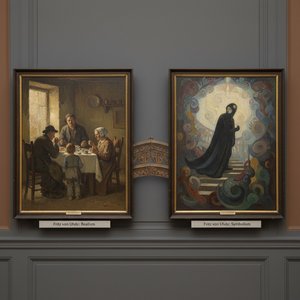
Fritz von Uhde: Bridging Realism & Symbolism in Late 19th-Century German Painting
Explore the captivating world of Fritz von Uhde, a pivotal German painter bridging Realism & Symbolism. Discover his plein-air techniques, religious themes, and influence on modern art. Learn about this fascinating artist at OriginalUniqueArt.

Romantic Realism's Finest: 10 Masterpieces for Your Home | OriginalUniqueArt
Explore 10 defining masterpieces of Romantic Realism! Discover Courbet, Millet & Daumier's powerful paintings—capturing emotion and social realities. Find museum-quality reproductions for your home at OriginalUniqueArt.com.

Adolph von Menzel: Realism, Prussian Society & the Painterly Chronicle of a Changing Era
Explore the life & work of Adolph von Menzel, a leading German Realist painter. Discover his detailed depictions of Prussian society, innovative techniques, and lasting influence on art history. Hand-painted reproductions available at OriginalUniqueArt.

Anton von Werner: Imperial Painter, Historical Witness & Shifting German Identity
Explore the life & work of Anton von Werner, Imperial Germany's leading painter. Discover his dramatic depictions of war, unification, and court life – a fascinating insight into 19th-century German history & art.

The Evocative Embrace of Reality: Exploring Romantic Realism in 19th-Century Painting
Explore the captivating world of Romantic Realism! Discover key artists like Courbet & Millet, masterpieces, and the social context behind this influential art movement. Expert insights for collectors at OriginalUniqueArt.

