プリント版に切り替え
 詳細を表示
詳細を表示







































 いずれかの辺が105 cm(約41インチ)を超えるアートワークまたは複製画の場合、フレームは分解されたキットの状態でお届けいたします。この方法は、輸送中の破損を防ぎ、安全に配送するために採用しております。


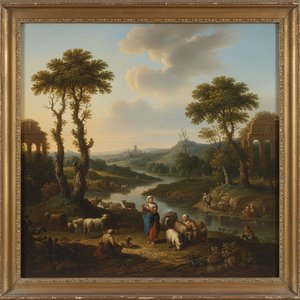
A Serene Reflection: Adam Pynacker’s “Barges on a River”
The Dutch Golden Age was an era of unparalleled artistic flourishing, a time when painters sought to capture not just the likeness of reality but also its very essence. Among those who masterfully achieved this goal stands Adam Pynacker, and his 1655 painting, “Barges on a River,” offers a captivating glimpse into the heart of Dutch life during that period. Housed within the prestigious halls of The Hermitage in St. Petersburg, Russia, this oil-on-canvas masterpiece is more than just a landscape; it’s a carefully constructed tableau brimming with subtle details and profound emotional resonance.
At first glance, “Barges on a River” presents a deceptively simple scene: two barges gliding along a tranquil waterway. The foreground barge, laden with barrels and goods, hints at the bustling commerce that fueled the Dutch economy. A solitary figure stands poised at its bow, perhaps overseeing the cargo or navigating the vessel – an anonymous observer immersed in the rhythm of daily life. In the distance, a smaller barge reflects the light, adding depth and perspective to the composition. The surrounding landscape is equally evocative, featuring buildings that could be warehouses or even modest residences, all nestled against a backdrop of gently rolling hills and a cloudy sky.
A Masterclass in Light and Atmosphere
Pynacker’s genius lies not merely in his depiction of the scene but in his masterful manipulation of light and atmosphere. The painting is dominated by an earthy palette – browns, ochres, and greens – creating a warm and inviting mood. Yet, it's the interplay of light and shadow that truly elevates the work. Notice how the diffused sunlight catches the water’s surface, creating shimmering reflections that dance across the canvas. These subtle highlights not only add visual interest but also imbue the scene with a sense of tranquility and serenity. The artist’s attention to detail is remarkable; every ripple in the water, every texture on the barges, feels meticulously rendered.
The technique employed by Pynacker further enhances the painting's impact. He utilizes a loose, expressive brushstroke—a hallmark of the Dutch Golden Age—that conveys both immediacy and depth. The strokes are visible, lending a tactile quality to the canvas and inviting the viewer to lose themselves in the scene. This approach contrasts sharply with the more polished techniques favored by some of his contemporaries, suggesting a deliberate choice to prioritize emotional impact over photographic realism.
Historical Context and Artistic Significance
Adam Pynacker was a prominent figure within the Dutch Golden Age art world, known primarily for his landscapes. His work reflects the period’s fascination with capturing everyday life and its emphasis on realism. Born in Schiedam around 1622, Pynacker spent formative years studying in Italy, absorbing the artistic principles of the Renaissance and Baroque periods. This exposure profoundly influenced his style, particularly his use of light, color, and perspective. “Barges on a River” exemplifies this Italianate influence, showcasing a sophisticated understanding of atmospheric perspective and a keen eye for detail.
The painting’s significance extends beyond its aesthetic qualities. It offers a valuable window into the social and economic life of 17th-century Holland – a nation renowned for its maritime prowess and thriving trade networks. The barges themselves represent the vital arteries of commerce, transporting goods across the country and fueling the prosperity of Dutch cities like Amsterdam.
Symbolism and Emotional Resonance
Beyond its literal depiction of a riverside scene, “Barges on a River” carries deeper symbolic weight. The tranquil waterway can be interpreted as a metaphor for the passage of time, while the barges themselves represent the flow of commerce and the interconnectedness of society. The solitary figure at the bow embodies a sense of contemplation and observation – perhaps reflecting on the complexities of human existence or simply appreciating the beauty of the natural world.
Ultimately, “Barges on a River” is a testament to Pynacker’s artistic skill and his ability to evoke profound emotions through seemingly simple imagery. It's a painting that invites contemplation, offering viewers a moment of respite from the hustle and bustle of modern life. High-quality reproductions of this stunning artwork are available at OriginalUniqueArt.com, allowing art lovers to bring a piece of Dutch Golden Age history into their homes.
For more information about Adam Pynacker and his other works, visit: OriginalUniqueArt.co
Q&A
「Barges on a River」は、アダム・ピナッカーのテーマやスタイルとどのように結びついているのでしょうか?
「Barges on a River」はアダム・ピナッカーによるDutch Golden Ageの作品であり、その描かれたテーマにはlandscape series focus, realist landscape style, early career work", italianate landscape, van goyen's influence, atmospheric perspective, dutch commerce & trade, riverine societyが含まれます。
「Barges on a River」は、どのような色調に寄っていますか?
アダム・ピナッカー作「Barges on a River」には、Ochre to Sepiaの色調が全体に広がっています。
アダム・ピナッカー作「Barges on a River」は、どの芸術運動や時代に属していますか?
アダム・ピナッカー作「Barges on a River」には、Dutch Golden Ageの潮流と近世の時代が融合しています。
この絵画の詳細を見る
 設置イメージを表示
 シェアする
シェアする シェアする
シェアする
 詳細を見る
詳細を見る ガイドを表示

 ダウンロード
 似ている作品
 X線調査
X線調査 スライドショーを表示
 Q&A
Q&A 統計情報
統計情報