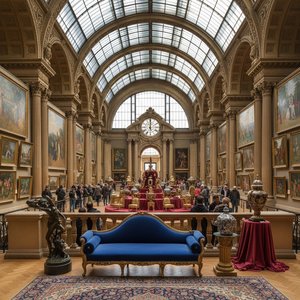
Un Palazzo di Luce che Abbraccia l'Anima dell'Impressionismo
Il Musée d'Orsay è molto più di un semplice deposito di tele e pigmenti; è un'esperienza sensoriale profonda, un viaggio nel cuore vibrante e pulsante della rivoluzione artistica del XIX secolo. Situato all'interno della maestosa ex stazione ferroviaria Gare d'Orsay, il museo si erge come una testimonianzza mozzafiato della bellezza che risiede nella trasformazione. Originariamente costruito come un capolavoro dell'architettura Beaux-Arts per l'Esposizione Universale di Parigi del 1900, questa struttura monumentale fu progettata per agevolare il movimento di persone e vapore; oggi, essa facilita il movimento dell'anima. Mentre i visitatori si addentrano sotto le sue maestose volte in vetro, immersi nella morbida luce naturale che filtra attraverso intricati telai in ferro, essi entrano in uno spazio dove il passato industriale e il presente artistico coesistono in un delicato e luminoso abbraccio.
La collezione custodita tra queste mura rappresenta una delle più celebri concentrazioni di arte impressionista e post-impressionista esistenti al mondo. Coprendo gli anni trasformativi che vanno dal 1848 al 1914, il museo offre una finestra senza pari su un'epoca definita da sperimentazioni audaci e da una nuova ossessione per la natura fuggevole della luce. È impossibile vagare per queste sale senza lasciarsi trascinare nei regni immersivi e onirici di Claude Monet, le cui monumentali Ninfee invitano a una profonda e meditativa contemplazione del colore e dell'atmosfera. L'intensità emotiva dell'epoca è altrettanto palpabile nelle opere di Vincent van Gogh, dove pennellate vorticose e una tavolozza turbolenta catturano l'energia cruda e viscerale della condizione umana. Dalle delicate scene punteggiate di luce di Renoir alla brillantezza strutturale di Cézanne, ogni galleria funge da capitolo nella storia di come l'arte si sia liberata dalla tradizione per abbracciare il mondo moderno.
La grandezza architettonica dell'edificio stesso agisce come un protagonista silenzioso nella narrazione del museo. Progettata dal leggendario Gustave Eiffel e dagli architetti Henri Garnier Frères, la funzione originale della stazione — quella di fungere da porta tra Parigi e Londra — è ancora impressa nelle sue fondamenta. La vasta e aperta navata, un tempo riempita dal ritmo cadenzato delle locomotive, oggi offre uno sfondo mozzafiato per capolavori che richiedono spazio per respirare. Questa giustapposizione tra il ferro pesante e l'arte delicata crea una tensione unica: la forza dell'era industriale sostiene la bellezza eterea del movimento impressionista. Per l'interior designer o l'amante della fine estetica, il museo offre una lezione magistrale su come la luce e la struttura possano essere manipolate per esaltare l'impatente emotivo di un oggetto, trasformando uno spazio funzionale in un tempio sacro della cultura.
Oltre ai suoi tesori permanenti, il Musée d'Orsay rimane un'istituzione viva e pulsante grazie alle sue mostre temporanee che approfondiscono le sfumature più sottili della storia dell'arte. Questi percorsi curati esplorano spesso le intersezioni tra scultura, innovazione e cambiamento sociale, spingendo i visitatori a riconsiderare le narrazioni consolidate e a scoprire i fili nascosti che collegano diversi movimenti. Attraverso programmi educativi e un impegno globale, il museo assicura che l'eredità del XIX secolo continui a risuonare con il pubblico contemporaneo. Esso rimane un luogo in cui il passato non è semplicemente preservato, ma attivamente reinventato, offrendo un santuario duraturo per chiunque cerchi di comprendere il potere trasformativo della luce, del colore e della creatività umana.