Ritratto di Xu Beihong

I 39 dipinti più famosi di Xu Beihong, una selezione della galleria

Aggiornato Novembre 2026 · classificato in base al nostro punteggio di popolarità (ricerche, visite e ordini per ogni opera) · 39 opere di Xu Beihong nel nostro catalogo

In breve

Tra tutti gli originali lasciati da Xu Beihong, il più famoso è Il vecchio stolto sposta la montagna (1940), nella collezione del Museo CAFA dell'Arte, Pecchino. Subito dopo troviamo Ritratto di Sun Duoci (1936) e Tian Heng e i suoi Cinquemila Seguaci (1930). Il nostro catalogo contiene 39 opere di Xu Beihong; la galleria ha conservato le 39 che il mondo ammira di più, ognuna presentata con la sua data, il suo museo e la sua storia.

1895 – 1953, Yixing Realismo contemporaneo Più opere: Museo CAFA dell'Arte

I 10 migliori dipinti di Xu Beihong: la scelta della galleria

1
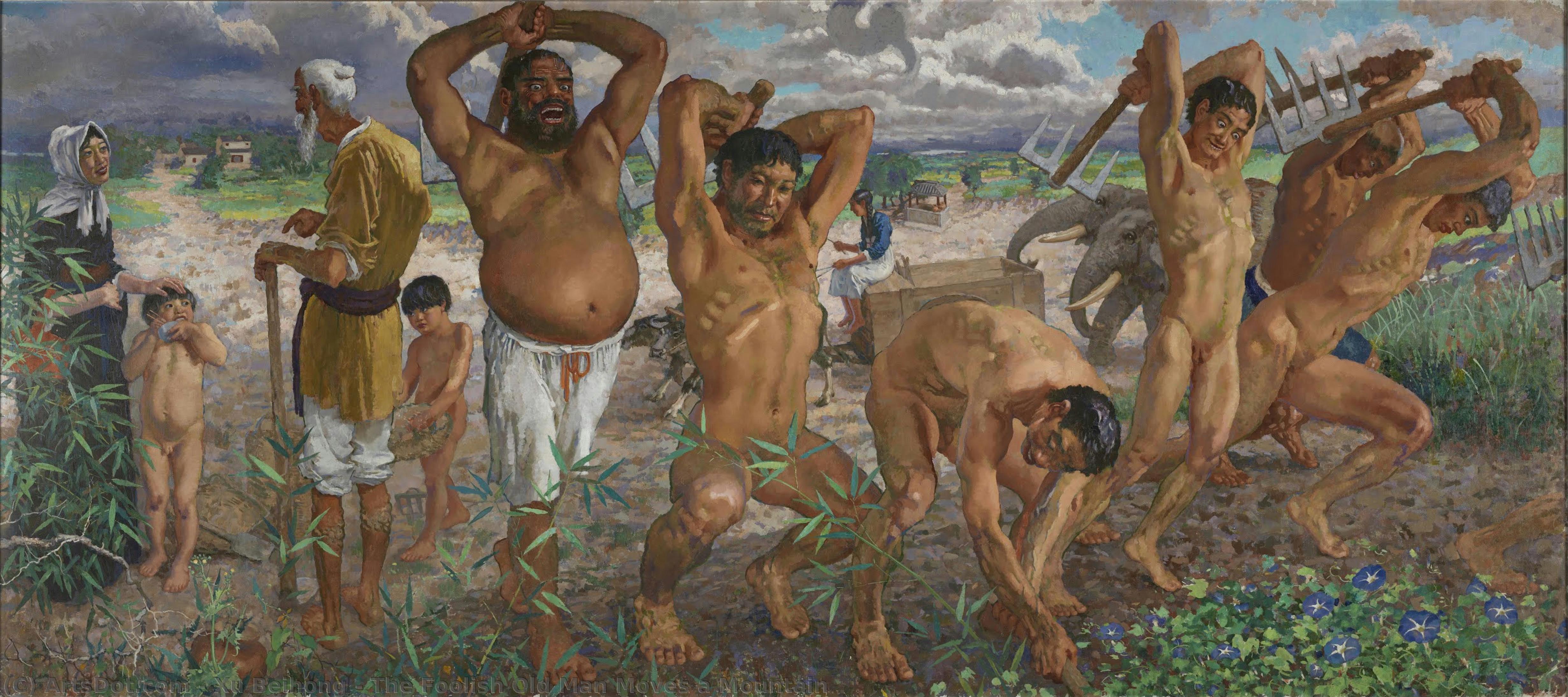
Il vecchio stolto sposta la montagna (1940) di Xu Beihong

Il vecchio stolto sposta la montagna

1940 · Olio su tela · Museo CAFA dell'Arte, Pecchino

Il vecchio stolto sposta la montagna di Xu Beihong è un monumentale dipinto a olio realizzato intorno al 1940. L'opera trae la sua narrazione da una favola contenuta nel Libro di Lieh-tzu, un testo che risale al IV secolo a.C. Questa storia fu successivamente tramandata nel I secolo a.C. e acquisì ulteriore risalto quando fu celebrata nel 1945. Il dipinto cattura un momento di intenso lavoro fisico e di risoluta…

2
Ritratto di Sun Duoci (1936) di Xu Beihong

Ritratto di Sun Duoci

1936 · Olio su tela · Museo CAFA dell'Arte, Pecchino

Nella quieta intimità di uno studio del 1936, Xu Beihong catturò molto più di un semplice ritratto; egli immortalò una connessione profonda. Il Ritratto di Sun Duoci si erge come una testimonianza mozzafiato di un momento in cui l'amore e la rivoluzione artistica confluirono insieme. Mentre lo spettatore incontra questa tela monumentale, viene immediatamente attratto dallo sguardo sereno di Sun Duoci, una donna la cui presenza irradia un delicato equilibrio…
3
Tian Heng e i suoi Cinquemila Seguaci (1930) di Xu Beihong

Tian Heng e i suoi Cinquemila Seguaci

1930 · Olio su tela · Museo CAFA dell'Arte, Pecchino

In questo monumentale olio su tela, intitolato Tian Heng e i suoi Cinquemila Seguaci, l'artista Xu Beihong presenta una scena di profondo spessore storico. Completata nel 1930, l'opera occupa una presenza fisica imponente, con dimensioni di 197 x 349 cm. La sua scala richiede un certo grado di quiete contemplazione a chiunque si trovi di fronte ad essa.

4
Cavallo in piedi (1947) di Xu Beihong

Cavallo in piedi

1947 · Museo CAFA dell'Arte, Pecchino

A single horse occupies the center of this ink and wash painting on paper. The animal is depicted standing on all four legs, its head lifted toward the upper edge of the frame. Its mane and tail appear to move in a steady wind, creating a sense of physical motion within a static pose. The horse is rendered in black and white, utilizing varying tones of ink to define its…

5
Sketch of a Man from the Front and the Side (1924) di Xu Beihong

Sketch of a Man from the Front and the Side

1924 · Oil · Museo CAFA dell'Arte, Pecchino

Xu Beihong’s Sketch of a Man from the Front and the Side, created about 1924, functions as a rigorous study of human anatomy and form. The composition centers on two nude male figures positioned against a dark, atmospheric background. One figure faces the viewer directly in a frontal view, while the second figure is presented in profile, facing right. This dual orientation allows for a comprehensive examination of the physical…

6
HORSE UNDER A WILLOW TREE di Xu Beihong

HORSE UNDER A WILLOW TREE

Ink

HORSE UNDER A WILLOW TREE is a painting by Xu Beihong. The work features a horse positioned beneath a tree, a central motif in the artist's oeuvre. Xu Beihong was born in 1895 in Yixing, People's Republic of China, and continued to influence the direction of Chinese art until his death in 1953.

7
Ritratto di Xu (1943) di Xu Beihong

Ritratto di Xu

1943 · Olio su tela · Museo CAFA dell'Arte, Pecchino

Il “Ritratto di Xu” di Xu Beihong, dipinto nel 1943, non è una semplice somiglianza; è un tableau accuratamente costruito, traboccante di quieta contemplazione e del sottile potere della suggestione. Questo olio su tela, realizzato su una superficie di 62 x 48 cm, offre uno sguardo nell'animo di una giovane donna – probabilmente Jingwen, la moglie di Xu Beihong – catturata in un momento di serena introspezione. L'opera attira immediatamente…

9
Accarezzare il gatto (1924) di Xu Beihong

Accarezzare il gatto

1924 · Olio su tela · Museo CAFA dell'Arte, Pecchino

In questa scena intima, Accarezzare il gatto riunisce l'artista Xu Beihong e la sua compagna, Jiang Biwei, all'interno di un momento di quiete della vita domestica. Il dipinto cattura la coppia insieme al loro gatto, una creatura a cui entrambi sono profondamente legati. Emana un senso palpabile di vicinanza tra le due figure mentre interagiscono con l'animale, creando una scena di affetto condiviso. La composizione si concentra su questa connessione…

10
Portrait of a Young Woman (1940) di Xu Beihong

Portrait of a Young Woman

1940 · Oil · Museo CAFA dell'Arte, Pecchino

A young woman sits in a room, her gaze drifting toward a distance we cannot see. She wears a floral shirt, the petals of which rest against her skin like small, silent memories. The light catches the dark weight of her hair, framing a face caught in a moment of deep thought. Behind her, the presence of another person lingers in the shadows, a soft silhouette that adds to the…

La selezione di Xu Beihong continua, da 11 a 39

I dipinti più famosi di Xu Beihong, periodo per periodo

I soggetti che hanno catturato lo sguardo di Xu Beihong

I quattro soggetti che ricorrono più spesso in questi originali, ognuno con il suo esempio più raffinato.

I musei che conservano gli originali di Xu Beihong

I 3 musei che ospitano la maggior parte dei dipinti presenti in questa pagina.

Musei Città Opere di Xu Beihong Dipinti di questo elenco
Museo CAFA dell'Arte, PecchinoMuseo CAFA dell'Arte Pecchino 24 Il vecchio stolto sposta la montagna, Ritratto di Sun Duoci, Tian Heng e i suoi Cinquemila Seguaci
Centro di Ricerca sul Documento dell'Arte Moderna e Contemporanea Cinese, PechinoCentro di Ricerca sul Documento dell'Arte Moderna e Contemporanea Cinese Pechino 2 Jiu Fang Gao, Galloping horse
Long Museum West Bund, ShanghaiLong Museum West Bund Shanghai 1 Due Cavalli

Xu Beihong decennio per decennio: l'originale che definisce ogni epoca

Opere per decennio

Scegli un decennio per scoprire l'opera originale che lo ha definito.

Domande dei collezionisti sulle opere di Xu Beihong

Per quale opera è più famoso Xu Beihong?Scopri la risposta

Il vecchio stolto sposta la montagna (1940), Museo CAFA dell'Arte, Pecchino. Seguono Ritratto di Sun Duoci (1936) e Tian Heng e i suoi Cinquemila Seguaci (1930).

Che età aveva Xu Beihong quando è stata realizzata Il vecchio stolto sposta la montagna?Scopri la risposta

45 anni: Il vecchio stolto sposta la montagna risale al 1940, e Xu Beihong è nato/a nel 1895.

Quali sono i dieci dipinti più famosi di Xu Beihong?Scopri la risposta

Il vecchio stolto sposta la montagna, Ritratto di Sun Duoci, Tian Heng e i suoi Cinquemila Seguaci, Cavallo in piedi, Sketch of a Man from the Front and the Side, HORSE UNDER A WILLOW TREE, Ritratto di Xu, Madre e figlia, Accarezzare il gatto e Portrait of a Young Woman. La classifica sopra riporta l'anno e il museo di ciascuna opera.

Quante opere ha lasciato Xu Beihong?Scopri la risposta

Il nostro catalogo comprende 39 opere di Xu Beihong, datate da 1924 a 1950.

In quali musei sono esposti i capolavori di Xu Beihong?Scopri la risposta

Principalmente in Museo CAFA dell'Arte (Pecchino), Centro di Ricerca sul Documento dell'Arte Moderna e Contemporanea Cinese (Pechino) e Long Museum West Bund (Shanghai). La tabella dei musei sopra li elenca tutti.

In quali anni Xu Beihong ha dipinto le sue opere più famose?Scopri la risposta

In 1930s: 9 delle 39 opere in questa pagina sono state realizzate in quel periodo, tra cui Ritratto di Sun Duoci.

Quali sono le prime e le ultime opere originali famose di Xu Beihong?Scopri la risposta

In questa pagina, il più antico risale al Sketch of a Man from the Front and the Side (1924) e il più recente al Cavalry Hero Tai Xide (1950).

Quali soggetti ha scelto più spesso Xu Beihong?Scopri la risposta

Arte cinese (5), Paesaggio (5) e Pittura cinese (4), tra le 39 opere in questa pagina.

Quale tecnica ha utilizzato maggiormente Xu Beihong?Scopri la risposta

Olio su tela, per 9 delle 39 opere in questa pagina.

A quale movimento artistico appartiene Xu Beihong?Scopri la risposta

Realismo contemporaneo, a giudicare dagli originali presenti in questa pagina.

Quali opere di Xu Beihong sono esposte al Museo CAFA dell'Arte?Scopri la risposta

Il vecchio stolto sposta la montagna, Ritratto di Sun Duoci e Tian Heng e i suoi Cinquemila Seguaci: il Museo CAFA dell'Arte, Pecchino custodisce 24 delle opere presenti in questa pagina.

Xu Beihong: vita e opera

A Pioneer Bridging Worlds: The Life and Art of Xu Beihong

Xu Beihong, born Xu Shoukang in 1895 in the tranquil town of Yixing, Jiangsu province, stands as a monumental figure in 20th-century Chinese art. His life was a compelling narrative of artistic evolution, dedicated to forging a new path for Chinese painting—one that harmoniously blended the rich traditions of his homeland with the innovations of Western art. From humble beginnings steeped in classical learning and traditional brushwork under the tutelage of his father, Xu Dazhang, a struggling artist himself, young Beihong’s early life was marked by both artistic promise and economic hardship. This formative period instilled within him not only technical skill but also a deep appreciation for Chinese culture and a resilient spirit that would define his career. The family's itinerant existence, painting portraits and landscapes to make ends meet, exposed him to the realities of rural China and fueled an early ambition to elevate the status of art and artists. A pivotal moment arrived when he adopted the name “Beihong,” meaning "sad wild goose," a reflection perhaps of his youthful anxieties and aspirations.

The European Awakening: Forging a New Artistic Vision

Driven by a thirst for knowledge and a desire to modernize Chinese art, Xu Beihong embarked on a transformative journey to Europe in 1917. Initially studying in Tokyo, he soon secured a coveted scholarship to the prestigious École Nationale Supérieure des Beaux-Arts in Paris. This period proved crucial in shaping his artistic philosophy and technique. Immersed in the heart of European art, he meticulously studied oil painting and drawing, mastering Western principles of perspective, composition, and realism. While embracing these new techniques, Xu Beihong remained critical of certain modernist trends prevalent at the time, favoring instead the classical traditions he encountered. He adopted the French name "Ju Péon" during his stay, a testament to his immersion in European culture. However, it was not merely technical skill that he sought; he aimed to understand the underlying principles of Western art and adapt them to revitalize Chinese painting—a vision articulated in his later writings and teachings. This period laid the foundation for his unique artistic style, characterized by a powerful synthesis of Eastern aesthetics and Western techniques. He spent years studying the works of masters like Ingres and Delacroix, absorbing their meticulous attention to detail and their ability to capture fleeting moments of emotion. His time in Paris wasn’t just about imitation; it was about understanding *why* these artists succeeded, and how he could apply those principles to his own work while retaining a distinctly Chinese sensibility.

Iconic Motifs and Artistic Style: A Synthesis of East and West

Upon returning to China in 1927, Xu Beihong embarked on a prolific career marked by groundbreaking works that captured the spirit of a nation undergoing profound change. He quickly became renowned for his dynamic depictions of horses and birds—motifs that transcended mere representation to become powerful symbols of strength, freedom, and national pride. His horses, in particular, are celebrated for their muscularity, energy, and expressive power, often depicted galloping across vast landscapes with a sense of untamed spirit. Galloping Horse, perhaps his most iconic work, embodies this perfectly—a testament to the vitality and resilience of the Chinese people. The painting is not simply a portrait of a horse; it’s an embodiment of China's spirit, its power, and its connection to the land. Beyond these signature subjects, Xu Beihong also excelled in portraiture and historical painting, demonstrating his mastery of both oil painting and traditional ink wash techniques. His style was characterized by a unique blend of bold brushstrokes, precise delineation, and a masterful command of light and shadow. He seamlessly integrated Western perspective and composition into the fluidity of Chinese brushwork, creating a visual language that was both innovative and deeply rooted in tradition. Foolish Old Man Who Removed the Mountains, inspired by a traditional Chinese fable, exemplifies his ability to imbue classical themes with modern energy and social commentary. The painting’s layered symbolism speaks volumes about the challenges of progress and the importance of respecting ancient wisdom.

Legacy and Influence: Shaping Modern Chinese Art Education

Xu Beihong’s impact extended far beyond his own artistic creations; he was also a pioneering art educator who profoundly shaped the development of modern Chinese art education. After returning to China, he held teaching positions at several prestigious universities, including National Central University and Peking University, where he tirelessly advocated for curriculum reform. He championed the incorporation of Western sketching and oil painting techniques into traditional Chinese art programs, believing that this integration was essential for revitalizing Chinese artistic expression. His approach wasn’t about abandoning tradition; rather, it was about building upon it—taking the best elements of both Eastern and Western art to create something entirely new. Following the founding of the People's Republic of China in 1949, he became president of the Central Academy of Fine Arts and chairman of the China Artists Association, further solidifying his influence on the nation’s artistic landscape. He trained generations of artists who went on to become leading figures in Chinese art, carrying forward his vision of a modern yet culturally grounded aesthetic. Xu Beihong's emphasis on artistic conception, the importance of life experiences, and the integration of Eastern and Western traditions left an indelible mark on Chinese art history, cementing his legacy as one of its most influential figures. His work continues to inspire artists and captivate audiences worldwide, serving as a powerful reminder of the enduring power of art to bridge cultures and transcend boundaries.

Major Achievements

Throughout his career, Xu Beihong achieved numerous significant milestones that cemented his place in art history:
  • Early Recognition: He gained early recognition for his portraiture skills, capturing the likenesses of prominent figures in Chinese society.
  • European Scholarship: His receipt of a prestigious scholarship to study at the École Nationale Supérieure des Beaux-Arts in Paris marked a pivotal moment in his artistic development.
  • Monumental Oil Paintings: He pioneered the creation of monumental oil paintings depicting epic scenes from Chinese history and mythology, showcasing his mastery of Western techniques while retaining a distinctly Chinese aesthetic.
  • Art Education Reform: As president of the Central Academy of Fine Arts, he spearheaded reforms in art education, advocating for the integration of Western sketching and oil painting into traditional Chinese curricula.
  • International Exhibitions: He organized and participated in numerous international exhibitions, showcasing his work to a global audience and promoting Chinese art abroad.
Xu Beihong’s life and work represent a remarkable synthesis of Eastern and Western artistic traditions—a testament to his vision, talent, and dedication. His legacy continues to inspire artists and scholars alike, ensuring that his contributions to the world of art will be remembered for generations to come.