A Jamaican Soul Embraced by British Modernism
Elsie Evelyn Few stands as a singular and luminous figure in the tapestry of British art history, embodying a profound confluence of Jamaican heritage and the dynamic, searching spirit of London’s avant-garde. Born on 4 February 1909 in the vibrant landscape of Kingston, Jamaica, her early years were steeped in a rich cultural environment that instilled within her a lifelong appreciation for the interplay of color and texture. This foundational sensitivity would later become the heartbeat of her work, as she transitioned from the tropical warmth of her birthplace to the rigorous academic and experimental circles of mid-century Europe.
Her journey toward artistic maturity was marked by an impressive pursuit of formal excellence. Moving to London, Few immersed herself in the prestigious halls of the Slade School of Art and the Bartlett School of Architecture between 1929 and 1931. This dual education provided her with a unique perspective, blending the structural principles of Beaux Arts architecture with the burgeoning modernist movements of the era. As she traveled throughout Europe, absorbing the shifting aesthetics of the continent, her vision began to coalesce into a style that was both structurally grounded and emotionally fluid.
The Euston Road School and the Evolution of Style
Few’s ascent within the British art scene was cemented through her association with the influential Euston Road School. Working alongside luminaries such as Victor Pasmore and Claude Rogers, she became part of a collective dedicated to navigating the complexities of postwar Britain through a lens of controlled abstraction and observational truth. This period of her life was characterized by a departure from rigid academic realism in favor of a more atmospheric and evocative approach to the natural world.
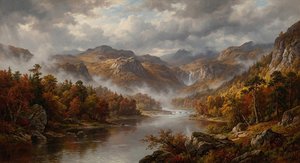
Her technical evolution is particularly fascinating, as it moved from the traditional to the experimental. In her earlier years, she mastered the medium of oil on canvas, producing landscapes that captured the serene essence of nature with remarkable tranquility. Works such as Russell Square, London demonstrate her ability to use rich pigments and meticulous detail to evoke a sense of peace. However, as her career progressed, Few began to embrace the radical possibilities of collage. By layering textures and fragments, she moved toward abstract designs that mirrored the fragmentation and complexity of modern life, creating compositions that possessed an incredible emotional depth.
Legacy of a Visionary
Beyond the canvas, Elsie Evelyn Few led a life of significant intellectual and educational contribution. Her professional career was marked by her role as an art editor for Chatto & Windus and her leadership as the Head of the Art Department at Gipsy Hill College, where she played a vital role in nurturing the next generation of artistic educators. Her exhibitions at prestigious venues like the Whitechapel Art Gallery and Wimbledon served as testament to her enduring commitment to the evolution of contemporary art.
The significance of Few’s work lies in its ability to bridge worlds—between the Caribbean and Britain, between architecture and painting, and between representational landscape and abstract collage. Her legacy is preserved not only in the museums that house her oil paintings but in the very way she challenged the boundaries of medium and identity. Today, her work remains a poignant reminder of how personal heritage and modernist experimentation can merge to create a truly universal artistic voice.
Domande e risposte
Dove posso vedere tutte le opere di Elsie Evelyn Few?
Ogni opera di Elsie Evelyn Few su questo sito può essere consultata nella pagina Tutte le opere d'arte dell'artista.
Posso sfogliare le opere di Elsie Evelyn Few in base alla palette di colori?
Le opere di Elsie Evelyn Few possono essere consultate per palette cromatica nella pagina Per palette dell'artista.
Dove posso trovare statistiche relative alle opere di Elsie Evelyn Few?
La pagina Statistiche di Elsie Evelyn Few presenta statistiche calcolate a partire dalle opere dell'artista elencate su questo sito.