Il Maestro delle Ombre Napoletane: La Vita e l'Eredità di Baldassarre De Caro
Nelle strade vibranti e inondate di sole della Napoli del XVIII secolo, un'epoca definita da un intenso fervore artistico e da un profondo legame con le tradizioni spagnole, emerse un pittore capace di catturare la delicata tensione tra vita e decadenza. Baldassarre De Caro (1689–1750) non fu solo un cronista della natura, ma un poeta del tangibile. La sua opera si pone come una pietra miliare del Barocco italiano, specificamente nell'ambito specializzato della natura morta, dove padroneggiò l'abilità di rendere le trame del mondo naturale con una precisione quasi inquietante. Guardare una tela di De Caro significa entrare in uno spazio in cui la bellezza di un fiore che sboccia o la lucentezza di una piuma d'uccello esistono in un dialogo costante e drammatico con le inevitabile ombre della mortalità.
Il percorso artistico di De Caro era profondamente radicato nelle ricche tradizioni pedagogiche della sua terra natale. La sua formazione iniziale sotto l'estimato Andrea Belvedere gli fornì un comando fondamentale della composizione e della luce, ma fu l'immersione in un ambiente collaborativo e sperimentale a forgiare veramente la sua voce unica. Egli si muoveva all'interno di una cerchia di talentuosi contemporanei, tra cui Tommaso Realfonso, Gaspare Lopez e Nicola Casissa, creando un'atmosfera condivisa di innovazione. Questo periodo della sua vita fu segnato da un'intensa assorbimento di diverse influenze europee. Mentre il suo cuore rimaneva napoletano, i suoi occhi erano allenati alle meticolose tradizioni fiamminghe di Frans Snyders e Jan Fyt, così come ai sobri e profondi bodegones dei maestri spagnoli. La presenza di Abraham Brueghel a Napoli arricchì ulteriormente il vocabolario visivo di De Caro, permettendogli di fondere il realismo dell'Europa settentrionale con il drammatico chiaroscuro caratteristico del Barocco italiano.
Una Sinfonia di Texture e Mortalità
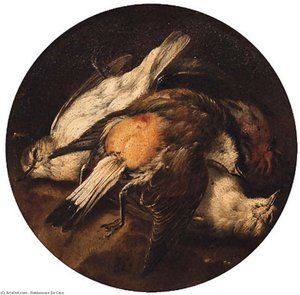
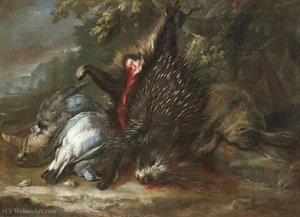
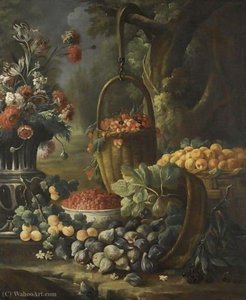
La vera genialità di De Caro risiede nella sua virtuosità tecnica e nella sua capacità di infondere ai soggetti inanimati un senso di polso e respiro. Il suo focus principale—la raffigurazione di selvaggina, flora e varie specie aviarie—gli permise di esplorazione l'intero spettro delle consistenze organiche. Attraverso l'applicazione minuziosa di velature e un comando magistrale del colore, raggiunse un livello di realismo che appariva quasi tattile. Si può quasi percepire l'umidità di una foglia caduta o il peso ruvido di un fagiano spennato. La sua tavolozza era spesso sorprendentemente vibrante, utilizzando tonalità brillanti per squarciare le ombre profonde e drammatiche che definiscono le sue composizioni.
Al di là della mera abilità tecnica, l'opera di De Caro è intrisa di una profonda profondità simbolica. I suoi dipinti navigano frequentemente sul sottile confine tra il celebrativo e il macabro. In opere come Natura morta con beccaccia e altri uccelli, l'artista presenta una scena che è simultaneamente magnifica e cupa. Questa dualità—la celebrazione dell'abbondanza della natura accostata alla cruda realtà della caccia—funge da potente memento mori. Egli catturò la "bellezza e la brutalità" del mondo naturale, assicurandosi che i suoi soggetti non fossero mai semplici oggetti, ma personaggi in una narrazione silenziosa e drammatica sulla natura fuggevole dell'esistenza.
Significato Storico e Spirito Artistico Duraturo
L'importanza storica di Baldassarre De Caro si estende ben oltre i confini di Napoli. Egli giocò un ruolo cruciale nell'instaurare la pittura napoletana come una voce stilistica distinta e formidabile all'interno del più ampio movimento Barocco europeo. Sintetizzando il dettaglio meticoloso dei maestri fiamminghi con l'intensità emotiva delle tradizioni italiana e spagnola, contribuì a creare uno stile locale che era allo stesso tempo di rilevanza internazionale e unicamente regionale.
Oggi, l'eredità di De Caro è preservata attraverso la sua straordinaria capacità di evocare emozioni attraverso la staticità. I suoi contributi al genere della natura morta rimangono una testimonianza di un'epoca in cui l'arte cercava di trovare l'infinito nel finito. Le sue opere continuano a affascinare collezionisti e storici allo stesso modo, fungendo da finestre su un mondo in cui ogni petalo, piuma e ombra racconta una storia di vita, morte e dello splendore duraturo dell'ordine naturale.
Domande e risposte
Posso esplorare le opere di Baldassare De Caro tramite parole chiave?
Per trovare le opere di Baldassare De Caro relative a un tema specifico, consulta la pagina Per parole chiave dell'artista, che raggruppa le opere per parola chiave.
Dove si possono trovare le opere di Baldassare De Caro raggruppate per palette?
Le opere di Baldassare De Caro possono essere esplorate per palette cromatica nella pagina Per palette di colori dell'artista.
Dove posso vedere le opere di Baldassare De Caro in ordine cronologico?
La pagina Cronologia delle opere dell'artista presenta le opere di Baldassare De Caro in ordine cronologico, anno dopo anno.