 Passa alle stampe
 Espandi i dettagli







































 Per opere d'arte o riproduzioni con un lato superiore a 105 cm (circa 41 pollici), la cornice verrà spedita in forma di kit smontato. Questo metodo garantisce una consegna sicura e previene danni durante il trasporto.


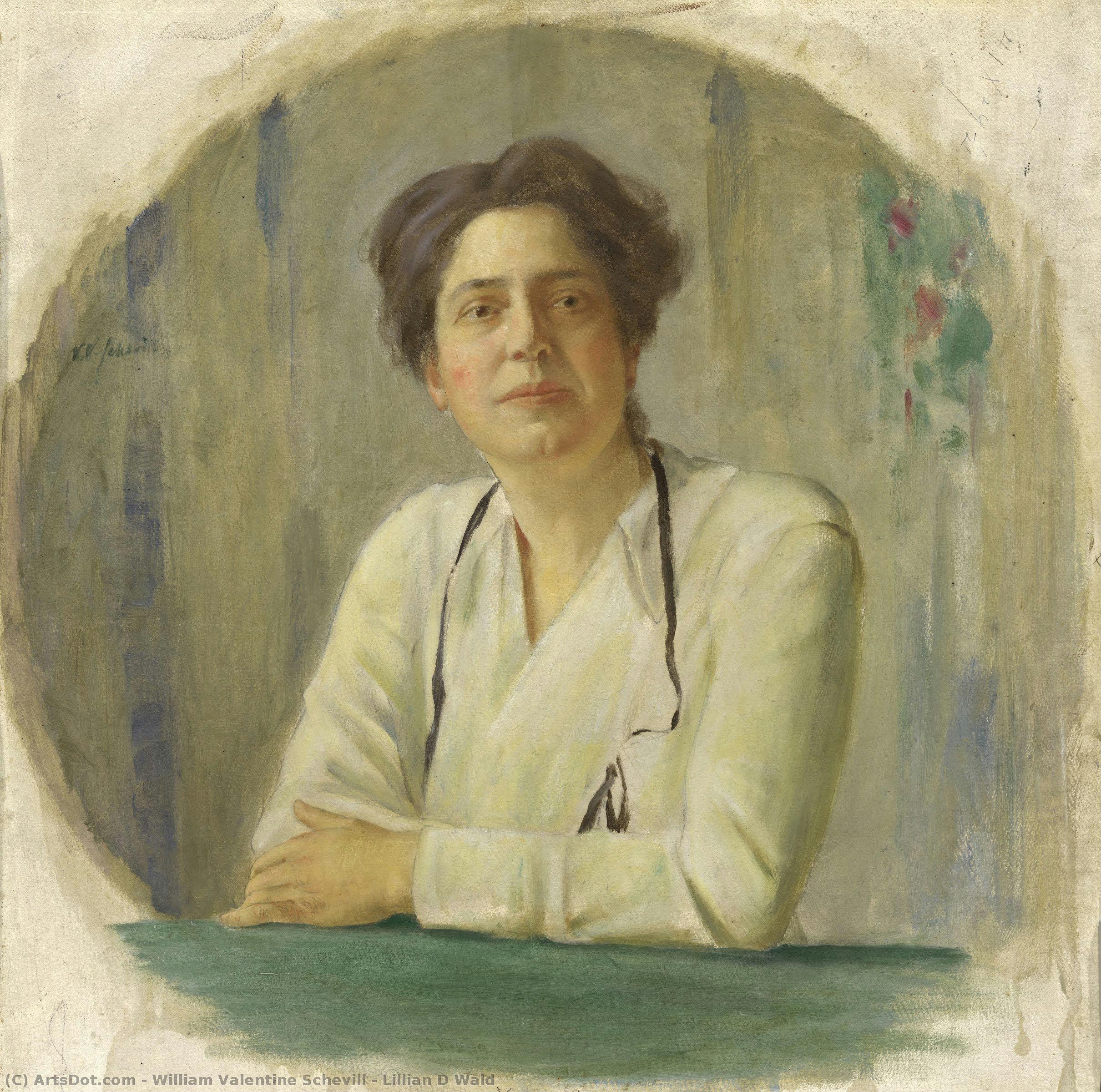
A Portrait of Compassion: Lillian D. Wald by William Valentine Schevill
William Valentine Schevill’s 1919 portrait of Lillian D. Wald is more than just a likeness; it's a poignant embodiment of social reform and the burgeoning spirit of American progressivism. The painting, rendered in a style that deftly balances German Impressionistic influence with the emerging realism of the early 20th century, captures not merely Wald’s physical appearance but also her unwavering dedication to improving public health and advocating for the underserved.
Wald herself was a transformative figure. Born into privilege within a prominent German-Jewish family in Cincinnati, Ohio, she defied societal expectations to become one of America's first registered nurses and a pioneer in public health nursing. Her work with immigrant communities in New York City during the late 19th and early 20th centuries exposed her to appalling conditions – rampant disease, overcrowding, and systemic neglect – fueling her commitment to social justice. Schevill’s portrait serves as a visual testament to this dedication; Wald's direct gaze conveys both strength and empathy, suggesting an individual deeply invested in the well-being of others.
The Language of Light and Shadow
Schevill’s technique is characterized by a masterful manipulation of light and shadow, hallmarks of his training under Frank Duveneck and further refined during his time studying at the Academy of Fine Arts Munich. The painting utilizes a muted palette—primarily greens, browns, and creams—to create a sense of quiet dignity and understated power. Notice how Schevill employs broken brushstrokes to capture the texture of Wald’s dress and the subtle nuances of her face. The diffused light, reminiscent of Impressionism, softens the features while simultaneously highlighting the intelligence and resolve in her eyes. The background is deliberately simple, allowing Wald's presence to dominate the composition and drawing the viewer’s attention directly to her compassionate expression.
Symbolic Elements and Historical Context
Beyond its technical brilliance, the painting is rich with symbolic elements reflecting the era. The stethoscope, prominently displayed around Wald’s neck, immediately identifies her profession and underscores her role as a healer. The potted plants flanking the figure – one on either side – can be interpreted as symbols of growth, care, and the nurturing environment she sought to create for those in need. The clock visible in the upper-middle section subtly references the relentless passage of time and the urgency of her work. Painted in 1919, shortly after World War I, the portrait reflects a nation grappling with profound social changes and striving towards a more equitable future – a future Wald was actively shaping.
A Legacy of Service and Artistic Merit
Lillian D. Wald’s legacy extends far beyond her pioneering nursing work; Schevill's painting immortalizes her spirit, offering a powerful visual reminder of the importance of social responsibility and compassionate action. The artwork is not merely a portrait but a historical document, capturing a pivotal moment in American history and celebrating the life of a woman who dedicated herself to serving humanity. Today, reproductions of this compelling image continue to resonate with audiences, reminding us of the enduring value of empathy, service, and artistic expression.
- Artist: William Valentine Schevill
- Year: 1919
- Size: 72 x 72 cm
- Medium: Oil on Canvas
Further Research: For more information about Lillian D. Wald and William Valentine Schevill, please refer to the links below:
- National Portrait Gallery - Lillian D. Wald
- Google Arts & Culture - Lillian D Wald – William Valentine Schevill
Domande e risposte
Con quale tecnica è realizzato "Lillian D Wald"?
"Lillian D Wald" è realizzata con Acrylic On Canvas.
"Lillian D Wald" di William Valentine Schevill è di pubblico dominio? E perché?
"Lillian D Wald" di William Valentine Schevill è di di pubblico dominio - il copyright è scaduto. La durata del copyright decorre dalla morte dell'artista, avvenuta nel 1951.
Cosa rappresenta "Lillian D Wald" di William Valentine Schevill?
I temi presenti in "Lillian D Wald" di William Valentine Schevill includono nurse, lillian wald, portrait, healthcare, early 20th, medicine, american art, elementi che insieme sintetizzano il soggetto dell'opera.
 Anteprima in scala reale
 Invia
Invia Condividi
 Dettagli opera
 Guida
Guida

 Scarica
 Simili
 Radiografia
 Slideshow
 Q&A
Q&A Statistiche