

 Anteprima in scala reale
 Condividi
 Condividi
 Dettagli
 Guida stampabile

 Scarica
 Articoli simili
 Radiografia
 Slideshow
 Statistiche
Still-Life with a Nautilus Cup
 Olio su tela
- Opere da parete
- Baroque
 1662
1662 79.0 x 67.0 cm
 Museo Thyssen-Bornemisza
 Leggi tutto
Giclée / Stampe d'arte
Stampa giclée o su tela di qualità museale, con produzione rapida e diverse opzioni di finitura. ( Ordina la riproduzione dipinta a mano Passa all'immagine digitale)




P118B $10

P118H $10

P118W $10

P438Z $10

P508JH $12

P508YH $12

P805H $10

P805Z $10

P919BZ $10

P919G $10

P919XJ $10

P959ZH $10

P968JZ $12

W106C $8

W218G $10

W218JH $8

W218Y $10

W307PJ $10

W316G $10

W316PJ $8

W316Y $10

W398PJ $8

W4111J $10

W500HY $15

W500JH $15

W692G $12

W849H $8

W940BG $15

W953PJ $8




Scegli tra le nostre dimensioni predefinite, che rispettano le proporzioni originali dell'opera d'arte.

È possibile inserire dimensioni personalizzate per adattare l'opera a una cornice o a uno spazio specifico. Se la dimensione selezionata non corrisponde alle proporzioni dell'immagine originale, procederemo al ritaglio dell'opera o all'estensione dell'immagine con un bordo specchiato o a tinta unita. Un mockup digitale ti verrà inviato per approvazione prima dell'inizio della produzione.
Si prega di notare che l'anteprima a schermo non riflette il ritaglio o l'estensione effettivi. Solo il mockup mostrerà accuratamente la composizione finale.
Sebbene siano disponibili dimensioni personalizzate, si raccomanda di selezionare una dimensione dall'elenco predefinito per preservare le proporzioni originali.
Consegna in tutto il mondo () in 2 settimane invece delle normali 4/5 settimane. (25 Settembre)

Spedizione espressa gratuita in tutto il mondo

Tela in lino di alta qualità

Assicurazione completa sulla spedizione

Garanzia di rimborso dei dazi doganali

Garanzia di perfetta fedeltà cromatica

Politica di reso entro 100 giorni (solo per difetti di fabbricazione)

Garanzia di rimborso al 100%

Sconto per acquisti multipli
 L'opzione vetro è disponibile solo per dimensioni inferiori a 110 cm

Still-Life with a Nautilus Cup
Giclée / Stampe d'arte
Dimensioni della riproduzione
-


Prezzo totale
$ 80
A Glimpse into Dutch Opulence: The Still-Life Masterpiece of Willem Kalf
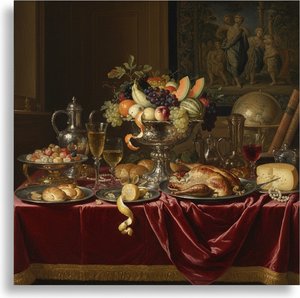
Willem Kalf’s “Still-Life with a Nautilus Cup” (1662) isn't merely a painting; it’s a meticulously crafted window into the heart of 17th-century Dutch society – a world saturated with wealth, ambition, and a profound appreciation for the finer things in life. More than just a collection of objects arranged on a table, this work embodies the pronkstilleven tradition that defined Kalf's career and secured his place as one of the most celebrated still-life painters of the Dutch Golden Age. The canvas immediately draws the viewer into a scene brimming with luxurious detail – a testament to the burgeoning mercantile power of the Netherlands and the conspicuous consumption of its elite.
The composition itself is a carefully orchestrated display of opulence. A dark, almost velvety background serves as a dramatic stage for the vibrant foreground, intensifying the impact of each object. Dominating the scene is an extravagant silver goblet overflowing with glistening grapes, immediately establishing a sense of abundance and indulgence. Beside it rests a porcelain bowl containing a figure – often interpreted as a soldier, though some scholars suggest a more ambiguous representation – alongside oranges and other delicacies. A peeled citrus fruit adds a touch of earthy realism to the otherwise meticulously rendered scene, while a richly patterned textile draped across the lower right corner hints at the wealth and status of its owner. The inclusion of a nautilus cup, a symbol of exoticism and rarity, further elevates the painting’s sense of grandeur.
The Painter's Technique: A Symphony of Light and Shadow
Kalf’s mastery lies not just in his subject matter but also in his exceptional technical skill. He employed a sophisticated technique known as chiaroscuro – the dramatic interplay of light and shadow – to create an astonishing sense of depth and three-dimensionality. Notice how the strong directional lighting highlights the textures of each object, from the smooth sheen of the silver goblet to the delicate folds of the textile. Layered glazes build up color gradually, creating a remarkable richness and luminosity that seems to capture the very essence of light itself. The meticulous attention to detail is breathtaking; you can almost feel the cool smoothness of the porcelain and the yielding texture of the fruit.
The painting’s perspective is relatively shallow, focusing our attention on the immediate foreground. This deliberate choice draws us into the scene, inviting us to examine each object closely and contemplate its significance. The use of lines – precise and carefully rendered – defines the shapes of each element with remarkable accuracy, contributing to the overall sense of realism. The artist’s skill in capturing reflections and highlights is particularly noteworthy, adding a subtle shimmer to the surfaces of the objects and creating an illusion of movement within the composition.
Symbolism and Context: A Reflection of Dutch Society
Beyond its aesthetic beauty, “Still-Life with a Nautilus Cup” offers a fascinating glimpse into the social and cultural context of 17th-century Holland. The lavish display of wealth reflects the prosperity brought about by the Dutch East India Company’s trade routes – a period of unprecedented economic growth and influence. The inclusion of exotic objects like the nautilus cup symbolizes the Netherlands' role as a center for global commerce, connecting it to distant lands and cultures.
Vanitas themes, prevalent in still lifes of this era, subtly permeate the painting. The decaying citrus fruit, for example, serves as a reminder of mortality and the fleeting nature of earthly pleasures. The soldier within the bowl could represent authority or even the inevitability of conflict – elements that underscore the transient nature of worldly possessions. However, Kalf’s approach is less overtly didactic than some of his contemporaries; he presents these symbols with an elegant restraint, inviting viewers to contemplate their meaning without resorting to moralizing pronouncements.
Bringing Kalf's Vision Home: Reproductions and Artistic Legacy
Today, “Still-Life with a Nautilus Cup” stands as a testament to Willem Kalf’s extraordinary talent and his enduring legacy. High-quality reproductions capture the painting’s luminous colors, intricate details, and dramatic chiaroscuro with remarkable fidelity. Whether you're an art enthusiast, a collector seeking a statement piece, or simply someone drawn to the beauty of Dutch Golden Age artistry, a reproduction of this masterpiece offers a captivating way to bring Kalf’s vision into your home.
Biografia dell'artista
Willem Kalf: Maestro delle Nature Morte Olandesi
- Nato: Rotterdam, Paesi Bassi (1619)
- Morto: 1693
Willem Kalf è stato un rinomato pittore olandese celebrato per le sue squisite composizioni di nature morte durante l'Età dell'Oro Olandese. Nato nel 1619 a Rotterdam, divenne noto per i suoi lussuosi "pronkstilleven" (nature morte ostentative), che esibivano oggetti opulenti con meticolosi dettagli e un uso magistrale della luce.
Primi Anni e Formazione
Kalf nacque in una prospera famiglia patrizia a Rotterdam. Suo padre ricopriva incarichi municipali, offrendo a Willem una confortevole educazione. Alla fine degli anni '30 del 1600, Kalf viaggiò a Parigi e trascorse del tempo all'interno del circolo di artisti fiamminghi a Saint-Germain-des-Prés. Durante questo periodo, dipinse principalmente piccoli interni rustici e nature morte.
Stile Artistico e Sviluppo
- Periodo Parigino: Le sue prime opere, create a Parigi, presentavano tipicamente gruppi di verdure, secchi, pentole e padelle disposti come natura morta in primo piano. Figure erano spesso presenti ma sfocate sullo sfondo. Questi dipinti riflettevano una tradizione pittorica praticata principalmente nelle Fiandre all'inizio del XVII secolo da artisti come David Teniers il Giovane.
- Nature Morte Mature (Pronkstilleven): Le opere successive di Kalf, i suoi "pronkstilleven", sono caratterizzate dall'esposizione di oggetti lussuosi ed esotici – vasi d'argento, porcellana, frutta e altre prelibatezze. Queste composizioni dimostrano un'eccezionale attenzione ai dettagli, colori ricchi ed effetti di illuminazione drammatici. Sebbene la struttura di questi dipinti rimanesse relativamente coerente, con oggetti simili, l'abilità di Kalf nel rendere le texture e catturare la luce li elevò a un'arte eccezionale.
- Influenze: Il lavoro di Kalf mostra influenze da pittori olandesi precedenti come Simon Luttichuys. Condivise anche somiglianze stilistiche con artisti come Pieter Claesz, Willem Claeszoon Heda e Juriaen van Streeck, che erano noti per i loro "banketjes" o 'piccoli banchetti' negli anni '30 del 1600.
Opere Notevoli e Eredità
I dipinti di Kalf sono molto apprezzati per la loro brillantezza tecnica e il loro fascino estetico. Sebbene opere individuali specifiche ricevano meno riconoscimento diffuso rispetto ad alcuni dei suoi contemporanei, il suo contributo complessivo al genere è significativo.
- Collezioni Museali: Le opere di Kalf si possono trovare in prestigiose collezioni museali in tutto il mondo, tra cui il Museum Boijmans Van Beuningen a Rotterdam, la National Gallery of Art a Washington D.C. e il Getty Museum.
- Influenza sull'Arte Francese: Le nature morte semi-monocromatiche di Kalf ebbero una notevole influenza sull'arte francese, in particolare all'interno del circolo dei fratelli Le Nain.
- Significato Storico: In quanto figura di spicco della pittura dell'Età dell'Oro Olandese, Willem Kalf contribuì a definire il genere del "pronkstilleven", mostrando la ricchezza e la raffinatezza della società olandese del XVII secolo. La sua meticolosa attenzione ai dettagli e l'uso magistrale della luce continuano a ispirare artisti e amanti dell'arte oggi.
Ulteriori Approfondimenti
- Wikipedia: https://en.wikipedia.org/wiki/Willem_Kalf
- National Gallery of Art: https://www.nga.gov/artists/1430-willem-kalf
- Getty Museum: https://www.getty.edu/art/collection/person/103JR3

Willem Kalf
1619 - 1693 , Paesi Bassi
Informazioni rapide
- Artistic Movement Or Style: Pittura di natura morta
- Artists Or Movements Influenced By This Artist: ['Fratelli Le Nain']
- Artists Who Influenced This Artist: ['David Teniers il Giovane']
- Date Of Birth: 1619
- Date Of Death: 1693
- Full Name: Willem Kalf
- Nationality: Olandese
- Place Of Birth: Rotterdam, Paesi Bassi
Articoli correlati

Golden Light & Dutch Skies: The Timeless Magic of Dutch Golden Age Landscapes
Discover the breathtaking beauty of Dutch Golden Age landscapes. Explore the mastery of light, chiaroscuro, and 17th-century realism through an expert art history lens, celebrating the enduring legacy of the Dutch Masters for discerning collectors and art lovers.

Golden Age Reflections: Dutch Baroque Painting & Cultural Innovation
Explore the Dutch Golden Age of painting! Discover key artists like Vermeer & ter Borch, their innovative techniques, and the rich cultural context behind these Baroque masterpieces. Learn about collecting & appreciating this iconic art period.
Abraham Hendricksz van Beyeren: Pioneering Dutch Still Life & the Banquet Tradition
Explore the captivating world of Dutch Golden Age still life with Abraham van Beyeren. Discover his innovative techniques, symbolic banquet scenes & lasting influence on art history. Learn about collecting these masterpieces.

I 10 Capolavori dell'Età d'Oro Olandese: Arte, Storia e Stile per la Tua Casa
Esplora i 10 capolavori dell'Età d'Oro Olandese con ! Rembrandt, Vermeer e altri maestri rivivono in dipinti iconici. Scopri storia, tecnica e colori di opere senza tempo per arredare la tua casa con arte di qualità museale. Esplora la collezione online!

Illuminating Innovation: Exploring the Dutch Golden Age of Painting
Explore the Dutch Golden Age of painting with OriginalUniqueArt. Discover Rembrandt, Vermeer & other Masters. Learn about key characteristics, iconic artworks, and lasting influence. Expert insights for collectors & enthusiasts.


