Anteprima in scala reale
 Condividi
 Condividi
 Dettagli
 Guida stampabile

 Scarica
 Articoli simili
 Radiografia
 Slideshow
 Statistiche
Donna


 Leggi tutto
L'opera d'arte visualizzata in questa pagina è protetta dalle leggi sul diritto d'autore, il che significa che non possiamo legalmente creare o vendere una riproduzione identica. Tale protezione è garantita da accordi internazionali quali la Convenzione di Berna e dalle leggi nazionali, incluse quelle stabilite da Legge sul copyright degli Stati Uniti - Titolo 17. Tutti i diritti riservati. Le immagini presenti su questo sito sono protette da copyright e non possono essere riprodotte o utilizzate senza l'autorizzazione scritta di WahooArt.com o dei rispettivi proprietari del copyright.
Questo metodo è pienamente conforme alle normative sul diritto d'autore poiché non prevede la copia o la duplicazione dell'opera protetta. Si tratta invece di una rielaborazione creativa: un nuovo dipinto che trae ispirazione dall'originale, senza tuttavia esserne identico.
Giclée / Stampe d'arte
Stampa giclée o su tela di qualità museale, con produzione rapida e diverse opzioni di finitura. ( Ordina la riproduzione dipinta a mano Passa all'immagine digitale)




P118B €10

P118H €10

P118W €10

P438Z €10

P508JH €12

P508YH €12

P805H €10

P805Z €10

P919BZ €10

P919G €10

P919XJ €10

P959ZH €10

P968JZ €12

W106C €8

W218G €10

W218JH €8

W218Y €10

W307PJ €10

W316G €10

W316PJ €8

W316Y €10

W398PJ €8

W4111J €10

W500HY €15

W500JH €15

W692G €12

W849H €8

W940BG €15

W953PJ €8




Scegli tra le nostre dimensioni predefinite, che rispettano le proporzioni originali dell'opera d'arte.

Inserisci la larghezza e l'altezza desiderate, per adattarle alla tua cornice o alla tua parete. Una stampa può essere solo ritagliata, mai resa più grande dell'immagine originale; pertanto, un formato con una forma differente comporterà la perdita di una parte dell'opera. Ti invieremo un mockup digitale da approvare prima di procedere con la stampa. L'immagine mostrata in questa pagina non rappresenta il ritaglio reale — solo il mockup lo mostra.
Consegna in tutto il mondo () in 2 settimane invece delle normali 4/5 settimane. (21 Ottobre)

Spedizione espressa gratuita in tutto il mondo

Tela in lino di alta qualità

Assicurazione completa sulla spedizione

Garanzia di rimborso dei dazi doganali

Garanzia di perfetta fedeltà cromatica

Politica di reso entro 100 giorni (solo per difetti di fabbricazione)

Garanzia di rimborso al 100%

Sconto per acquisti multipli
 L'opzione vetro è disponibile solo per dimensioni inferiori a 110 cm

Donna
Giclée / Stampe d'arte
Dimensioni della riproduzione
-


Prezzo totale
€ 70
A Descent into Emotion: Willem de Kooning’s “Woman”
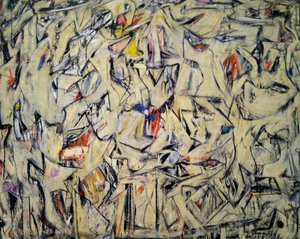
Willem de Kooning's "Woman," painted in 1964, stands as a defiant emblem of Abstract Expressionism—a movement that sought to liberate painting from representational constraints and delve directly into the subconscious mind. More than just an image of a woman’s face, it’s a visceral confrontation with anxiety, desire, and the complexities of human experience, rendered in a style that remains both unsettling and undeniably captivating. The canvas explodes with color—bold reds, yellows, and blues collide against textured blacks and whites—creating a dynamic visual landscape that mirrors the turbulent emotional currents beneath its surface. This isn’t about capturing likeness; it's about conveying feeling.The Style of Raw Emotion
De Kooning’s technique is characterized by aggressive brushstrokes – thick impasto layers build up on the canvas, disrupting any illusion of smoothness or precision. These marks aren’t merely decorative; they embody the artist’s energy and frustration, mirroring the psychological turmoil he sought to express. The fragmented form of the woman's face—a deliberate rejection of traditional portraiture—further underscores this emotional intensity. Parts of her visage are obscured, distorted, and seemingly dissolving into the surrounding chaos, symbolizing vulnerability and the elusive nature of identity itself. It’s a technique that anticipates later developments in expressive painting, prioritizing gesture and materiality over meticulous detail.Historical Context: The Shadow of Postwar Trauma
“Woman” emerged during the height of Abstract Expressionism's influence—a reaction to the devastation wrought by World War II and the pervasive anxieties of the Cold War era. Artists like Pollock, Rothko, and Newman wrestled with existential questions about humanity’s place in the universe, attempting to capture the profound psychological impact of these turbulent times. De Kooning’s work aligns squarely within this broader artistic dialogue, reflecting a preoccupation with primal emotions—fear, aggression, and eroticism—that transcended rational thought. The painting speaks to a collective unease about societal shifts and personal vulnerability during a period marked by significant upheaval.Symbolic Layers: Femininity and Fragmentation
The woman herself is arguably the central symbol of the piece. While her face remains ambiguous, she embodies notions of femininity – strength, beauty, and fragility simultaneously—themes that were frequently explored in Surrealist and Expressionist art prior to De Kooning’s time. However, her fragmented form isn't merely aesthetically striking; it represents a breakdown of conventional representations of womanhood, mirroring the artist’s own internal struggles. The surrounding figures – swirling shapes and textures – amplify this sense of disorientation and contribute to the painting’s overall atmosphere of unease. They represent forces beyond the woman’s control, highlighting the difficulty of achieving wholeness or certainty in a world riddled with contradictions.Emotional Resonance: A Portrait of Inner Turmoil
Ultimately, “Woman” succeeds in conveying an overwhelming emotional experience—a glimpse into the artist's psyche and, by extension, into the anxieties of its time. It’s not a comforting image; it demands engagement from the viewer, forcing them to confront uncomfortable truths about human emotion and perception. The painting’s enduring power lies in its ability to tap into primal feelings of vulnerability and disorientation—a testament to De Kooning's mastery of expressive technique and his profound understanding of the human condition. Its bold colors and dynamic brushstrokes continue to inspire awe and provoke contemplation, cementing its place as a cornerstone of Abstract Expressionism and a captivating subject for high-quality reproductions.Domande e risposte
Qual è il colore dominante di "Donna" di Willem de Kooning?
Il colore dominante di "Donna" di Willem de Kooning è Marrone rosato (#b19876).
Che intensità cromatica ha "Donna" di Willem de Kooning?
"Donna" di Willem de Kooning mostra un'intensità cromatica Vivace.
Come è strutturata la composizione cromatica di "Donna" di Willem de Kooning?
In "Donna", un Serene contrasto si sposa con una Strong Color Unity armonia.
Biografia dell'artista
primi anni e carriera
Willem de Kooning, un rinomato artista astrattista americano-olandese, nacque il 24 aprile 1904 a Rotterdam, nei Paesi Bassi. I suoi genitori, Leendert de Kooning e Cornelia Nobel, divorziarono nel 1907 e De Kooning visse con suo padre prima di trasferirsi all'accudimento della madre. Lasciò la scuola nel 1916 e divenne apprendista in un'agenzia di arte commerciale.sviluppo artistico
De Kooning frequentò lezioni serali presso l'Accademia di Belle Arti e Scienze Applicate a Rotterdam dal 1916 al 1924. Nel 1927 si trasferì a New York City, dove lavorò come pittore edile e iniziò a sviluppare il suo stile artistico unico.astrattismo
Il lavoro di De Kooning si spostò verso l'astratto espressionismo negli anni '50, caratterizzato da pennellate audaci e colori vibranti. Il suo dipinto Woman I (1950-1952) è un'opera fondamentale in questo movimento, che fonde la figurazione con la spontaneità e l'intensità emotiva.opere notevoli e collezioni
* The Glazier (137 x 112 cm, olio su tela): un cupo dipinto dalle tonalità terrose ispirato agli affreschi di Boscoreale. * Door to the River (astratto espressionismo): un dipinto con ampie pennellate che ricorda il suo passato come pittore edile. * Standing Man (astratto espressionismo): un esempio caratteristico dello stile astratto espressionista di De Kooning.musei e collezioni
* Museo Boijmans Van Beuningen, Rotterdam, Paesi Bassi: presenta una collezione impressionante di oltre 151.000 opere d'arte. * Universiteitsbibliotheek, Leiden, Paesi Bassi: ospita un importante centro culturale con più di 5.200.000 volumi e 1.000.000 ebook. L'eredità di Willem de Kooning continua a ispirare artisti e appassionati d'arte, consolidando il suo posto come pioniere dell'astratto espressionismo.
Willem de Kooning
1904 - 1997 , Paesi Bassi
Informazioni rapide
- Artisti Influenti: ['Arshile Gorky']
- Data Di Morte: 1997
- Data Di Nascita: 24 aprile 1904
- Luogo Di Nascita: Rotterdam, Paesi Bassi
- Movimento Artistico: Espressionismo astratto
- Nazionalità: Olandese-Americano
- Nome Completo: Willem de Kooning
- Opere Notevoli:
- Donna I
- The Glazier
- Excavation
Articoli correlati

Goya: I 25 Capolavori Immortali dell'Anima Spagnola | OriginalUniqueArt
Esplora i 25 capolavori di Francisco Goya, il genio spagnolo tra Romanticismo e Realismo. Ritratti iconici, 'Los Caprichos' e le toccanti 'Disastri della Guerra'. Trova stampe su tela e riproduzioni artistiche di alta qualità per la tua casa su OriginalUniqueArt.com.

Espressionismo Astratto: I 10 Capolavori che Hanno Definito un Movimento Artistico Rivoluzionario
Esplora i 10 capolavori dell'Espressionismo Astratto con ! Scopri Pollock, Rothko e De Kooning: storia, tecnica e significato di opere iconiche per arredare la tua casa con arte di alta qualità. Esplora la collezione online!

Kandinsky: I 25 Capolavori che Hanno Rivoluzionato l'Arte Moderna | OriginalUniqueArt
Esplora i 25 capolavori di Wassily Kandinsky, pioniere dell'arte astratta. Scopri la storia, il significato e le tecniche dietro ogni dipinto iconico. Trova riproduzioni d'arte di alta qualità per decorare la tua casa su OriginalUniqueArt.com.
Beyond Representation: Exploring the Emotional Landscape of Abstract Expressionism
Explore the profound emotional world of Abstract Expressionism with OriginalUniqueArt. Discover key artists like Pollock & Rothko, learn about collecting, and find museum-quality reproductions to inspire your space.

Willem de Kooning: Astrazione, Gesto e l'Evoluzione della Pittura Americana del Dopoguerra
Esplora l'evoluzione dell'espressionismo astratto con Willem de Kooning. Analisi approfondita del suo stile, l'influenza italiana e il suo impatto sull'arte moderna. Scopri perché De Kooning è un investimento prezioso per i collezionisti.