Anteprima in scala reale
 Condividi
 Condividi
 Dettagli
 Guida stampabile

 Scarica
 Articoli simili
 Radiografia
 Slideshow
 Statistiche
Nel Blu


 Leggi tutto
Riproduzione a olio fatta a mano
Olio su tela dipinto a mano nelle tue dimensioni e con la tua cornice, realizzato su ordinazione dai nostri artisti. ( Passa alle stampe Passa all'immagine digitale)




P118B €10

P118H €10

P118W €10

P438Z €10

P508JH €12

P508YH €12

P805H €10

P805Z €10

P919BZ €10

P919G €10

P919XJ €10

P959ZH €10

P968JZ €12

W106C €8

W218G €10

W218JH €8

W218Y €10

W307PJ €10

W316G €10

W316PJ €8

W316Y €10

W398PJ €8

W4111J €10

W500HY €15

W500JH €15

W692G €12

W849H €8

W940BG €15

W953PJ €8




Scegli tra le nostre dimensioni predefinite, che rispettano le proporzioni originali dell'opera d'arte.

Inserisci la larghezza e l'altezza di cui hai bisogno, per adattarle alla tua cornice o alla tua parete. Trattandosi di un'opera dipinta a mano, in caso di dimensioni con una forma differente, l'artista può dipingere un po' più oltre i bordi dell'immagine o ritagliare leggermente — la scelta spetta a te. Ti invieremo un mockup digitale da approvare prima che la pittura abbia inizio. L'immagine mostrata in questa pagina non rappresenta il risultato reale — solo il mockup lo fa.
Dopo l'ordine, il team di OriginalUniqueArt.com contatterà il cliente via e-mail per ricevere le istruzioni e fornirà un'anteprima del mockup
Consegna in tutto il mondo () in 3/4 settimane anziché nelle normali 5 settimane. (23 Ottobre). Nessun compromesso sulla qualità.

Spedizione espressa gratuita in tutto il mondo

Tela in lino di alta qualità

Assicurazione completa sulla spedizione

Garanzia di rimborso dei dazi doganali

Garanzia di perfetta fedeltà cromatica

Politica di reso entro 100 giorni (solo per difetti di fabbricazione)

Garanzia di rimborso al 100%

Sconto per acquisti multipli
 L'opzione vetro è disponibile solo per dimensioni inferiori a 110 cm

Nel Blu
Tecnica di riproduzione
Dimensioni della riproduzione
-


Prezzo totale
€ 263
In the Blue: Unveiling Kandinsky’s Spiritual Landscape
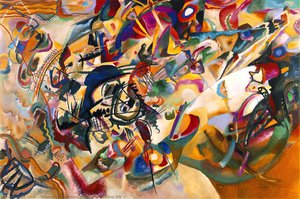
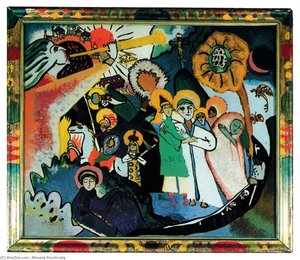
“In the Blue,” painted by Wassily Kandinsky around 1907-1912, isn't merely a depiction of color; it’s an immersion into a realm of pure feeling, a testament to the burgeoning movement of abstract art. This captivating work, housed within the vibrant heart of the early 20th century, transcends representational imagery and invites the viewer on a deeply personal journey through form, hue, and emotion. It represents a pivotal moment in Kandinsky’s artistic evolution, marking his decisive break from traditional perspective and his embrace of non-objective art – a radical shift that would fundamentally reshape the course of modern painting.
The canvas explodes with an intense azure, not as a simple backdrop but as a dynamic force. This dominant blue isn't static; it pulsates with energy, layered with washes of crimson, ochre, and lemon yellow. Geometric shapes – circles, triangles, and squares – dance across the surface, their relationships suggesting both harmony and tension. These forms aren’t arranged according to logical rules or spatial constraints; instead, they are governed by an internal logic, a visual language that speaks directly to the subconscious. Kandinsky himself described his approach as “inner necessity,” emphasizing that each element was driven by an intuitive impulse rather than external observation.
The Language of Color and Form
Kandinsky’s technique is characterized by its deliberate layering and blending of colors. He employed a wet-on-wet method, allowing the pigments to mingle and bleed into one another, creating subtle gradations and atmospheric effects. The brushstrokes are loose and expressive, conveying a sense of spontaneity and immediacy. The use of tempera on canvas allows for rich color saturation and a luminous quality that enhances the painting’s emotional impact. Notice how the circles, often associated with wholeness and spirituality in Kandinsky's work, seem to radiate outwards, suggesting expansion and release. The triangles, conversely, can be interpreted as symbols of stability and grounding, providing a counterpoint to the dynamism of the other forms.
The painting’s historical context is crucial to understanding its significance. Kandinsky was deeply influenced by music theory, believing that colors possessed inherent sonic qualities. He sought to translate musical harmonies into visual equivalents, aiming to create paintings that could evoke similar emotional responses as a symphony. “In the Blue” embodies this principle perfectly – it’s not simply a picture; it's an auditory experience rendered in pigment and form. It aligns with the broader artistic currents of the time, including the influence of Russian Symbolism and the burgeoning interest in spirituality within art.
Symbolic Resonance and Emotional Depth
Beyond its formal qualities, “In the Blue” is rich in symbolic meaning. The blue itself represents depth, infinity, and the spiritual realm – a key element in Kandinsky’s exploration of inner space. The vibrant reds and yellows evoke passion, energy, and vitality, while the softer ochres suggest warmth and earthiness. The interplay between these colors creates a complex emotional landscape, inviting viewers to project their own feelings and experiences onto the canvas. It's not about depicting a specific scene or object; it’s about conveying an atmosphere, a mood, a state of being.
Kandinsky believed that art should be capable of awakening emotions and stimulating intuition. “In the Blue” achieves this admirably, prompting viewers to contemplate their own relationship with color, form, and the unseen forces that shape our inner world. It’s a painting that rewards repeated viewing, revealing new layers of meaning and emotional resonance with each encounter. A reproduction of this work can bring a sense of tranquility and contemplation into any space, serving as a constant reminder of the power of art to transcend the limitations of language and logic.
Further Exploration
- View 'In the Blue' by Wassily Kandinsky on OriginalUniqueArt
- List of paintings by Wassily Kandinsky on Wikipedia
- Jüngster Tag (The Day of the Last Judgement) by Wassily Kandinsky on OriginalUniqueArt
- Improvisation II (Blue) by Wassily Kandinsky on OriginalUniqueArt
- Wassily Kandinsky on Wikipedia
Artist Information:
- Artist: Wassily Kandinsky
- Birth Year: 1866
- Death Year: 1944
- Birth City: Moscow
- Birth Country: Russia
- Biography: Wassily Kandinsky (1866-1944) was a Russian painter, art theorist, and pedagogue. He is considered one of the pioneers of abstract art and a key figure in the development of modern art. His work explored the relationship between color, form, and emotion, seeking to create paintings that could evoke spiritual experiences.
Additional Research:
- Sky Blue by Wassily Kandinsky
- The Blue Horseman by Wassily Kandinsky
- Blue by Wassily Kandinsky
- Franz Marc Museum, Kochel am See
- Lenbachhaus, Munich
Domande e risposte
Dove posso acquistare una stampa di "Nel Blu" di Wassily Wassilyevich Kandinsky?
"Nel Blu" è disponibile come una stampa fine art su tela di cotone o carta canvas d'archivio. Gli ordini possono essere effettuati nella pagina Stampa Fine Art, nella dimensione che preferisci.
È disponibile una presentazione a diapositiva per "Nel Blu" di Wassily Wassilyevich Kandinsky?
Il diaporama di "Nel Blu" può essere visualizzato nella pagina Slideshow dell'opera.
In quale ambiente si consiglia di collocare "Nel Blu" di Wassily Wassilyevich Kandinsky?
Lo spazio consigliato per "Nel Blu" di Wassily Wassilyevich Kandinsky è un Zona giorno. Il suggerimento può naturalmente essere adattato ai vostri interni.
Biografia dell'artista
Wassily Wassilyevich Kandinsky: Pioniere dell'Astrazione
- Nato: 16 dicembre 1866, Mosca, Russia
- Morto: 13 dicembre 1944
- Nazionalità: Russo
Primi Anni e Sviluppo Artistico
- La prima parte della vita di Kandinsky fu segnata da una formazione diversificata, studiando inizialmente legge ed economia all'Università di Mosca.
- All'età di 30 anni, si dedicò all'arte, iscrivendosi alla Accademia di Monaco sotto Franz von Stuck. Questa svolta significò un profondo impegno nell'espressione artistica.
- I suoi primi lavori furono influenzati dall'arte popolare russa, in particolare dal suo viaggio etnografico nella regione di Vologda nel 1889.
- Sviluppò un interesse per il simbolismo del colore e la psicologia, che divennero elementi fondamentali delle sue successive composizioni astratte.
Periodi Artistici Chiave e Stili
- Espressionismo Primitivo: Caratterizzato da colori vivaci e intensità emotiva, evidente in opere come "Papeln (Pioppi)" (1902).
- Transizione all'Astrazione: Kandinsky si allontanò gradualmente dall'arte rappresentazionale, esplorando il rapporto tra colore, forma ed emozione.
- Astrazione Geometrica: Questo periodo vide un focus su forme geometriche e composizioni, esemplificato da "Several Circles" (140 x 140 cm).
- Astrazione Spirituale: Kandinsky credeva che l'arte potesse esprimere verità spirituali attraverso forme non rappresentative. Le sue opere miravano a evocare emozioni ed esperienze interiori piuttosto che raffigurare la realtà esterna.
Influenza e Eredità
- Influenza del Bauhaus: In qualità di docente presso la scuola Bauhaus in Germania, Kandinsky influenzò profondamente generazioni di artisti con le sue teorie sul colore, sulla forma e sull'astrazione.
- Scritti Teorici: I suoi scritti, in particolare "Lo Spirituale nell'Arte," articolavano la sua filosofia artistica e contribuirono significativamente allo sviluppo della teoria dell'arte astratta.
- Impatto sull'Arte Moderna: Kandinsky è ampiamente riconosciuto come un pioniere dell'arte astratta, aprendo la strada a numerosi movimenti e artisti successivi.
- Collezioni Museali: Le sue opere sono conservate in importanti musei di tutto il mondo, tra cui la Galleria Tretyakov a Mosca, che ospita il suo monumentale "Composizione VII."
Opere Notabili
- Composizione VII: Un'opera astratta su larga scala considerata un culmine dello sviluppo artistico di Kandinsky.
- Quadrato Nero (in collaborazione con Kazimir Malevich): Un'opera fondamentale nella storia dell'astrazione, che rappresenta una rottura radicale dalle forme artistiche tradizionali.
- Several Circles: Dimostra il suo uso innovativo di forme geometriche e colori vivaci per creare composizioni dinamiche.
- Murnau con una Chiesa: Bilancia elementi astratti con immagini rappresentative, mostrando il suo stile in evoluzione.
- Una Festa Intima: Un'opera successiva che presenta astrazione geometrica e impasto stratificato, riflettendo la sua continua esplorazione di temi spirituali.

Wassily Wassilyevich Kandinsky
1866 - 1944 , Russia
Informazioni rapide
- Artistic Movement Or Style: Espressionismo Astratto
- Date Of Birth: 16 dicembre 1866
- Date Of Death: 13 dicembre 1944
- Full Name: Wassily Wassilyevich Kandinsky
- Nationality: Russo
- Notable Artworks:
- Composizione VII
- Quadrato Nero
- Several Circles
- Murnau con una chiesa
- An Intimate Party
- Place Of Birth: Mosca, Russia
Articoli correlati

Kandinsky: I 25 Capolavori che Hanno Rivoluzionato l'Arte Moderna | OriginalUniqueArt
Esplora i 25 capolavori di Wassily Kandinsky, pioniere dell'arte astratta. Scopri la storia, il significato e le tecniche dietro ogni dipinto iconico. Trova riproduzioni d'arte di alta qualità per decorare la tua casa su OriginalUniqueArt.com.

Astrazione Geometrica: 10 Capolavori che Hanno Definito un Movimento Artistico
Esplora i 10 capolavori dell'Astrazione Geometrica: Mondrian, Malevich e Kandinsky rivoluzionano l'arte moderna. Scopri la storia, i colori e le tecniche di questi movimenti iconici. Stampe d'arte di alta qualità su OriginalUniqueArt.com!

I 10 Dipinti Più Famosi Dominati dal Blu Ardesia: Storia, Arte e Decorazioni Raffinate
Esplora i 10 dipinti più iconici dominati dal blu ardesia! Scopri la storia, gli artisti e le tecniche dietro capolavori impressionisti e moderni. Trova riproduzioni artistiche di alta qualità per decorare casa con .

Espressionismo Astratto: I 10 Capolavori che Hanno Definito un Movimento Artistico Rivoluzionario
Esplora i 10 capolavori dell'Espressionismo Astratto con ! Scopri Pollock, Rothko e De Kooning: storia, tecnica e significato di opere iconiche per arredare la tua casa con arte di alta qualità. Esplora la collezione online!

Neo-Abstract Art: The High-Impact Evolution of Modern Visual Energy and Geometric Sophistication
Discover the power of Neo-Abstract art. Explore how bold geometric forms and high-impact visual energy are redefining modern design. Learn to curate sophisticated, high-energy spaces with the latest trends in contemporary abstraction and structural color.