

 Anteprima in scala reale
 Condividi
 Condividi
 Dettagli
 Guida stampabile

 Scarica
 Articoli simili
 Radiografia
 Slideshow
 Statistiche
Mrs Barrett


 Leggi tutto
Riproduzione a olio fatta a mano
Olio su tela dipinto a mano nelle tue dimensioni e con la tua cornice, realizzato su ordinazione dai nostri artisti. ( Passa alle stampe Passa all'immagine digitale)




P118B €10

P118H €10

P118W €10

P438Z €10

P508JH €12

P508YH €12

P805H €10

P805Z €10

P919BZ €10

P919G €10

P919XJ €10

P959ZH €10

P968JZ €12

W106C €8

W218G €10

W218JH €8

W218Y €10

W307PJ €10

W316G €10

W316PJ €8

W316Y €10

W398PJ €8

W4111J €10

W500HY €15

W500JH €15

W692G €12

W849H €8

W940BG €15

W953PJ €8




Scegli tra le nostre dimensioni predefinite, che rispettano le proporzioni originali dell'opera d'arte.

Inserisci la larghezza e l'altezza di cui hai bisogno, per adattarle alla tua cornice o alla tua parete. Trattandosi di un'opera dipinta a mano, in caso di dimensioni con una forma differente, l'artista può dipingere un po' più oltre i bordi dell'immagine o ritagliare leggermente — la scelta spetta a te. Ti invieremo un mockup digitale da approvare prima che la pittura abbia inizio. L'immagine mostrata in questa pagina non rappresenta il risultato reale — solo il mockup lo fa.
Dopo l'ordine, il team di OriginalUniqueArt.com contatterà il cliente via e-mail per ricevere le istruzioni e fornirà un'anteprima del mockup
Consegna in tutto il mondo () in 3/4 settimane anziché nelle normali 5 settimane. (22 Ottobre). Nessun compromesso sulla qualità.

Spedizione espressa gratuita in tutto il mondo

Tela in lino di alta qualità

Assicurazione completa sulla spedizione

Garanzia di rimborso dei dazi doganali

Garanzia di perfetta fedeltà cromatica

Politica di reso entro 100 giorni (solo per difetti di fabbricazione)

Garanzia di rimborso al 100%

Sconto per acquisti multipli
 L'opzione vetro è disponibile solo per dimensioni inferiori a 110 cm

Mrs Barrett
Tecnica di riproduzione
Dimensioni della riproduzione
-


Prezzo totale
€ 263
Walter Richard Sickert’s ‘Mrs Barrett’: A Study in Shadows and Subtlety
Walter Richard Sickert's “Mrs Barrett,” painted around 1905, isn’t merely a portrait; it’s a carefully constructed tableau of urban life, social observation, and veiled mystery. This pastel on board, measuring a modest 540 x 711 mm, resides within the Tate Gallery collection, offering a glimpse into the Camden Town Group's fascination with London’s undercurrents – its working-class inhabitants, their lives, and the often-uncomfortable truths they concealed. The painting immediately draws the eye to the sitter, a woman identified simply as “Mrs Barrett,” whose face is partially obscured by a fur stole and a strategically placed mirror reflecting a striped sofa. This deliberate ambiguity—her identity shrouded in shadow, her gaze averted—is central to the work’s enduring appeal.A Camden Town Portrait: Context and Character
Sickert's decision to focus on this particular woman speaks volumes about his artistic interests during this period. He was deeply embedded within the Camden Town Group, a collective of artists who rejected the academic traditions of the Royal Academy in favor of capturing the gritty reality of London’s East End. Unlike many of his contemporaries who sought to idealize their subjects, Sickert frequently depicted ordinary people – costers, music hall performers, and domestic servants – often with an unsettling frankness. “Mrs Barrett” embodies this approach; she isn't presented as a glamorous socialite but rather as a woman of the streets, her attire suggesting a degree of respectability while hinting at a life lived outside conventional societal norms. The inclusion of the mirror, reflecting the striped sofa, adds another layer of complexity, creating a sense of voyeurism and inviting the viewer to contemplate the scene from an unsettling perspective.Technique and Atmosphere: Pastel’s Delicate Dance
Sickert's masterful use of pastel is particularly noteworthy. He eschewed bold brushstrokes in favor of delicate layering and subtle tonal shifts, creating a remarkably atmospheric effect. The muted palette—dominated by shades of grey, brown, and olive green—evokes the gloom of a London evening, while the loose application of pigment lends a sense of immediacy and spontaneity to the composition. The artist’s technique is almost impressionistic in its focus on capturing fleeting moments of light and shadow, yet it retains a distinctly personal and expressive quality. The way he renders the texture of the fur stole, the sheen of the mirror, and the folds of the woman's clothing demonstrates an exceptional level of detail and observation.Symbolism and Intrigue: Unraveling the Narrative
The identity of “Mrs Barrett” remains a subject of speculation among art historians. While some believe she was Sickert’s charlady, others suggest she may have been a prostitute or a member of his circle of bohemian acquaintances. The painting itself offers few definitive clues, relying instead on carefully placed symbols and suggestive details to provoke interpretation. The mirror, as mentioned earlier, creates a sense of unease and invites the viewer to question the nature of reality presented in the image. The woman’s averted gaze suggests a guardedness or perhaps even a hint of sadness—a reflection of the hardships and uncertainties of her life. It's this ambiguity that elevates “Mrs Barrett” beyond a simple portrait, transforming it into a poignant meditation on social class, identity, and the hidden lives of London’s marginalized figures.A Timeless Masterpiece: Reproduction and Appreciation
“Mrs Barrett” stands as a testament to Sickert's unique artistic vision and his ability to capture the essence of a particular moment in time. Reproductions of this captivating work offer an opportunity to appreciate its intricate details, atmospheric quality, and profound emotional resonance. Whether displayed in a private collection or a public gallery, “Mrs Barrett” continues to fascinate viewers with its enigmatic subject matter and its enduring exploration of the complexities of human experience. It’s a piece that rewards repeated viewing, revealing new layers of meaning with each encounter.Domande e risposte
Dove posso trovare una guida per "Mrs Barrett"?
La pagina Schede didattiche di "Mrs Barrett" di Walter Richard Sickert offre una scheda informativa stampabile in due fogli: l'opera d'arte con la sua tabella identificativa, una linea temporale decennale che la colloca nel periodo di vita dell'artista, altre opere dello stesso autore, la tavolozza dei colori misurata e citazioni pronte per essere copiate in quattro stili diversi.
In che anno è stata realizzata l'opera "Mrs Barrett" di Walter Richard Sickert?
"Mrs Barrett" di Walter Richard Sickert è stata creata nel 1905.
Quanto sono intensi i colori di "Mrs Barrett"?
Il colore di "Mrs Barrett" presenta una saturazione di Muted e un'intensità di Monochromatic.
Biografia dell'artista
Primi anni e formazione
Walter Richard Sickert, pittore anglo-tedesco, nacque il 31 maggio 1860 a Monaco di Baviera. La sua famiglia si trasferì in Inghilterra nel 1868, dopo l'annessione tedesca dello Schleswig-Holstein. Ricevette la sua prima istruzione presso l’University College School e il King’s College School, studiando fino all'età di 18 anni.Sviluppo artistico
Il percorso artistico di Sickert iniziò con un breve periodo come attore, seguito dall'iscrizione alla Slade School nel 1881. Successivamente divenne allievo di James Abbott McNeill Whistler, che influenzò significativamente la sua opera. I suoi primi dipinti furono piccoli studi tonali realizzati "alla prima" dalla natura, seguendo l’esempio di Whistler.Opere significative e controversie
Le sue prime opere importanti, risalenti alla fine degli anni '80 dell'Ottocento, raffiguravano scene dei teatri musicali londinesi. Uno dei suoi dipinti più noti, Katie Lawrence at Gatti's, suscitò polemiche per la sua rappresentazione di una cantante dei teatri musicali, ritenuta "brutta e volgare" dalla critica.Influenze e il Gruppo Camden Town
Sickert fu un’importante influenza sugli stili d'avanguardia britannici del XX secolo. Nel 1888 si unì alla New English Art Club, un gruppo di artisti influenzati dall'arte realista francese, e successivamente divenne membro del Gruppo Camden Town.Eredità
Le opere di Sickert sono esposte in vari musei, tra cui il museo Kunstsalon Franke Schenk, che presenta opere dal XVI al XX secolo. La sua eredità si estende oltre la sua arte stessa, influenzando gli stili d'avanguardia britannici della metà e della fine del XX secolo.- Visionare i dipinti di Sickert su OriginalUniqueArt: Walter Richard Sickert
- Scoprire di più sul Gruppo Camden Town su Wikipedia: Wyndham Lewis
- Esplorare la collezione del museo Kunstsalon Franke Schenk su OriginalUniqueArt: Il Museo Kunstsalon Franke Schenk
- Approfondire la vita e l'opera di Sickert su Wikipedia: Walter Sickert
- 31 maggio 1860: nascita a Monaco di Baviera, Regno della Baviera
- 1888: aderisce alla New English Art Club
- 1903-04: sviluppa un approccio distintivo ai tableaux con figure multiple durante il suo ultimo viaggio di pittura a Venezia
Conclusione
Il lavoro pionieristico di Walter Richard Sickert nell'arte d'avanguardia britannica ha lasciato un segno indelebile nel mondo dell'arte. La sua eredità continua ad ispirare e influenzare gli artisti, rendendolo una figura cruciale nella storia dell’arte moderna.
Walter Richard Sickert
1860 - 1942 , Germania
Informazioni rapide
- Artisti Influenti: ['James Abbott McNeill Whistler']
- Artisti Influenzati: ['Wyndham Lewis']
- Data Di Nascita: 31 maggio 1860
- Luogo Di Nascita: Monaco, Germania
- Movimento Artistico: Post-impressionismo, Realismo
- Nazionalità: Britannico (di origine tedesca)
- Nome Completo: Walter Richard Sickert
- Opere Notevoli:
- Katie Lawrence at Gatti's
- Gaieté Montparnasse
Articoli correlati

The Soft Power of Pastel: A Connoisseur's Guide to History, Technique, and the Art of Texture
Explore the ethereal beauty of pastel art. From Renaissance origins to Impressionist mastery, discover the history, technique, and velvety textures that define this luminous medium in our expert guide for art connoisseurs.

The Subtleties of Pastel: A Comprehensive Exploration of Technique, History & Emotional Resonance
Explore the captivating world of pastel art! Discover its rich history, Impressionistic masters like Degas, emotional power & unique techniques. Find museum-quality reproductions at OriginalUniqueArt.
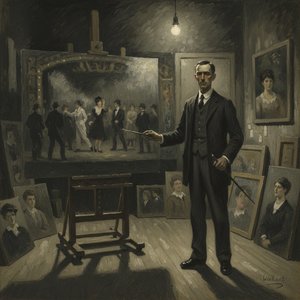
Walter Sickert: Ombre e Realismo nella Tela Britannica Moderna
Esplora la vita e l'opera di Walter Sickert, figura chiave del Camden Town Group e pioniere del realismo britannico moderno. Analisi approfondite, stile unico e guida al collezionismo.

The Subdued Radiance of Pastel: Exploring Nuance & Emotion in Art
Explore the nuanced world of pastel art! Discover its history, techniques & emotional power with expert insights from OriginalUniqueArt.com. Find museum-quality reproductions and learn about collecting this delicate medium.

The Magic of Pastel Art: A Guide to Soft Colors and Velvately Textures in Impressionist Masterpieces
Explore the ethereal beauty of pastel art. Discover how Impressionist masters used soft hues and velvety textures to capture light. A professional guide for art enthusiasts seeking to understand, collect, and appreciate the delicate magic of this timeless medium.


