

 Anteprima in scala reale
 Invia
Invia Condividi
 Dettagli opera
 Guida
Guida

 Scarica
 Simili
 Radiografia
 Slideshow
 Statistiche
Arcturus II

 Espandi i dettagli
L'opera d'arte visualizzata in questa pagina è protetta dalle leggi sul diritto d'autore, il che significa che non possiamo legalmente creare o vendere una riproduzione identica. Tale protezione è garantita da accordi internazionali quali la Convenzione di Berna e dalle leggi nazionali, incluse quelle stabilite da Legge sul copyright degli Stati Uniti - Titolo 17. Tutti i diritti riservati. Le immagini presenti su questo sito sono protette da copyright e non possono essere riprodotte o utilizzate senza l'autorizzazione scritta di WahooArt.com o dei rispettivi proprietari del copyright.
Questo metodo è pienamente conforme alle normative sul diritto d'autore poiché non prevede la copia o la duplicazione dell'opera protetta. Si tratta invece di una rielaborazione creativa: un nuovo dipinto che trae ispirazione dall'originale, senza tuttavia esserne identico.
Giclée / Stampe d'arte
Stampa giclée o su tela di qualità museale, con produzione rapida e diverse opzioni di finitura. ( Acquista il dipinto realizzato a mano Passa all'immagine digitale)




P118B €10

P118H €10

P118W €10

P438Z €10

P508JH €12

P508YH €12

P805H €10

P805Z €10

P919BZ €10

P919G €10

P919XJ €10

P959ZH €10

P968JZ €12

W106C €8

W218G €10

W218JH €8

W218Y €10

W307PJ €10

W316G €10

W316PJ €8

W316Y €10

W398PJ €8

W4111J €10

W500HY €15

W500JH €15

W692G €12

W849H €8

W940BG €15

W953PJ €8




Scegli tra le nostre dimensioni predefinite, che rispettano le proporzioni originali dell'opera d'arte.

Inserisci la larghezza e l'altezza desiderate, per adattarle alla tua cornice o alla tua parete. Una stampa può essere solo ritagliata, mai resa più grande dell'immagine originale; pertanto, un formato con una forma differente comporterà la perdita di una parte dell'opera. Ti invieremo un mockup digitale da approvare prima di procedere con la stampa. L'immagine mostrata in questa pagina non rappresenta il ritaglio reale — solo il mockup lo mostra.
Consegna in tutto il mondo () in 2 settimane invece delle normali 4/5 settimane. (26 Ottobre)

Spedizione espressa gratuita in tutto il mondo

Tela in lino di alta qualità

Assicurazione completa sulla spedizione

Garanzia di rimborso dei dazi doganali

Garanzia di fedeltà cromatica assoluta

Politica di reso entro 100 giorni (solo per difetti di fabbricazione)

Garanzia di rimborso al 100%

Offerta per acquisti multipli
 L'opzione vetro è disponibile solo per dimensioni inferiori a 110 cm

Arcturus II
Giclée / Stampe d'arte
Dimensioni riproduzione
-


Prezzo finale calcolato
€ 70
Arcturus II: A Geometric Dance of Perception
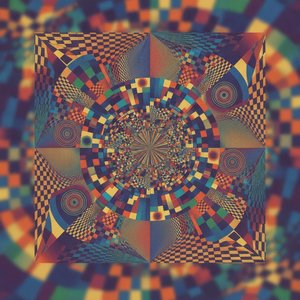
Victor Vasarely’s *Arcturus II*, a vibrant square composition bursting with color, isn't merely a painting; it's an exploration of how we perceive the world around us. Created in his signature Op Art style, this piece invites viewers into a dynamic interplay of shapes and hues that challenges our visual assumptions. The artwork presents four distinct squares – red, blue, green, and yellow – each containing a central circle. This seemingly simple arrangement belies a complex system of optical illusions designed to stimulate the eye and engage the mind. It’s a testament to Vasarely's belief in art as a science, a carefully calculated equation of color and form intended to evoke specific responses within the observer. The piece feels both modern and timeless, a reflection of its grounding in mathematical principles while simultaneously possessing an undeniable aesthetic appeal.The Genesis of Op Art and Vasarely’s Vision
To truly appreciate *Arcturus II*, one must understand the context from which it emerged. Victor Vasarely, born Károly Vásárhelyi in 1906, was a Hungarian-French artist who became a leading figure in the Op Art movement of the 1960s. His journey to this style wasn't straightforward; initially studying medicine before embracing art, he absorbed influences from Bauhaus design and early abstract movements. The term "Op Art," short for Optical Art, arose as critics sought to categorize works that exploited visual perception – creating illusions of movement, depth, or vibration through the strategic use of geometric forms and contrasting colors. Vasarely wasn't simply interested in depicting reality; he aimed to create a new reality, one governed by the principles of optics and psychology. *Arcturus II* exemplifies this ambition perfectly, demonstrating his commitment to creating art that actively engages with the viewer’s senses. He sought to democratize visual experience, believing that art should be accessible and stimulating for everyone, not just those versed in traditional artistic conventions.Color, Form, and the Illusion of Movement
The power of *Arcturus II* lies in its masterful manipulation of color and form. The bold primary colors – red, blue, and yellow – are strategically juxtaposed to create a sense of visual tension and dynamism. Each square is meticulously defined, yet their arrangement generates an impression of movement, as if the shapes are subtly shifting before our eyes. This effect is amplified by the central circles within each square; these focal points draw the viewer's gaze around the composition, creating a continuous loop of visual exploration. Vasarely’s technique involved precise calculations and careful consideration of color relationships to achieve this optical illusion. He wasn't interested in replicating natural forms but rather in constructing entirely new visual experiences based on geometric principles. The oil paint application is smooth and even, contributing to the clean, graphic quality that defines Op Art. It’s a testament to his dedication to precision and control – every element meticulously placed to maximize its impact on the viewer's perception.Symbolism and Emotional Resonance
While *Arcturus II* appears purely abstract, it resonates with deeper symbolic meanings. The title itself, referencing the star Arcturus, suggests a connection to vastness, cosmic order, and guiding light. Stars have long been associated with navigation and inspiration, and Vasarely’s choice of this name hints at his desire to guide viewers towards new ways of seeing. The geometric forms themselves can be interpreted as representations of fundamental building blocks – the basic elements from which all things are constructed. Emotionally, *Arcturus II* evokes a sense of energy, vibrancy, and intellectual stimulation. It’s an artwork that challenges us to question our assumptions about perception and invites us to engage with art in a more active and conscious way. The piece's inherent dynamism creates a feeling of exhilaration, while its precise geometry instills a sense of order and harmony. Ultimately, *Arcturus II* is a celebration of the power of visual experience – a testament to Vasarely’s genius and his enduring legacy as a pioneer of modern art.Domande e risposte
In che modo i colori di "Arcturus II" di Victor Vasarely si riflettono nel suo impatto emotivo?
"Arcturus II" di Victor Vasarely unisce una tavolozza Dark a un tono Tranquil.
È disponibile una guida per "Arcturus II" di Victor Vasarely?
La pagina Schede didattiche di "Arcturus II" di Victor Vasarely offre una scheda informativa stampabile su due fogli: l'opera d'arte con la sua tabella identificativa, una linea temporale decennale che la colloca nel periodo di vita dell'artista, altre opere dello stesso autore, la tavolozza dei colori misurata e citazioni pronte da copiare in quattro stili diversi.
Qual è il formato di "Arcturus II"?
"Arcturus II" di Victor Vasarely ha un formato Square. Il formato descrive le proporzioni della composizione.
Biografia dell'artista
Victor Vasarely: Pioniere dell'Op Art e dell'Esplorazione Cinetica
- Nato: 9 aprile 1906, Pécs, Croazia
- Morto: 15 marzo 1997, Parigi, Francia
- Nazionalità: Ungaro-Francese
Victor Vasarely (nato Károly Vaszary) è stato una figura fondamentale nello sviluppo dell'Op Art e dell'arte cinetica. La sua opera mirava a trascendere la pittura tradizionale esplorando illusioni ottiche e creando esperienze visive dinamiche. Nato a Pécs, all'epoca parte dell'Austria-Ungheria (ora Croazia), la sua prima vita vide lo studio della medicina presso l'Università Eötvös Loránd di Budapest prima di dedicarsi completamente all'arte.
Primi Influssi e Sviluppo Artistico
- Formazione Iniziale: Vasarely studiò inizialmente la pittura accademica tradizionale presso l'Accademia Podolini-Volkmann.
- Influenza Bauhaus: Un punto di svolta cruciale fu la sua iscrizione al laboratorio di Sándor Bortnyik (Műhely) a Budapest, una scuola fortemente influenzata dai principi del Bauhaus che enfatizzavano il design funzionale e l'astrazione geometrica. Questa esposizione plasmò la sua futura direzione artistica.
- Astrazione Geometrica: Alla fine degli anni '20 e all'inizio degli anni '30, Vasarely sperimentò con forme geometriche e relazioni cromatiche, allontanandosi dall'arte rappresentazionale verso l'astrazione pura. Opere chiave come "Studio Blu" (1929) e "Studio Verde" (1929) dimostrano questa transizione.
- Influenza di Mondrian & Malevich: Pur sviluppando il suo stile unico, Vasarely fu influenzato dalle astrazioni geometriche di Piet Mondrian e Kazimir Malevich, sebbene cercasse in definitiva di andare oltre le loro composizioni statiche.
L'Ascesa dell'Op Art e l'Esplorazione Cinetica
- Definizione dell'Op Art: Victor Vasarely è ampiamente considerato una figura fondatrice dell'Op Art (Optical Art), un movimento emerso negli anni '60 caratterizzato da opere d'arte che creano illusioni ottiche attraverso precise disposizioni di forme, colori e linee.
- Approccio Sistematico: A differenza di alcuni artisti che si affidavano all'intuizione, Vasarely sviluppò un approccio sistematico alla sua arte, utilizzando griglie e principi matematici per generare schemi e creare effetti visivi dinamici. Mirava alla riproducibilità e all'appeal popolare.
- Arte Cinetica & Installazioni su Larga Scala: In seguito nella sua carriera, Vasarely esplorò l'arte cinetica – opere d'arte che incorporano movimento o sembrano muoversi. "Georges Pompidou" (1976), un grande oggetto cinematico installato al Centre Pompidou di Parigi, esemplifica questa ambizione e dimostra il suo interesse per integrare l'arte con l'architettura e il design urbano.
- Imprese Commerciali: Vasarely è stato anche un innovatore nell'applicazione dei suoi progetti a prodotti commerciali. La sua collaborazione con la porcellana Rosenthal ha dato vita alla serie di stoviglie "Suomi", dimostrando la sua capacità di tradurre concetti astratti in oggetti funzionali.
Principali Realizzazioni e Eredità
- Fondazione Vasarely: La creazione della Fondazione Vasarely ad Aix-en-Provence, in Francia, ha garantito la conservazione e la promozione del suo vasto corpus di opere.
- Esplorazione Spaziale: Un momento significativo è stato quando delle serigrafie di Vasarely sono state portate nello spazio a bordo della navicella franco-sovietica Salyut 7 (1982), vendute in seguito a beneficio dell'UNESCO – una testimonianza del riconoscimento globale della sua arte.
- Influenza sul Design: L'approccio sistematico e lo stile geometrico di Vasarely hanno profondamente influenzato il graphic design, la moda e l'interior design. Il suo lavoro ha dimostrato come i principi astratti potessero essere applicati per creare ambienti visivamente coinvolgenti e funzionali.
- Eredità Duratura: La legacy di Victor Vasarely risiede nella sua pionieristica esplorazione delle illusioni ottiche, dell'arte cinetica e dell'intersezione tra arte e tecnologia. Rimane una figura significativa nella storia dell'arte moderna, ispirando generazioni di artisti e designer con la sua visione innovativa.
Significato Storico
Il contributo di Vasarely alla storia dell'arte è multiforme. Ha superato le tecniche pittoriche tradizionali per creare opere che coinvolgono attivamente la percezione dello spettatore. Il suo approccio sistematico ha sfidato le nozioni convenzionali di creatività artistica e ha aperto la strada all'arte generata al computer e al design digitale. Abbracciando la riproducibilità e le applicazioni commerciali, Vasarely ha offuscato i confini tra arte figurativa e cultura popolare, lasciando un segno duraturo in entrambi.

Victor Vasarely
1906 - 1997 , Croazia
Dettagli rapidi
- Artistic Movement Or Style: Op Art, Astrazione geometrica
- Artists Who Influenced This Artist:
- Piet Mondrian
- Kazimir Malevich
- Date Of Birth: 9 aprile 1906
- Date Of Death: 15 marzo 1997
- Full Name: Victor Vasarely
- Nationality: Ungaro-Francese
- Notable Artworks:
- Blue Study (1929)
- Green Study (1929)
- Georges Pompidou (1976)
- Place Of Birth: Pécs, Croazia
Articoli correlati

Victor Vasarely: Il Pioniere dell'Op Art e la Democratizzazione della Visione Artistica
Esplora la vita e l'opera di Victor Vasarely, il padre dell'Op Art. Scopri come le sue illusioni ottiche rivoluzionarie hanno democratizzato l'arte e influenzato il design moderno. Approfondimenti esclusivi su OriginalUniqueArt.

Neo-Abstract Art: The High-Impact Evolution of Modern Visual Energy and Geometric Sophistication
Discover the power of Neo-Abstract art. Explore how bold geometric forms and high-impact visual energy are redefining modern design. Learn to curate sophisticated, high-energy spaces with the latest trends in contemporary abstraction and structural color.

Astrazione Geometrica: 10 Capolavori che Hanno Definito un Movimento Artistico
Esplora i 10 capolavori dell'Astrazione Geometrica: Mondrian, Malevich e Kandinsky rivoluzionano l'arte moderna. Scopri la storia, i colori e le tecniche di questi movimenti iconici. Stampe d'arte di alta qualità su OriginalUniqueArt.com!
Mastering Illusion: The Vibrant World of Victor Vasarely's Op Art and the Geometry of Perception
Explore the mesmerizing world of Victor Vasarely. Discover how his Bauhaus-inspired Op Art masters the science of perception through geometric abstraction and vibrant color. A sophisticated guide for discerning art collectors seeking to understand the legacy of optical illusion.
Beyond Form & Color: Geometric Abstraction's Enduring Legacy in Art History
Explore the captivating world of geometric abstraction! Discover its origins, key artists like Malevich & Mondrian, and why this movement remains highly valued by art collectors today. Expert insights at OriginalUniqueArt.


